Our Sumatra adventure began, as these things sometimes do, with an arrival so chaotic that the jungle itself felt like the relaxing part. This is the story of Bukit Lawang and the Gunung Leuser rainforest — wild orangutans, leeches, a monkey raid, a jungle thunderstorm, and an unexpectedly brilliant way out on the river.
The arrival from hell
We landed in Medan in the evening, already tired from an unusually draining flight, and the start did not improve things. Our driver was not there when we came out. He turned up about twenty minutes late, spoke no English, and that was more or less the last time anything went to plan for the next several hours. We had been told the drive to Bukit Lawang would take three to three and a half hours — it is only about 100 kilometres. That turned out to be wildly optimistic.
The roads near Medan looked deceptively good, but before we had even left the city the driver needed fuel, and fuel was a problem. There was some kind of fuel shortage across Sumatra, and the government had set up a system where you could scan a QR code at certain stations to buy petrol at roughly half price — around 4 kroner a litre. Predictably, the queues at those stations were enormous. After a couple of failed attempts we found one where the wait was “only” about twenty minutes, he scanned his code, and we finally had a full tank and half an hour less of our evening.
Then came dinner. We had asked for somewhere quick and safe — ideally something plain that wouldn't make anyone sick. We found a restaurant, ordered fried rice among other things, and settled in for what turned into nearly an hour: thirty to forty minutes for most of the food, at which point we discovered Line's order had simply been forgotten and had to be started from scratch. Nobody got sick, which was the one victory. By now everyone was hot, tired and fraying. The Medan heat was a different animal from Lombok — heavier, stickier, harder to shrug off.
And then the road fell apart. The last stretch to Bukit Lawang was some of the worst tarmac we have ever been driven over: potholes the size of bathtubs, constant swerving, the whole car pitching like a rally stage. Noah and Vitus were both carsick several times, and Line felt it too, despite everyone having dutifully taken their tablets. We had to stop four times. Miraculously, nobody actually threw up. What was meant to be a three-hour drive took about five and a half. We'd left the airport around 6:50 p.m. and rolled into Bukit Lawang a little after 1 a.m.
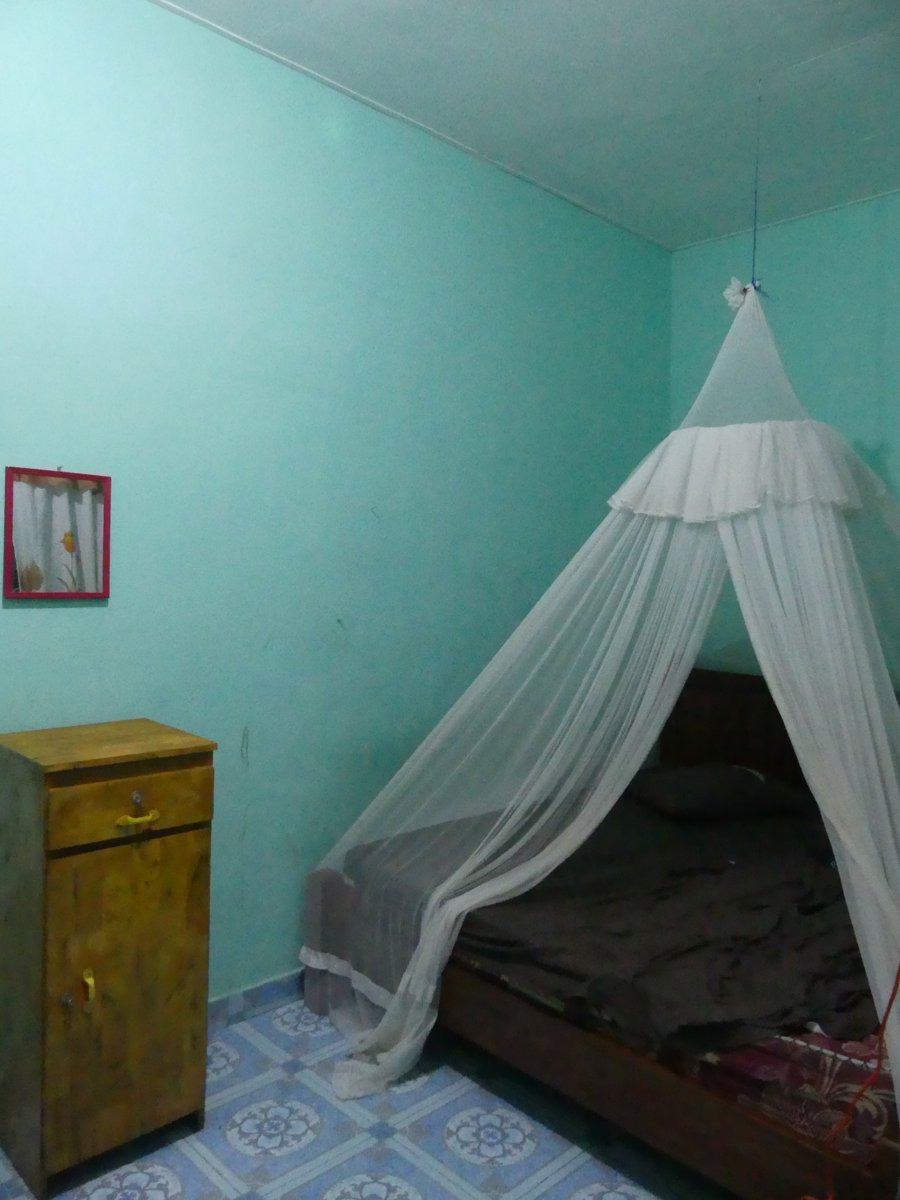
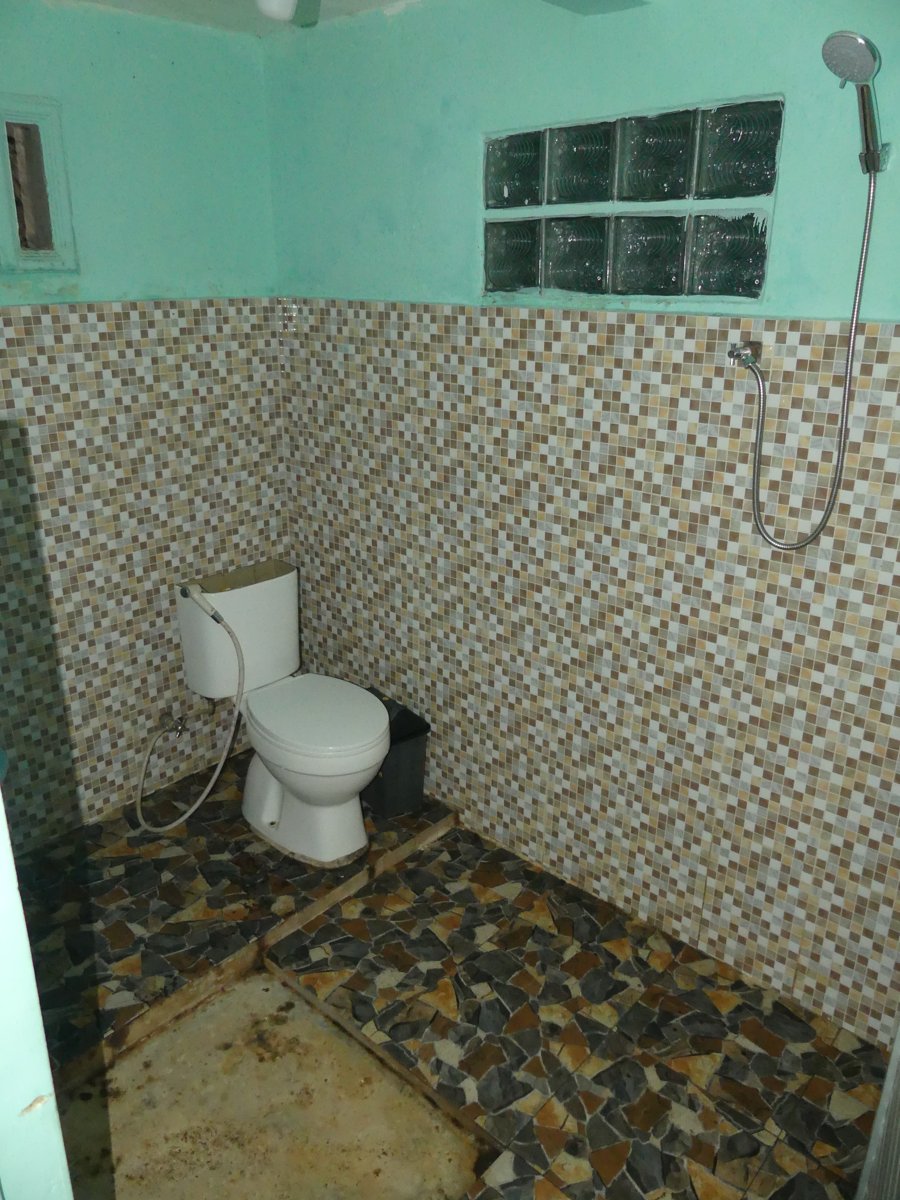
Waiting for us was Adi, who had arranged most of our Sumatra trip and the trek. Unfortunately the room for that first night was a spectacularly bad introduction to the place — among the worst standards we'd had anywhere in Indonesia. No air-conditioning, just a fan. Small beds under mosquito nets. A strange bathroom, an odd sink, a shower with no water, and a general air of grime. For good measure we were told not to open the door if anyone knocked in the night, and to bring our shoes and belongings inside because things had a habit of walking off — apparently there were drug addicts around. Not, it turns out, the ideal bedtime briefing. Noah slept fine. The rest of us less so.
Into the jungle — and an orangutan within minutes
The next morning we walked over to Adi's place for tea and breakfast and met the two other guests joining the first part of the trek: a German couple. They were doing two days; we were doing three, but we'd start out together with the same guides.
The weather was appalling. Not ordinary rain — near cloudburst, the kind we were assured almost never falls in the morning here. We waited a good while for it to ease, and finally set off around half past ten in what had softened to heavy drizzle. On the way we bought an ice cream, Noah picked up a packet of Oreos to share on the trail, and we walked in with our two guides.
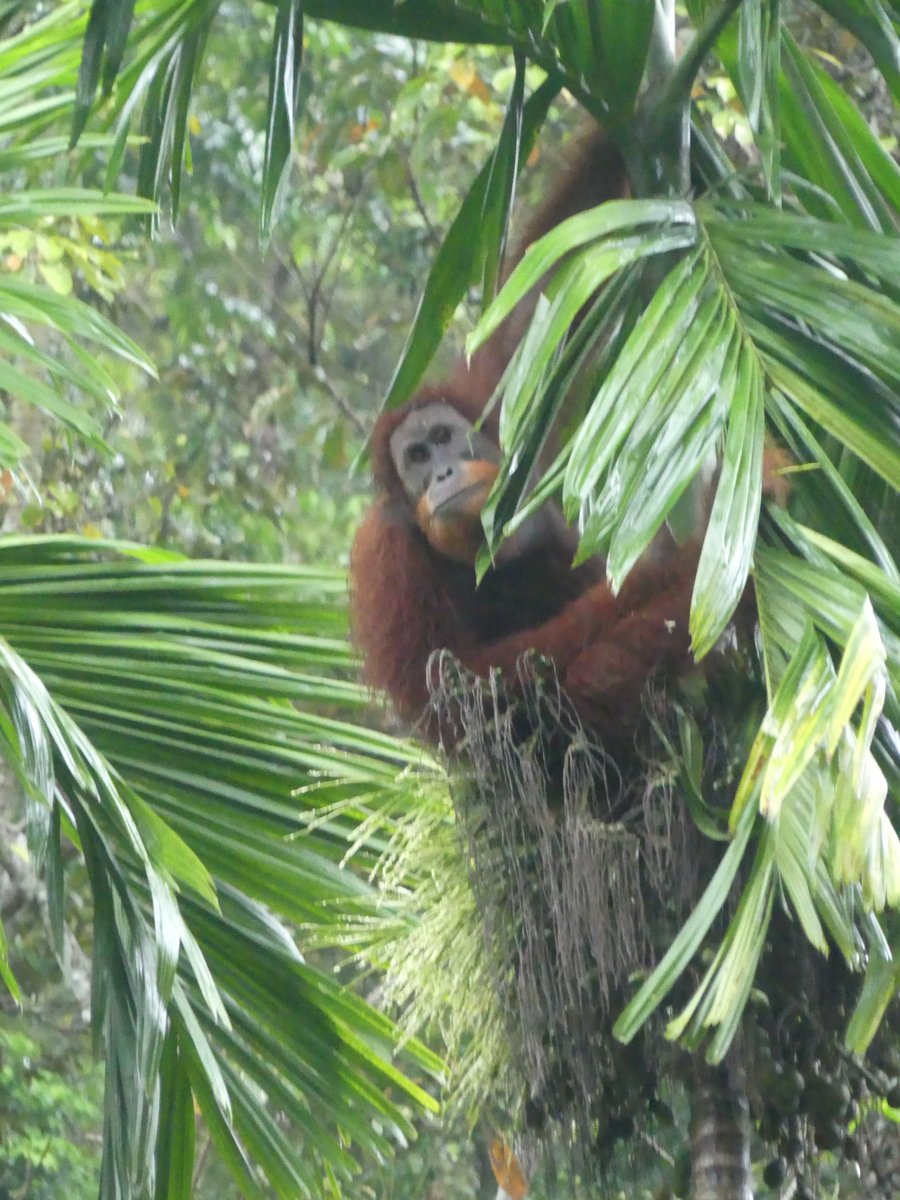
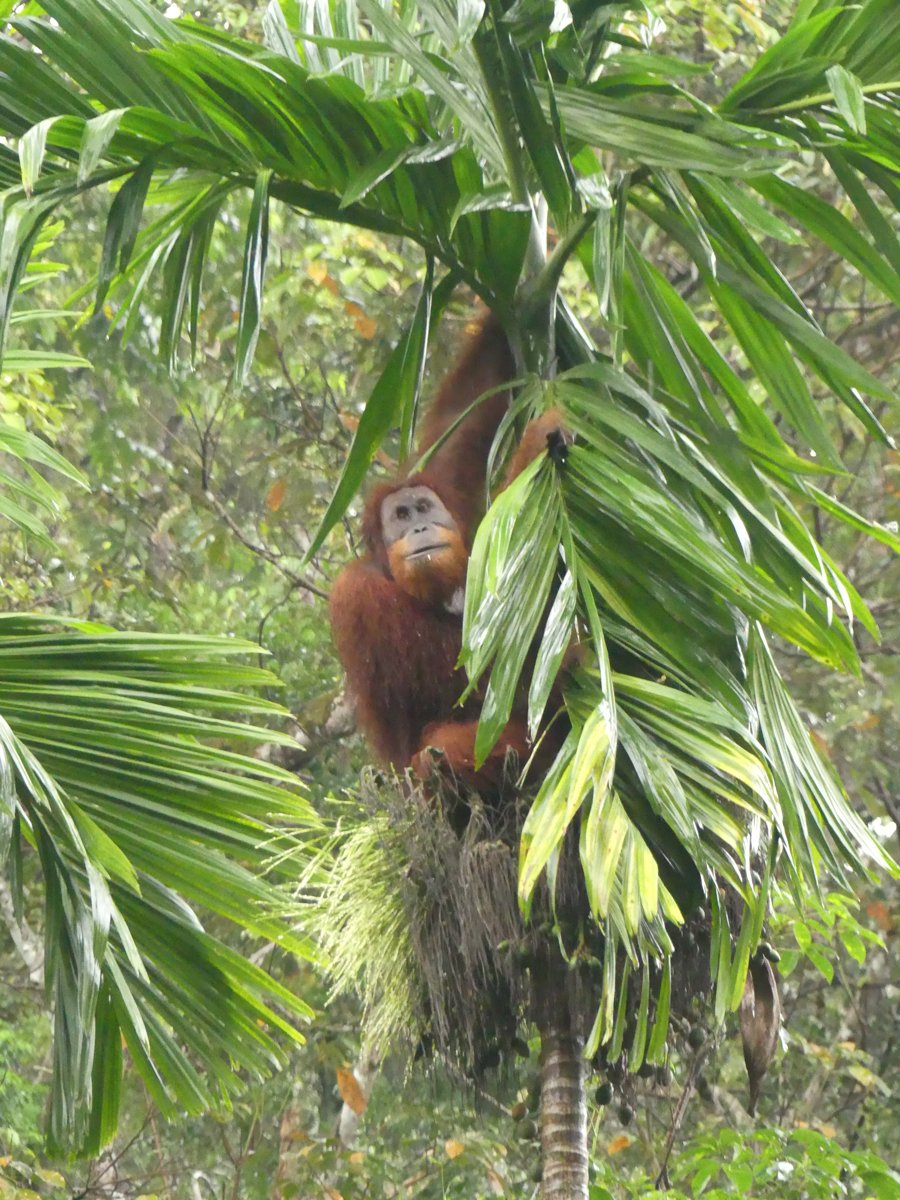
We'd been warned the rain might keep the orangutans hidden. It did nothing of the sort. Perhaps fifteen minutes in, right at the edge of the rainforest, there was our first orangutan, sitting in a palm tree calmly eating the leaves. Not knowing whether we'd see another, we stayed a long time, taking far too many photos and videos. It felt absurdly lucky to see one so soon.
The rain gradually gave up, though the humidity never did. Even on a cooler, cloudier day the jungle was relentlessly hot and sweaty. Line had prepared for battle against the leeches — hiking boots, leech socks, long trousers, T-shirt tucked in. Noah, considerably less armoured, collected the first leech of the trip on his foot. He wasn't remotely bothered; Line felt thoroughly vindicated by her more defensive wardrobe.
The guides made a great impression from the start — friendly, genuinely energetic, good English, and far more engaged than some we'd had elsewhere on this trip. They made it feel personal rather than a conveyor belt.
A very good day for wildlife
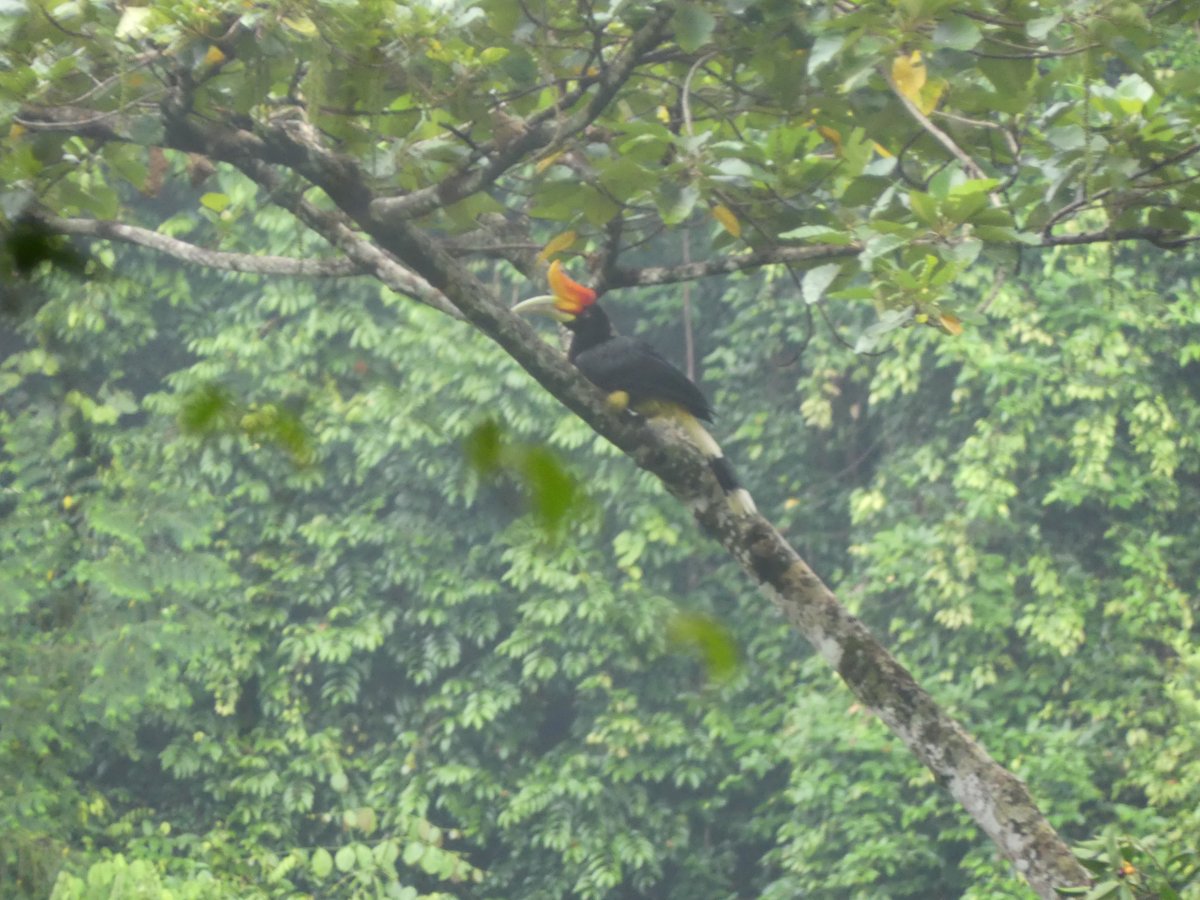
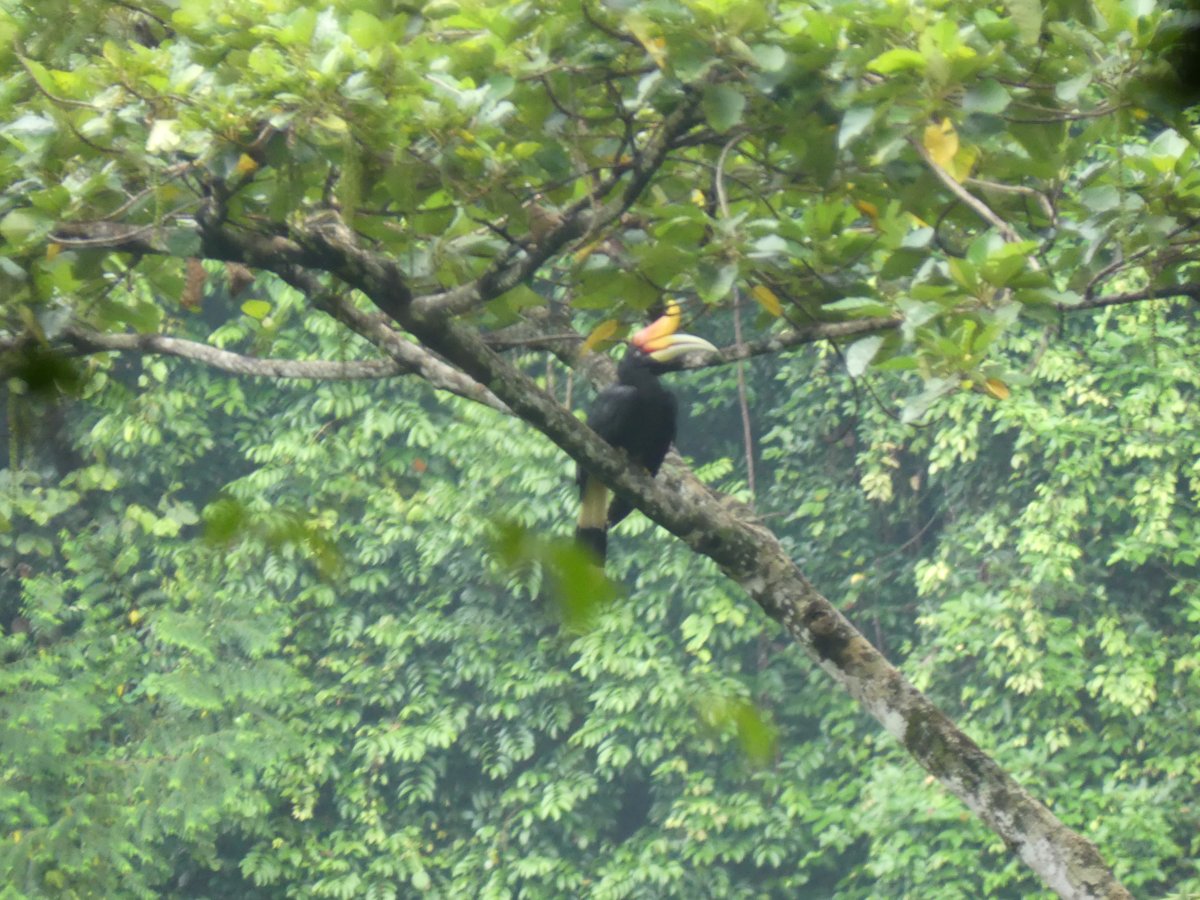
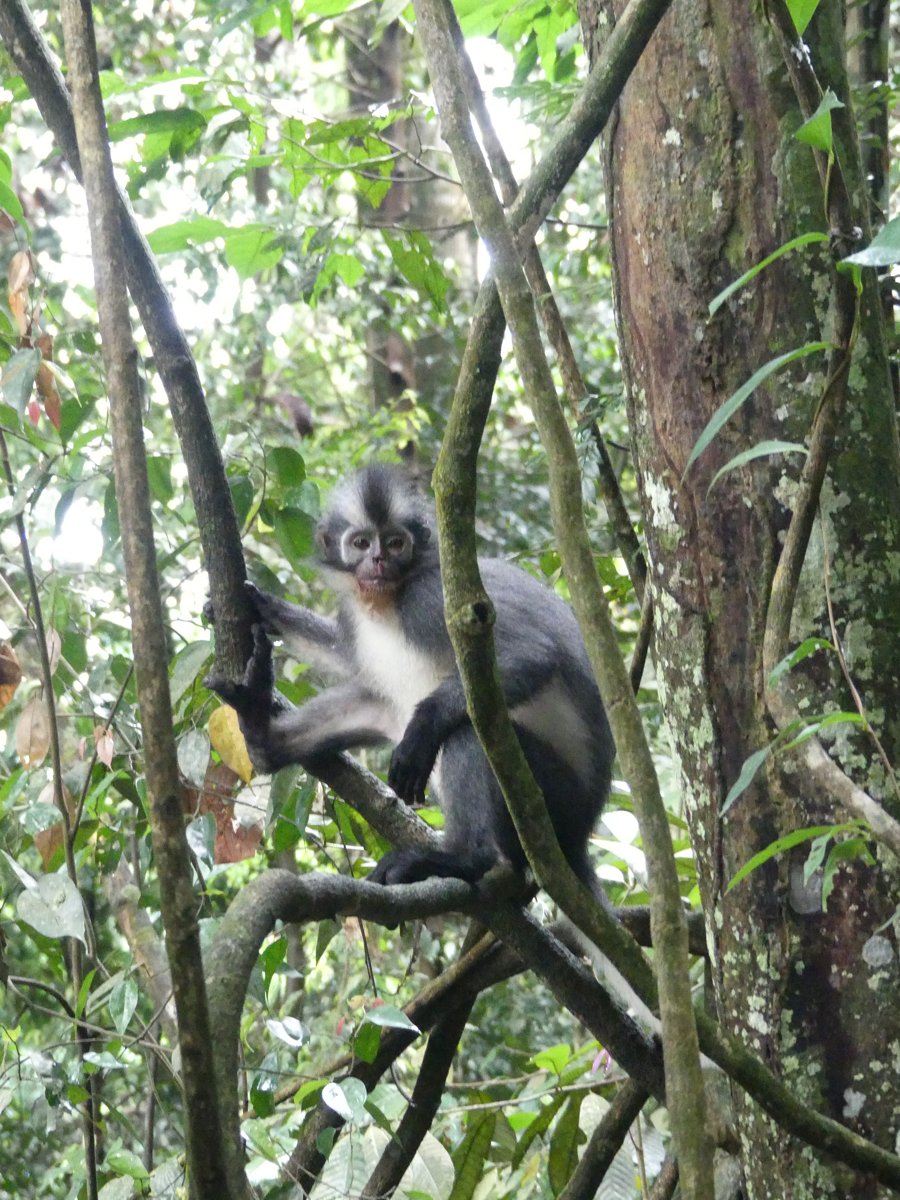
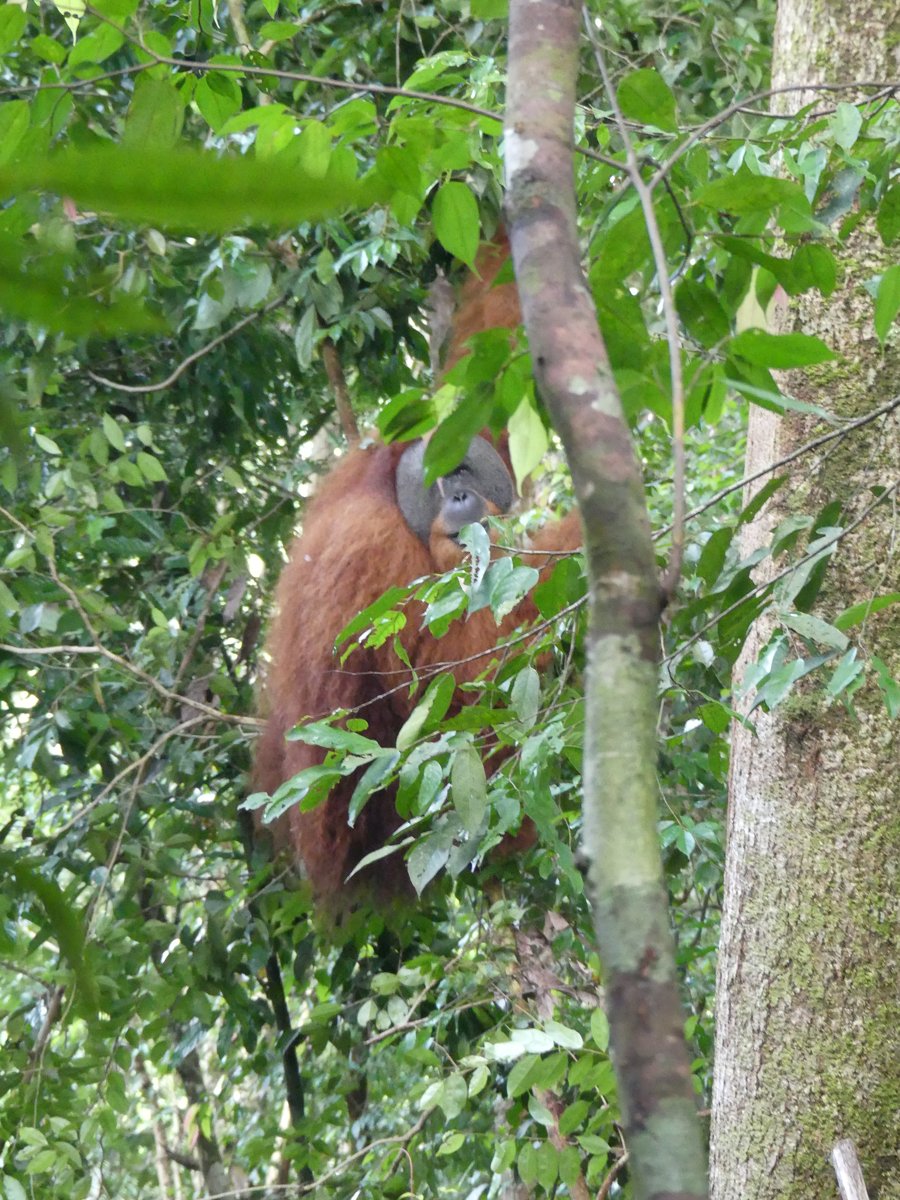
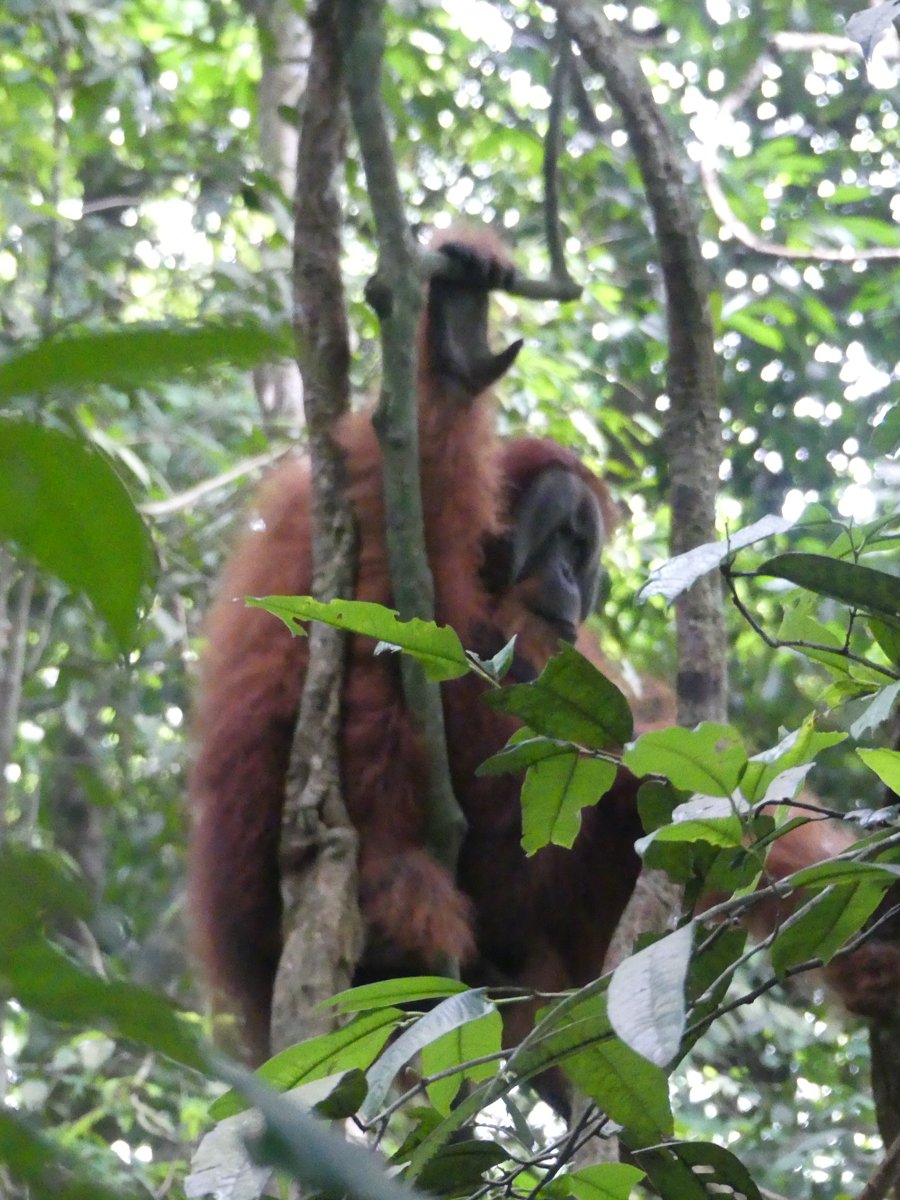
The first day turned out to be extraordinarily rich. All told we saw four or five orangutans, including smaller females and, high up in a nest, a huge male we could only half-make-out through the canopy — but knowing he was up there was thrilling enough. We also met a cast of other primates: Thomas leaf monkeys with their punk mohawks and long tails, pig-tailed macaques with their short pig-like tails, and other macaques besides. The pig-tailed ones, we were told, can be aggressive, so we kept our distance. Far off, a rhinoceros hornbill.
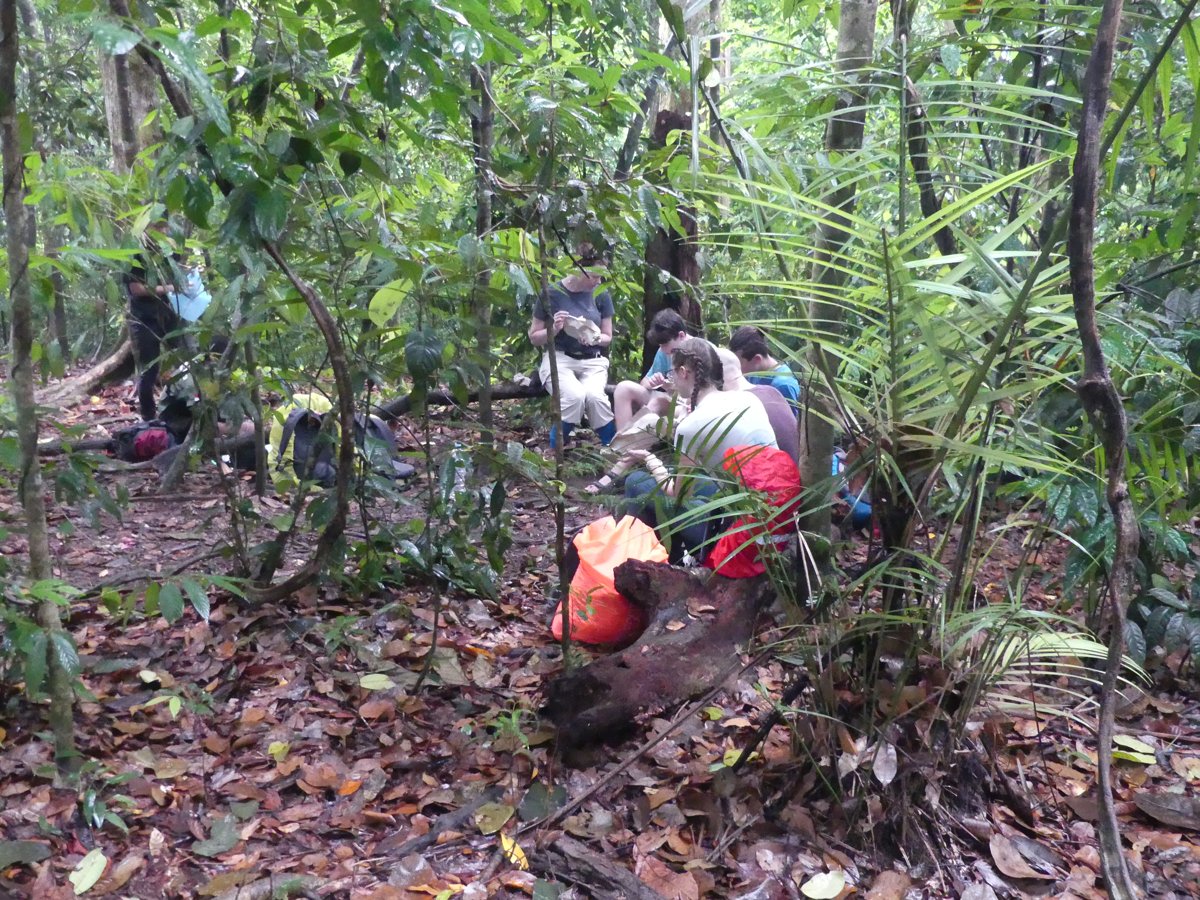
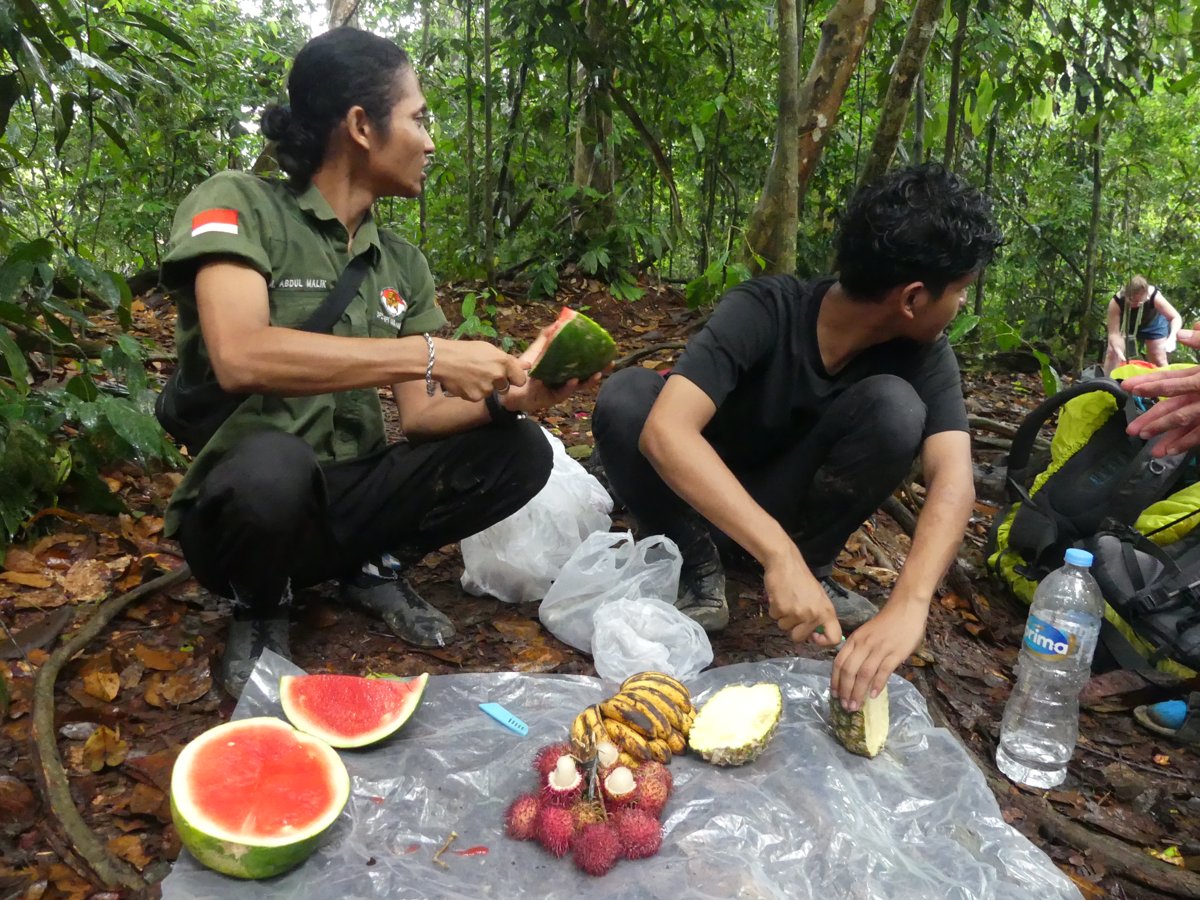
Around mid-morning the guides laid out a fruit platter on a sheet of plastic so it wasn't sitting on the ground — and we stumbled on a combination we'd repeat for the rest of the trip: pineapple with passion fruit spooned over the top. They suggested it; it was so good we never looked back. (The main jungle lunch itself — a half-cold fried rice with egg and prawn crackers — was nothing special, but nobody was there for the rice.)
There were monkeys everywhere too — Thomas leaf monkeys with their punk mohawks, and one that hopped straight down onto a log next to our backpacks, close enough that Noah simply turned around and took a selfie with it.
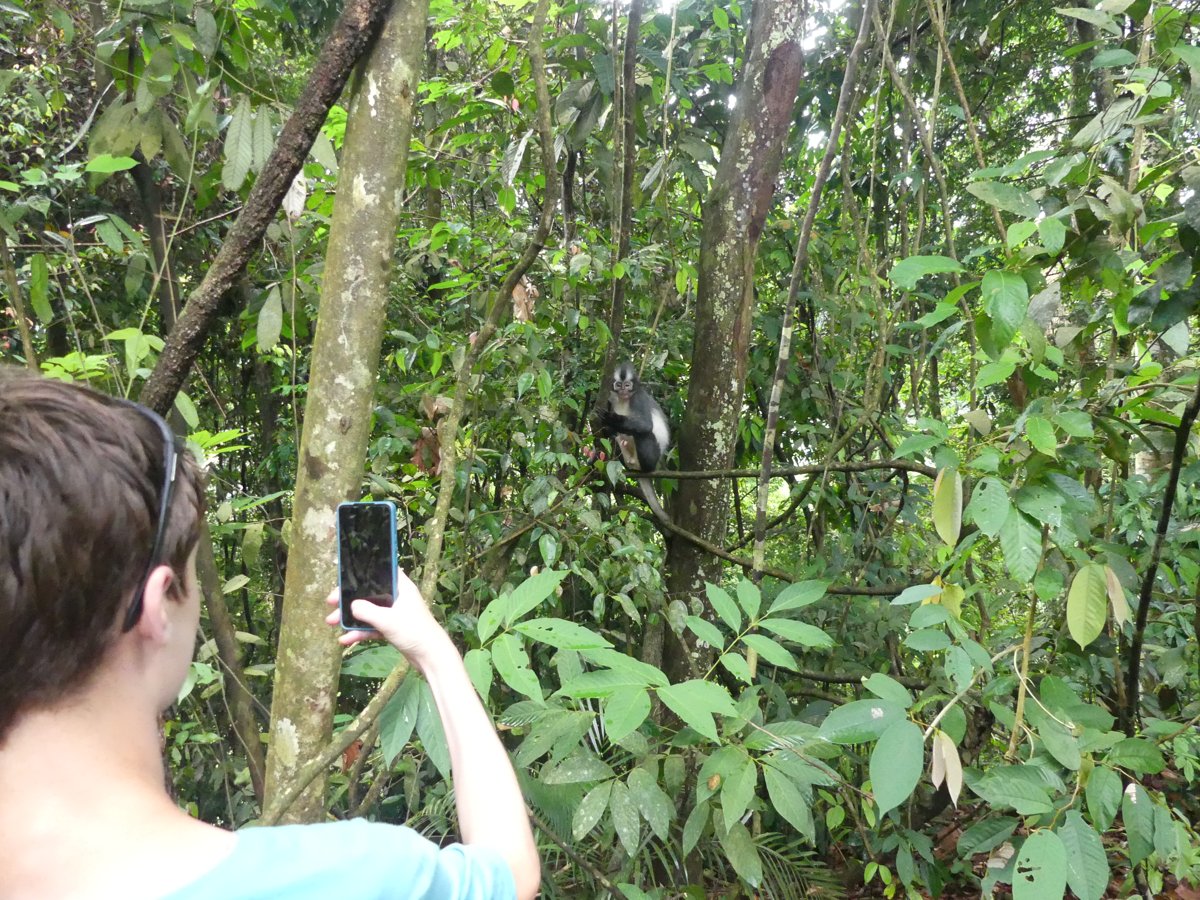
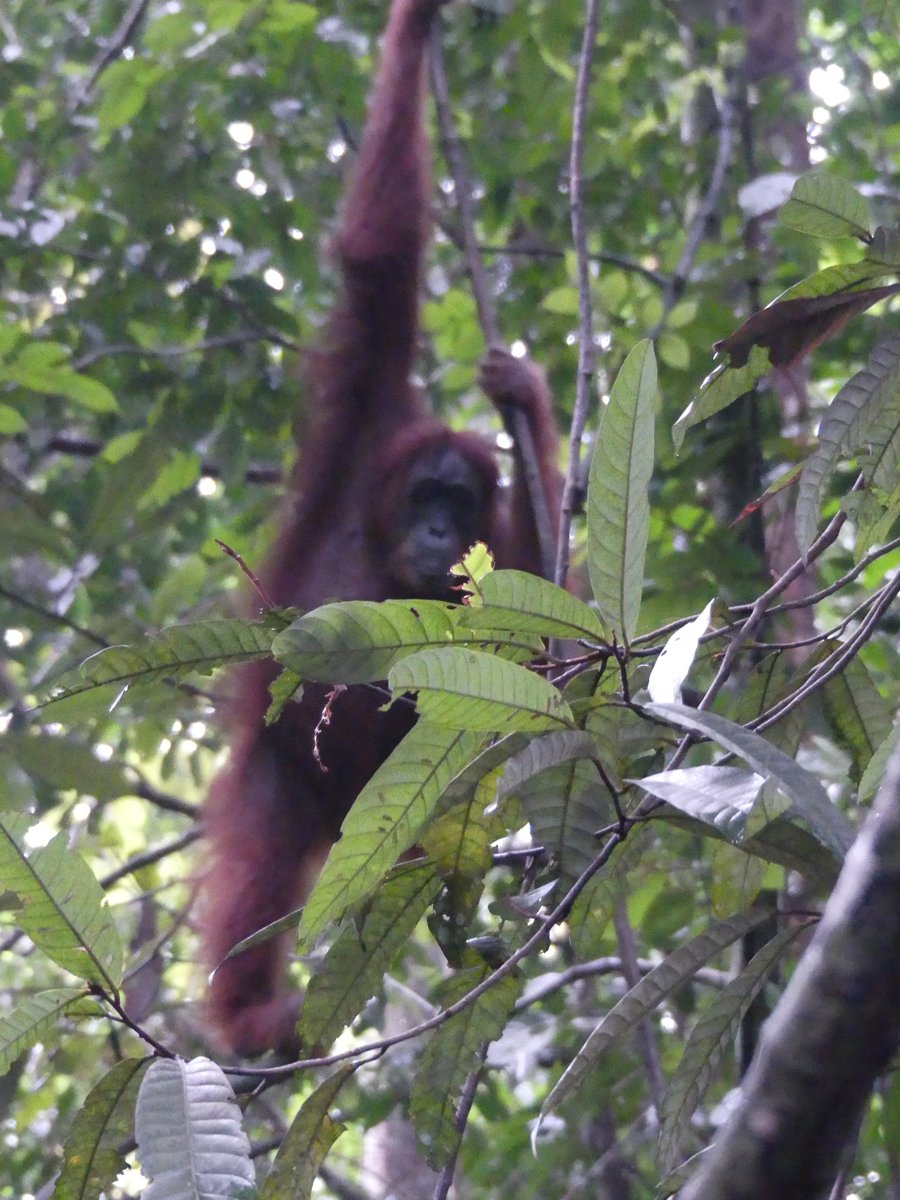
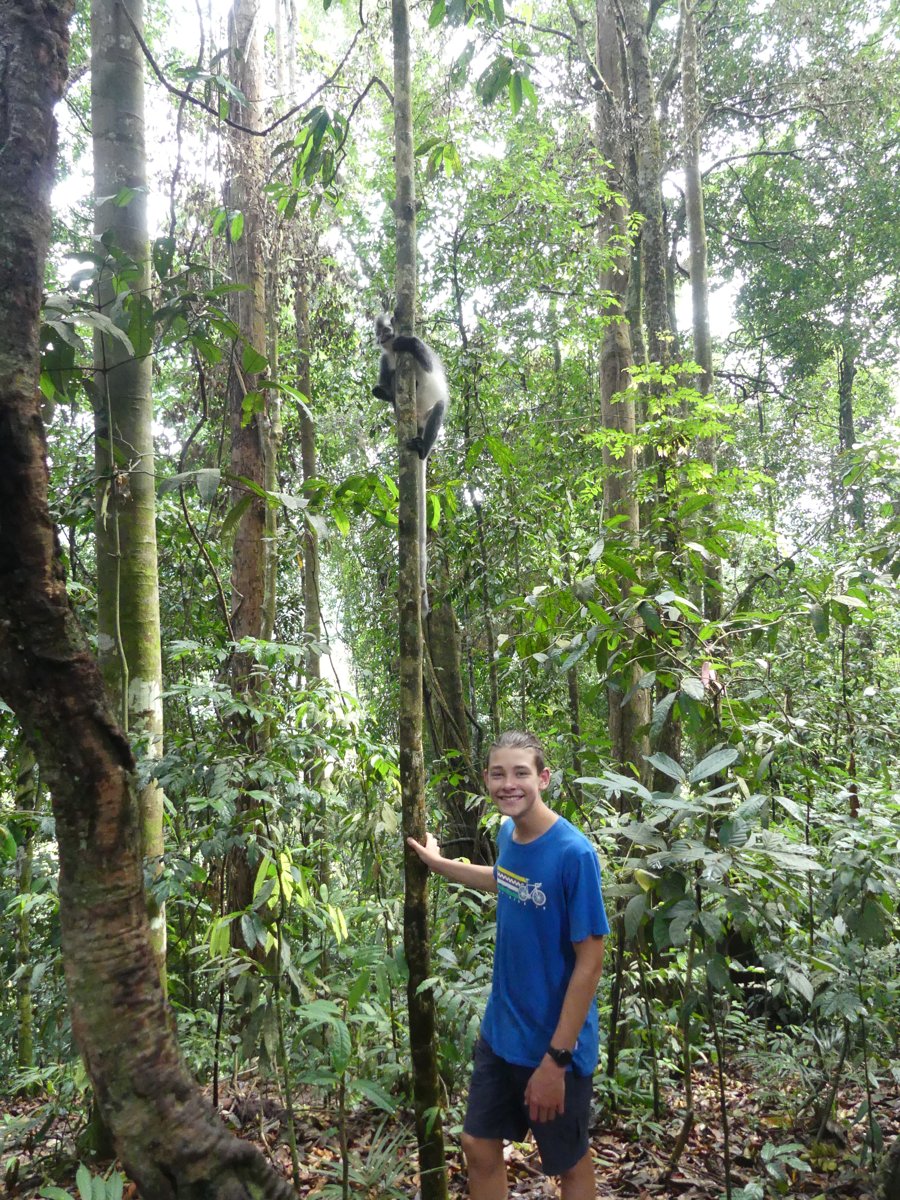
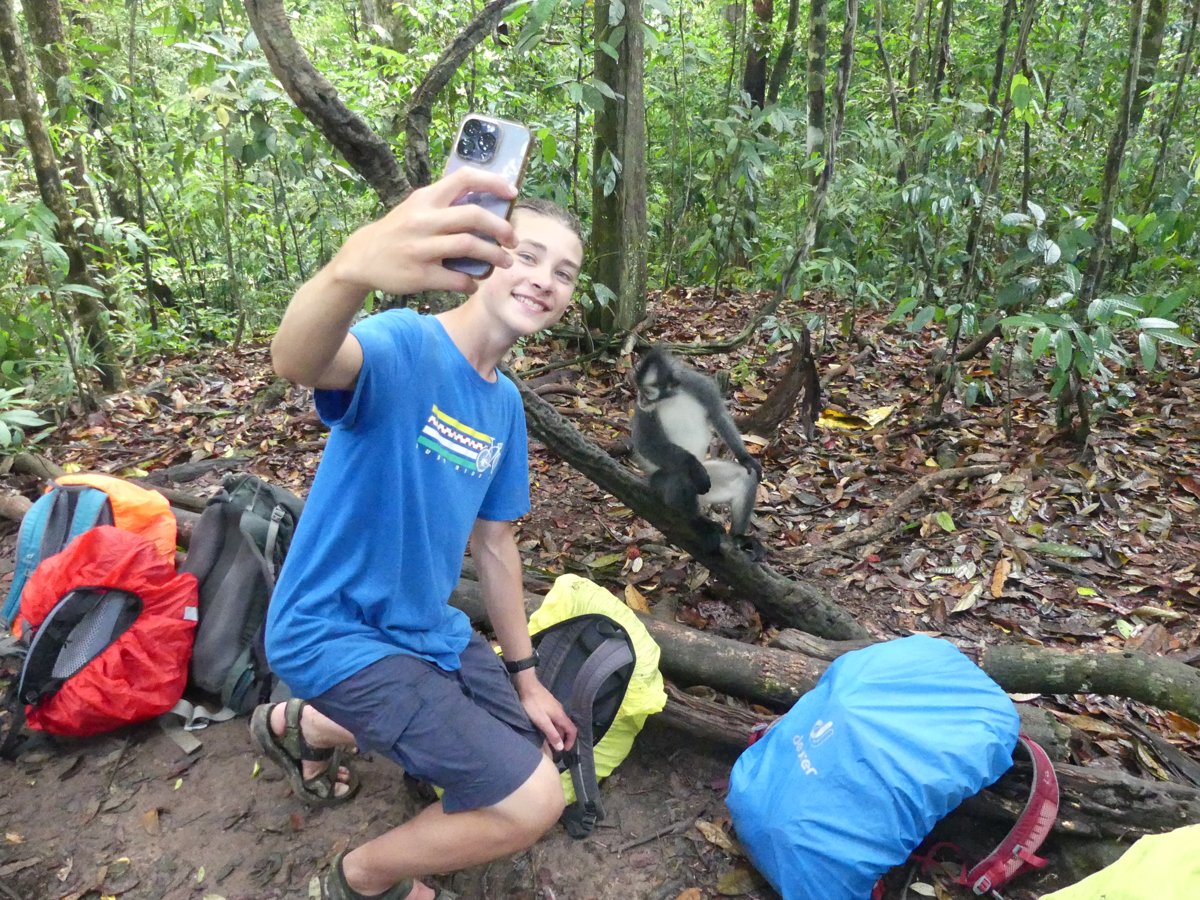
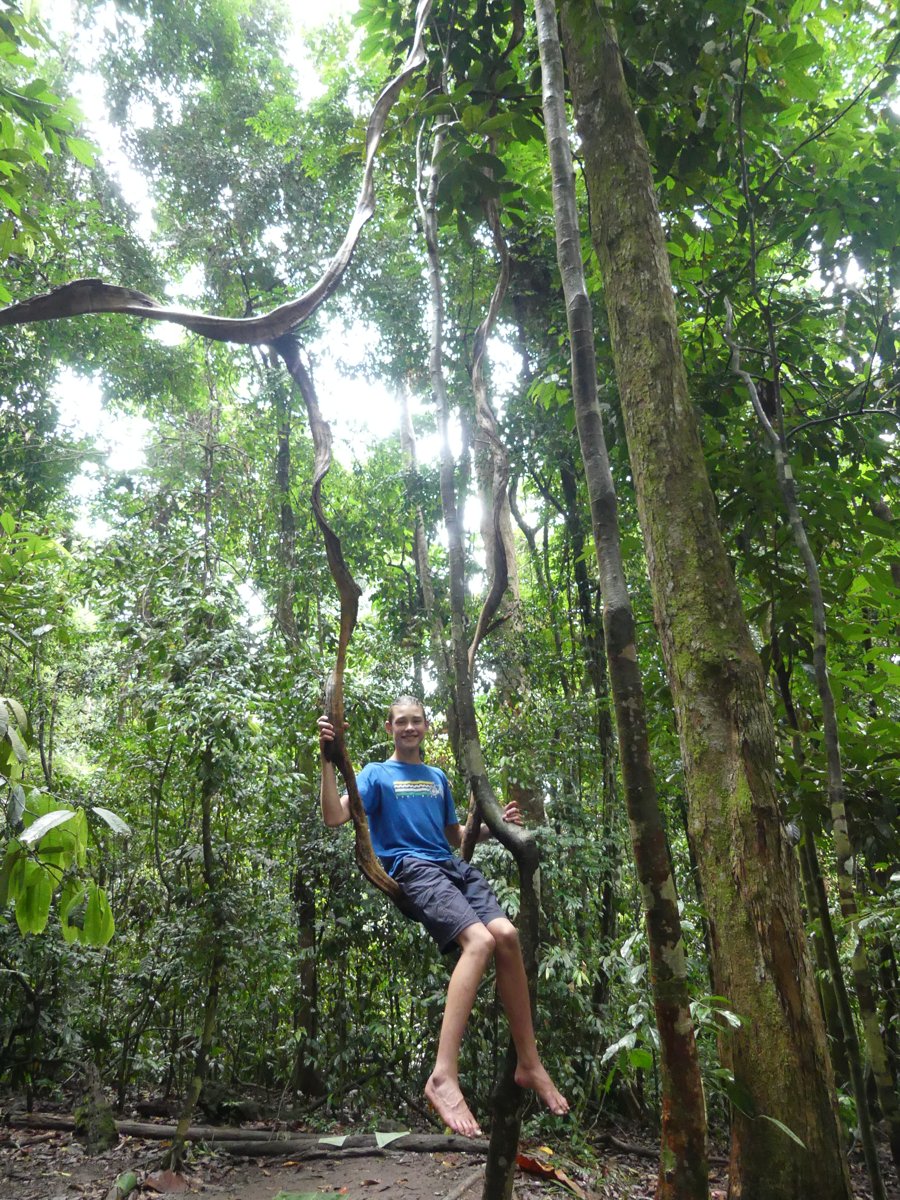
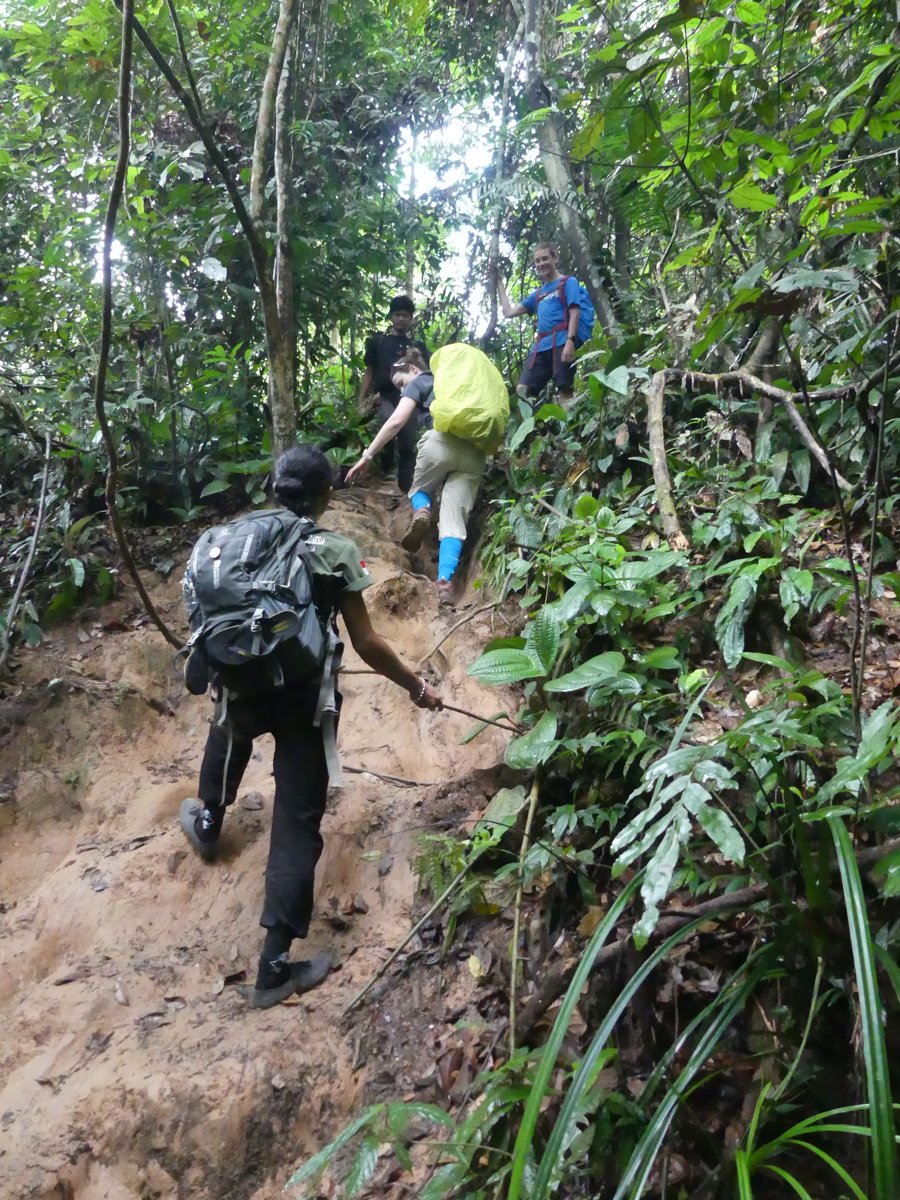
Between sightings there was plenty of ordinary jungle effort, too — scrambling up steep muddy slopes and picking our way along the trail with the guides pointing out things we'd never have spotted ourselves, before one last look up at a male orangutan high in the canopy.
River swim and the treehouse camp
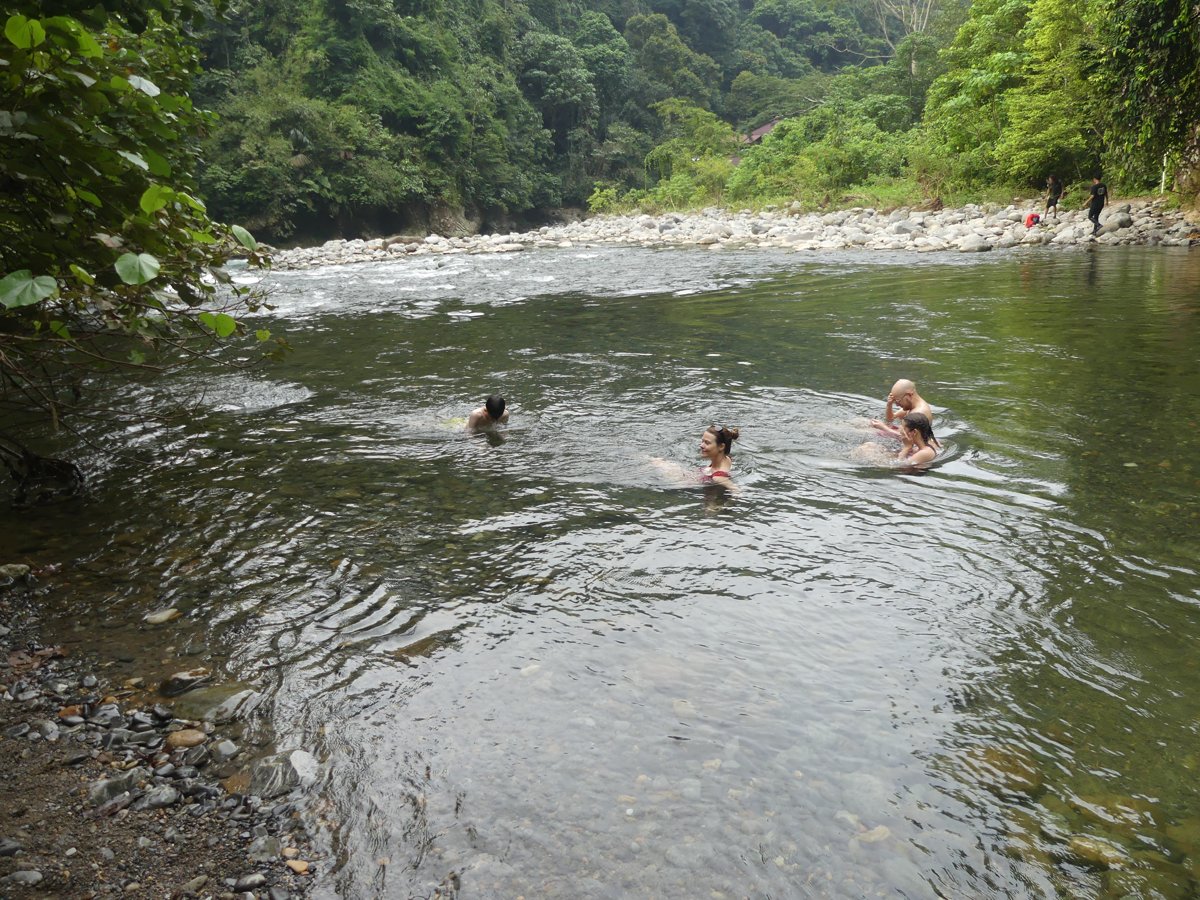
By afternoon we were all thoroughly cooked. The hike came out at the river, where we peeled off our shoes, changed into swimwear and got in. After a day in that humidity a swim in cool moving water was pure relief — we were soaked through with sweat anyway, so being able to properly rinse off felt like a small miracle.
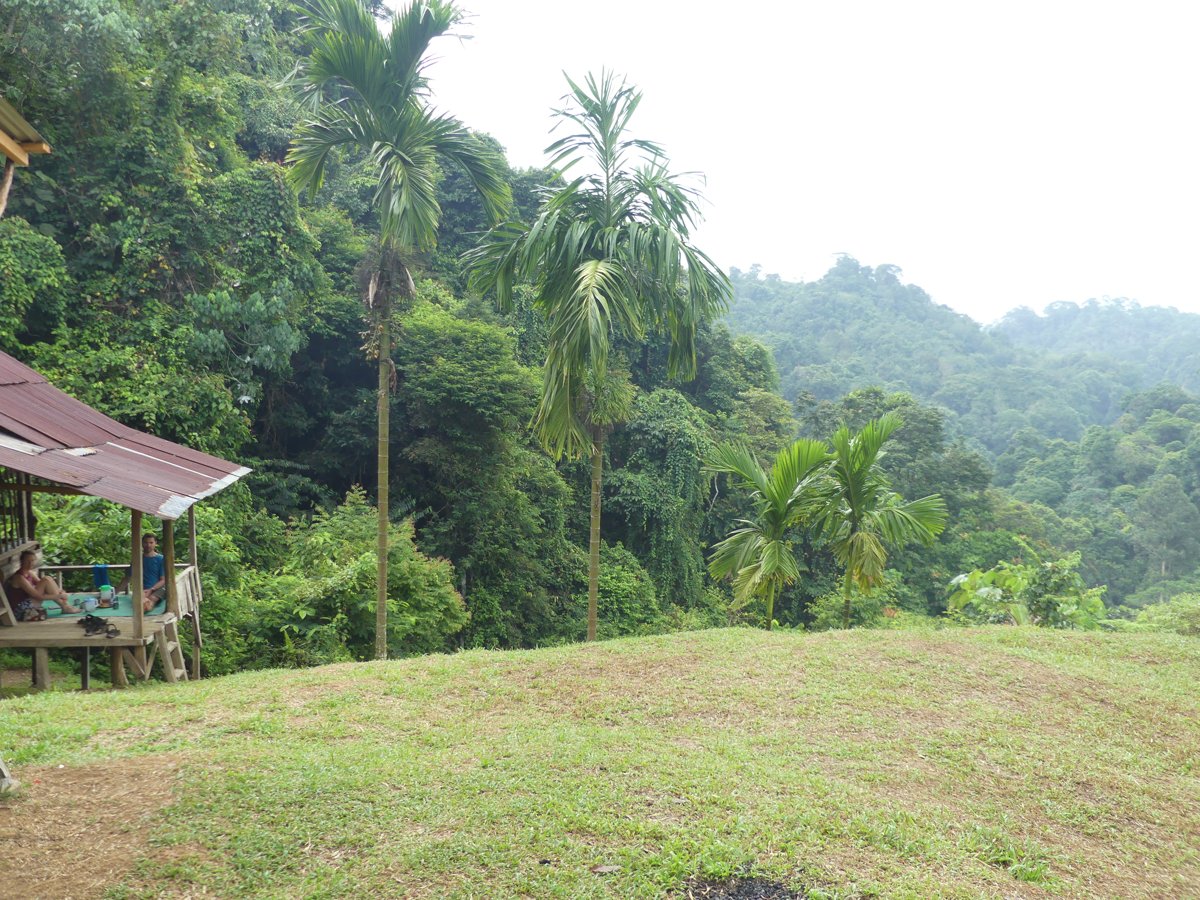
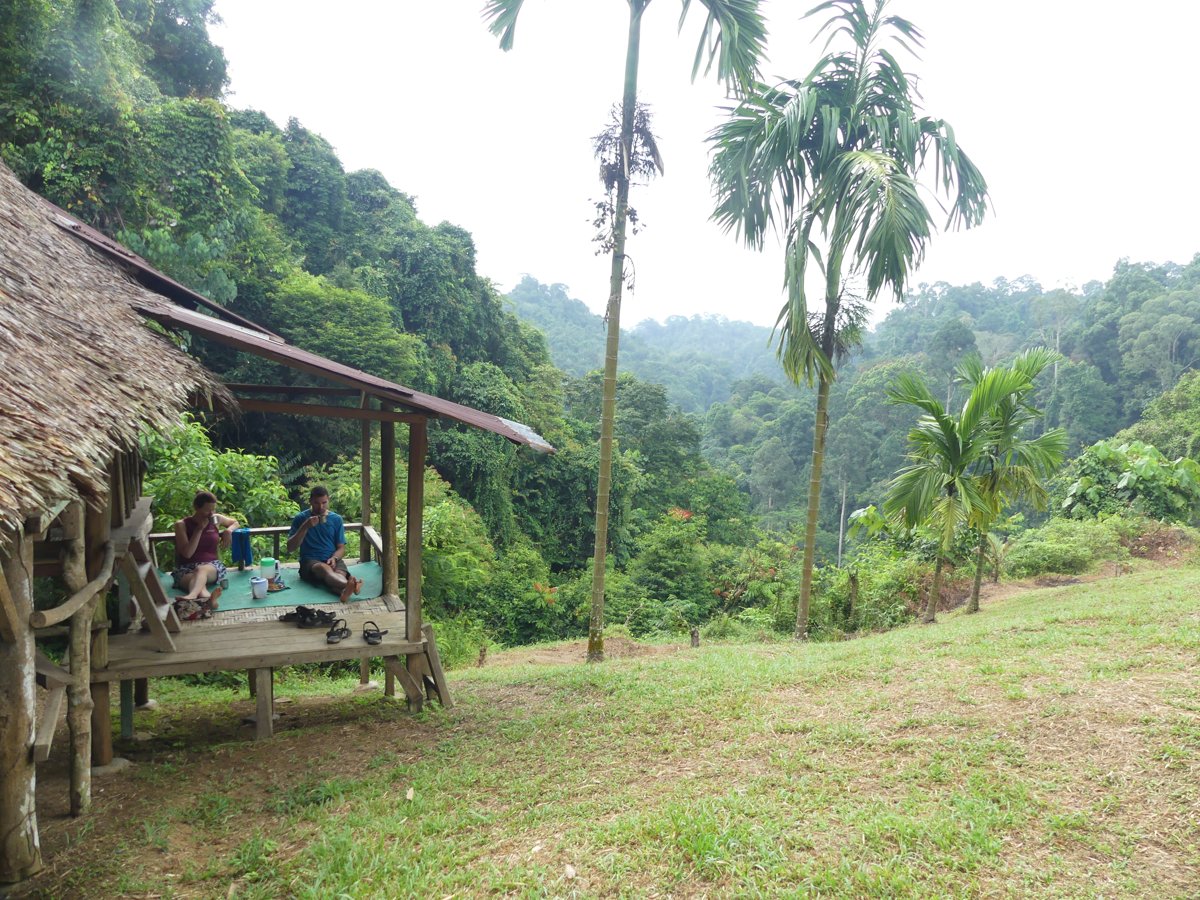
From the river it was only a ten-minute climb up to camp, which sat on top of a hill with a wide view over the rainforest. Our lodging was a simple wooden hut on stilts, generously called a “treehouse” — really a raised hut rather than anything up an actual tree, but with several levels and an open floor where you could sit with hot tea, read, and just watch and listen to the jungle. For Noah, one of the highlights of the whole stay was simply sitting up there with his Kindle looking out over the trees.
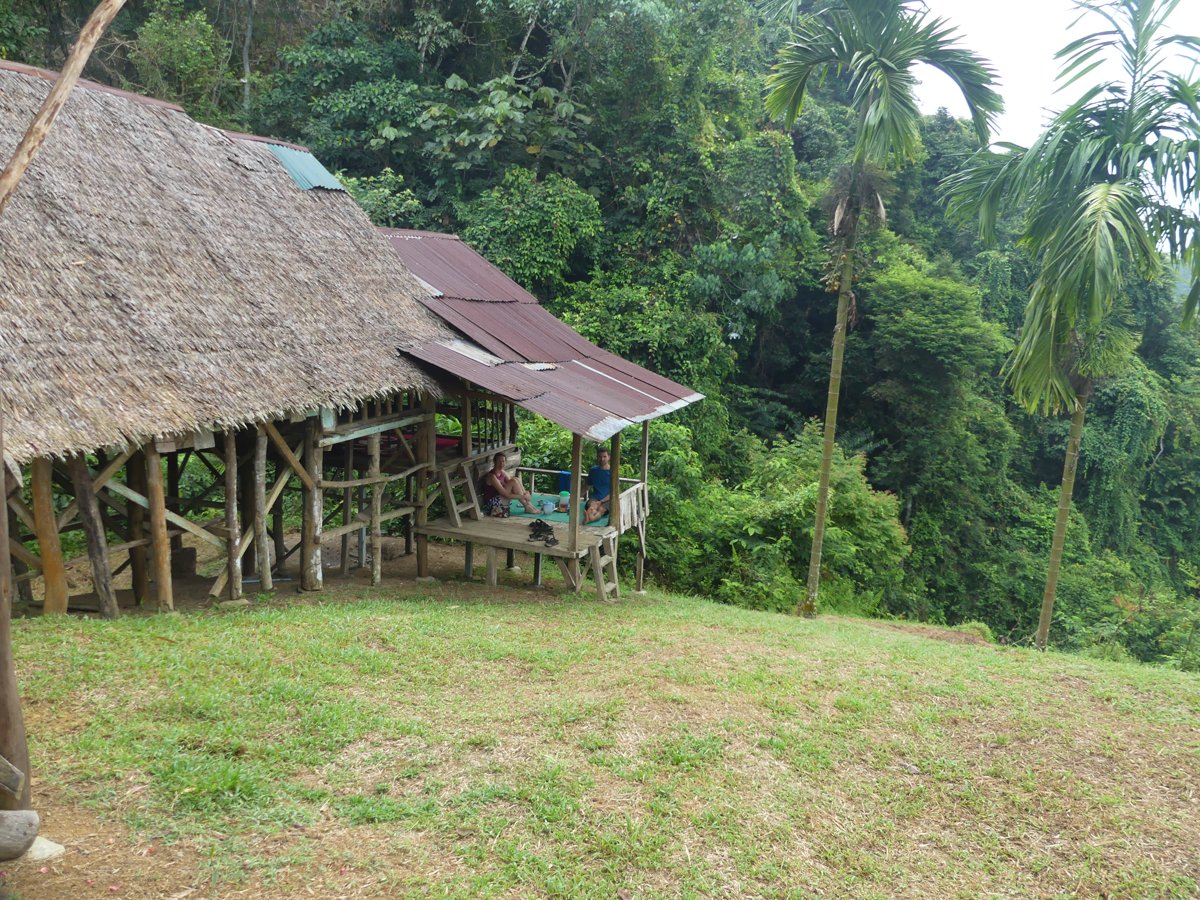
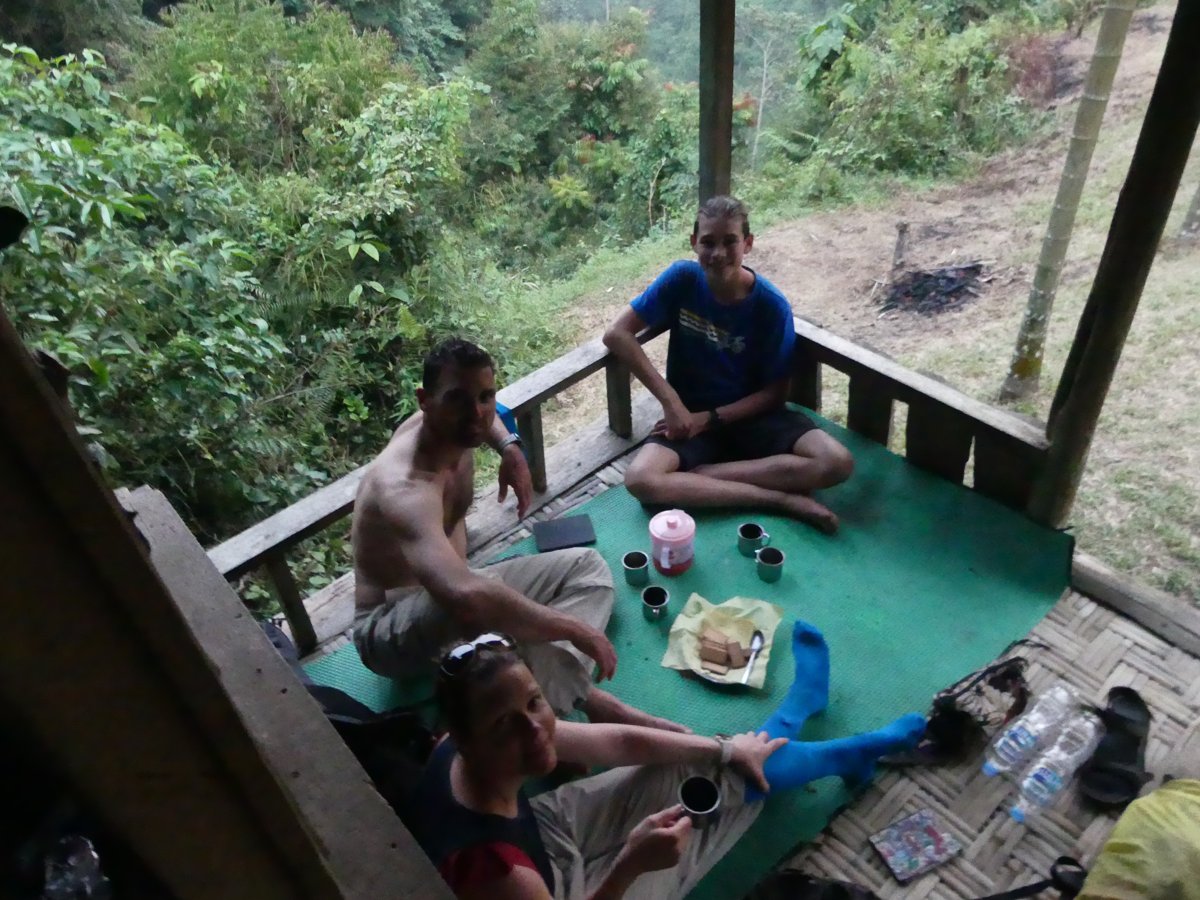
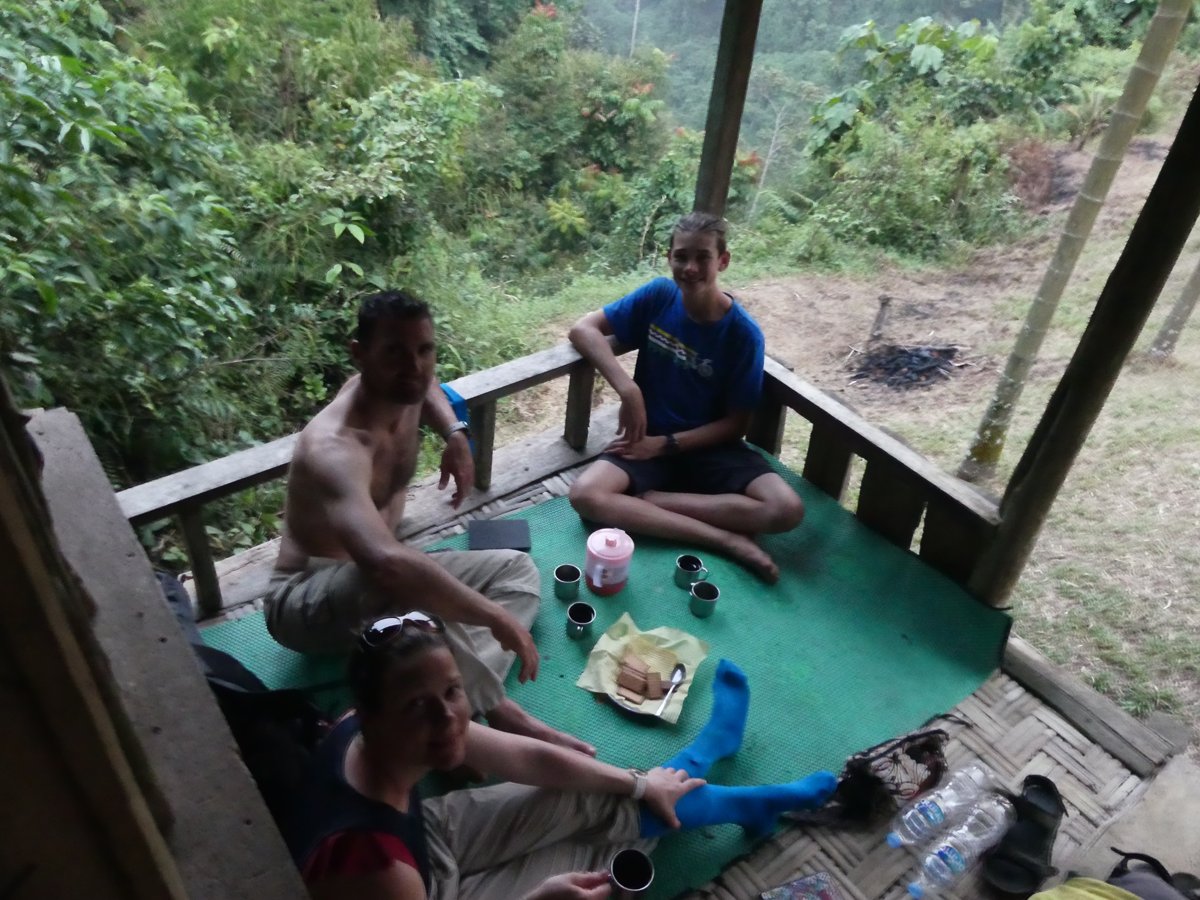
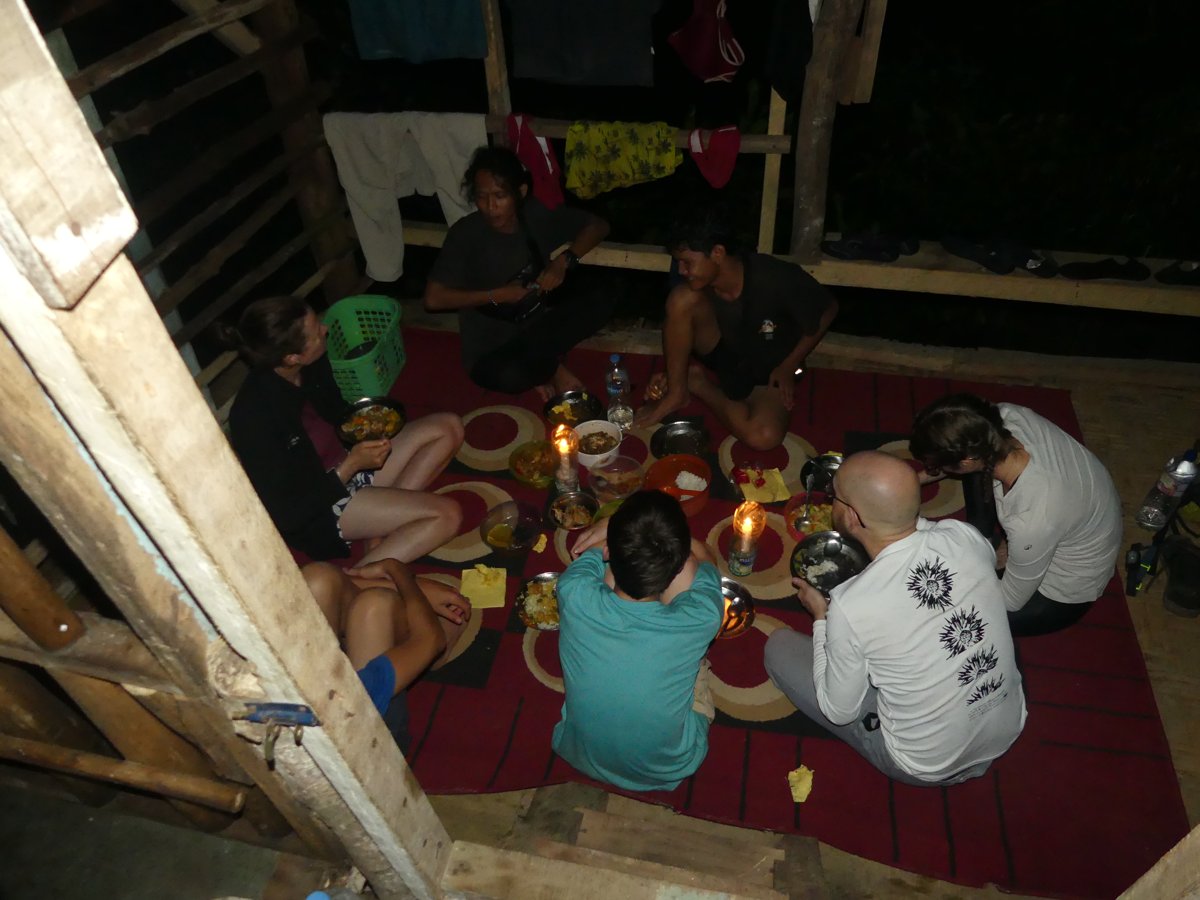
Because we had the biggest hut, the German couple and our two young guides came over to eat with us on the floor. One of the guides' mothers had cooked, and out came a whole spread of Indonesian dishes — far better than we'd expected. Eating together like that, cross-legged on the floor with the guides and the Germans, made the evening feel genuinely personal, and gave us a proper chance to talk with them. Then we slept on mattresses under mosquito nets. After the previous night's room, Line rated the simple jungle hut a clear upgrade.
The great macaque robbery
Noah woke around seven the next morning and did some strength training, as one does in a jungle hut. We drank tea and coffee and played a few hands of cards. And then came the most chaotic episode of the whole stay.
It began innocently: one small, cute monkey on the roof. Then a second. Then, all at once, a whole troop of macaques was raiding the hut — teeth bared, aggressive, rummaging through everything. They made off with condensed milk and cookies, and one started going through Line's bag, where the money was. She was convinced it was about to abscond with her wallet; happily it only extracted some toilet paper, which it dropped in disgust once it realised it wasn't food.
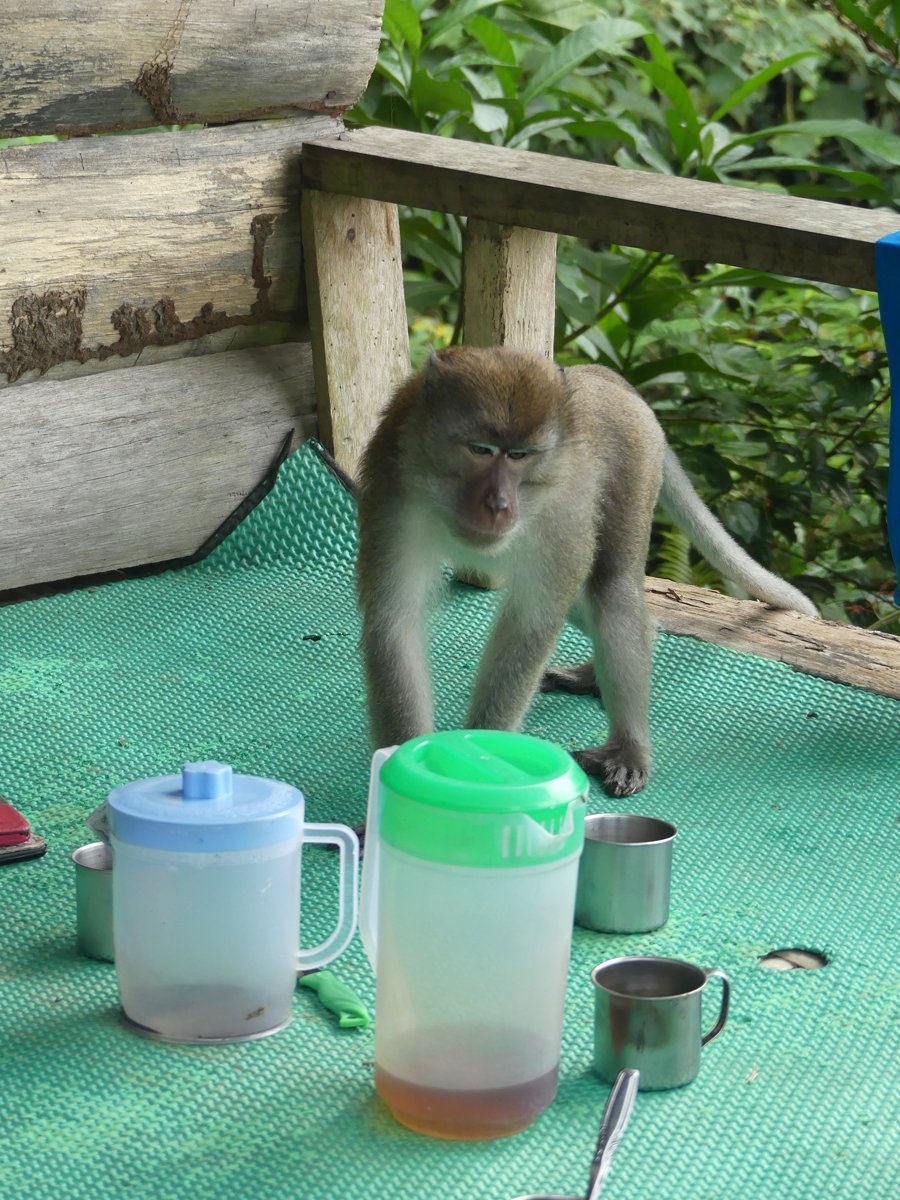
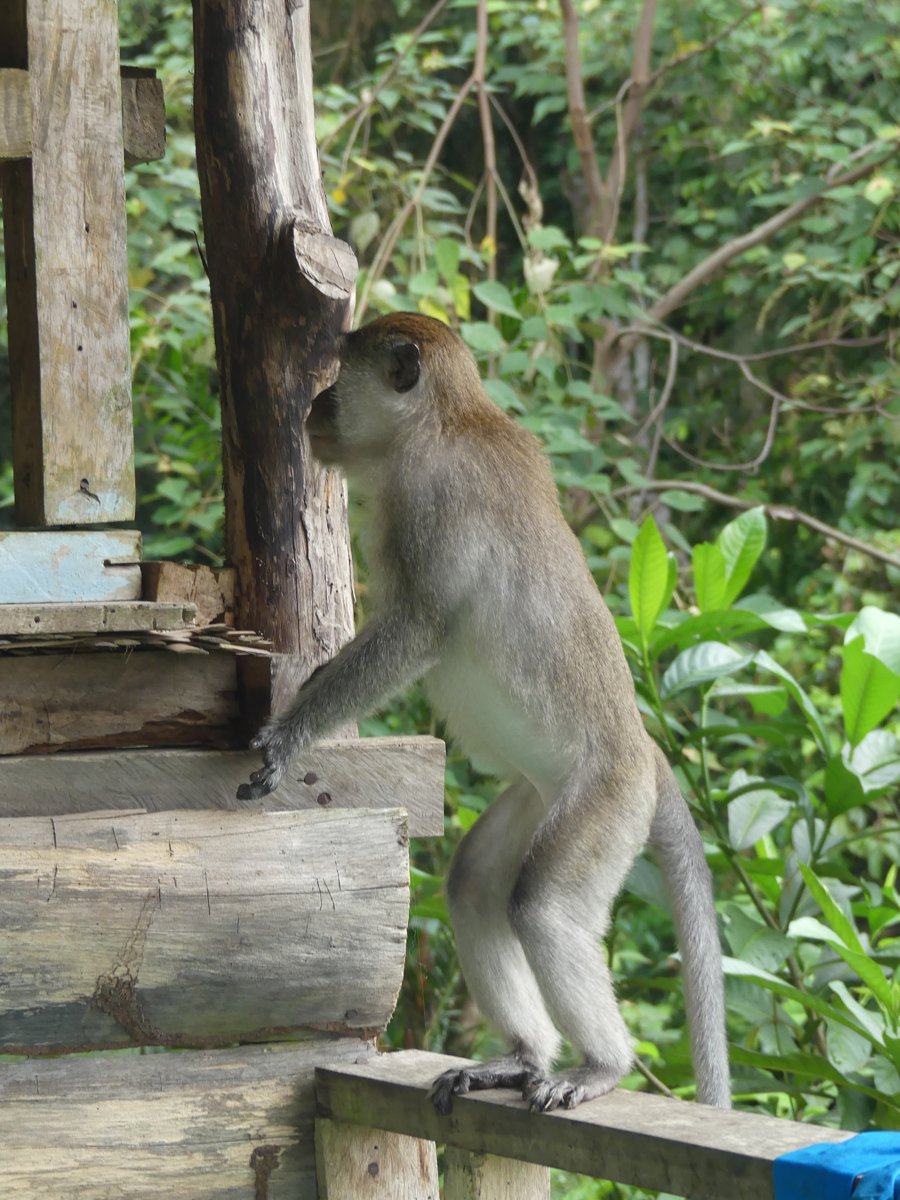
Line took refuge under the mosquito net while it all escalated. Then Malik, the main guide, arrived with a large branch and set about scaring the monkeys off — shouting, stamping, banging the stick against the hut. Don't be afraid, he told us; just show them clearly who's in charge. After that, Noah and Jesper appointed themselves defenders of the treehouse, clapping and cracking the branch against the boards every time the troop tried to come back. It took real effort to convince them to leave. In the end just one stubborn male kept his interest, and each time he began climbing down toward the hut, a good hard whack of the branch sent him scrambling back up.
Once the raid was repelled we had breakfast — some kind of egg sandwich, perfectly fine — and gambled on eating the vegetables too. Nobody got sick.
Day two on the trail — a mother, a baby, and a giant male
For the second day of hiking there was a choice: a longer route away from the busier tourist areas, or staying closer in where there were more people but also better odds of animals. Noah and Jesper fancied the longer, wilder option, but the majority voted to stay close and maximise wildlife. The German couple, technically on their two-day trek, decided to hike again before tubing back to the village later.
The weather was far kinder than the first morning — cloudy, not too hot, the odd bit of sun. Having already seen so much, nobody felt any pressure to march for hours. We crossed the river and hadn't gone far before word came that there were orangutans nearby. We adjusted course and found a little group: a mother with a baby clinging to her, and an older youngster of maybe six. It was heart-meltingly cute, and one of the best orangutan encounters of the trip.
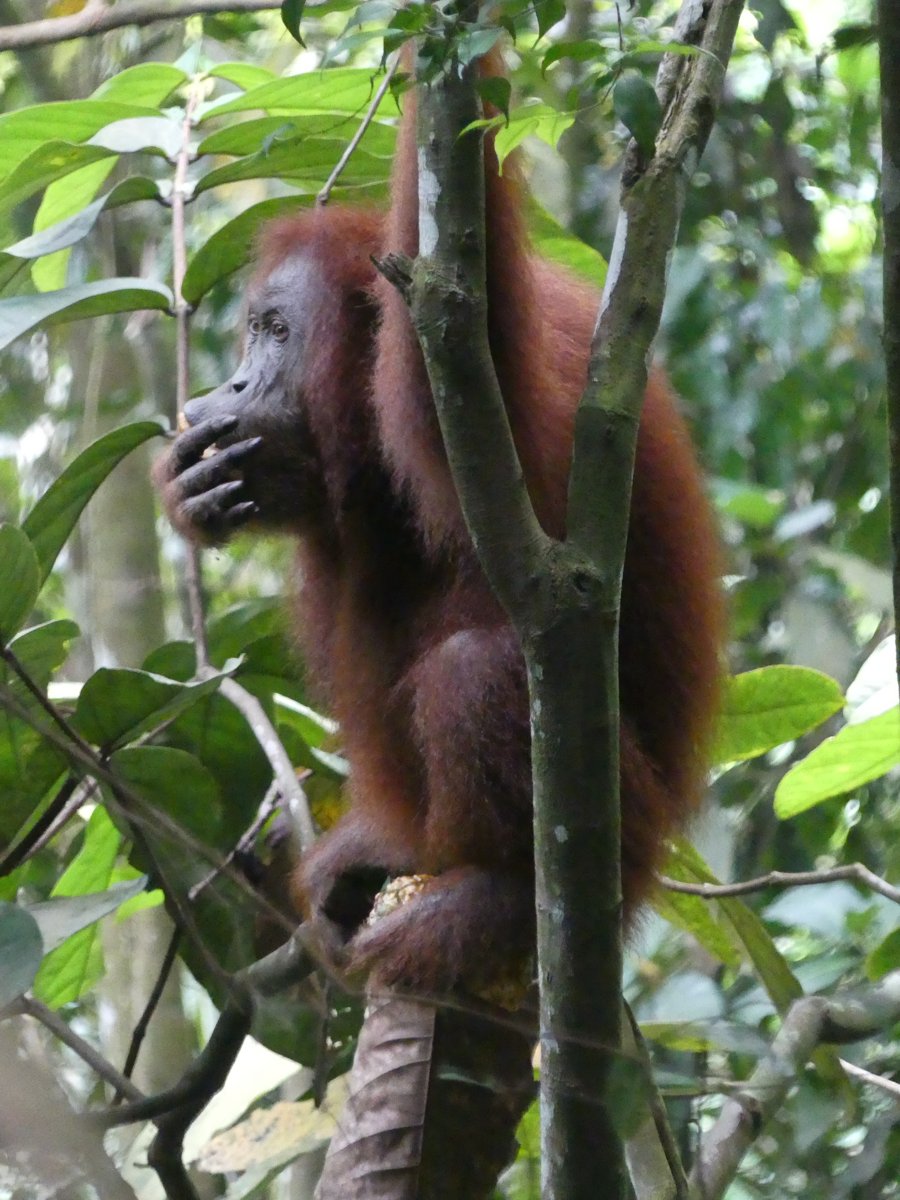
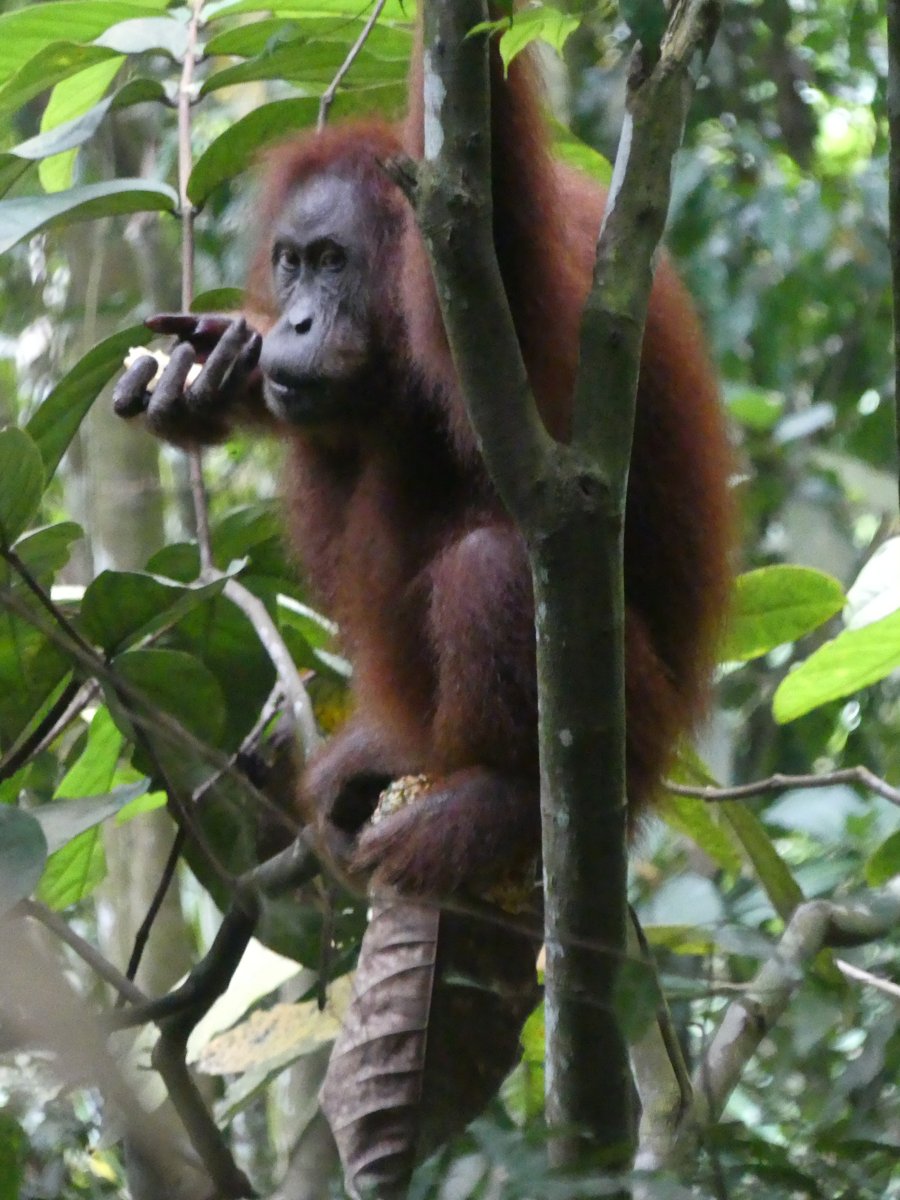
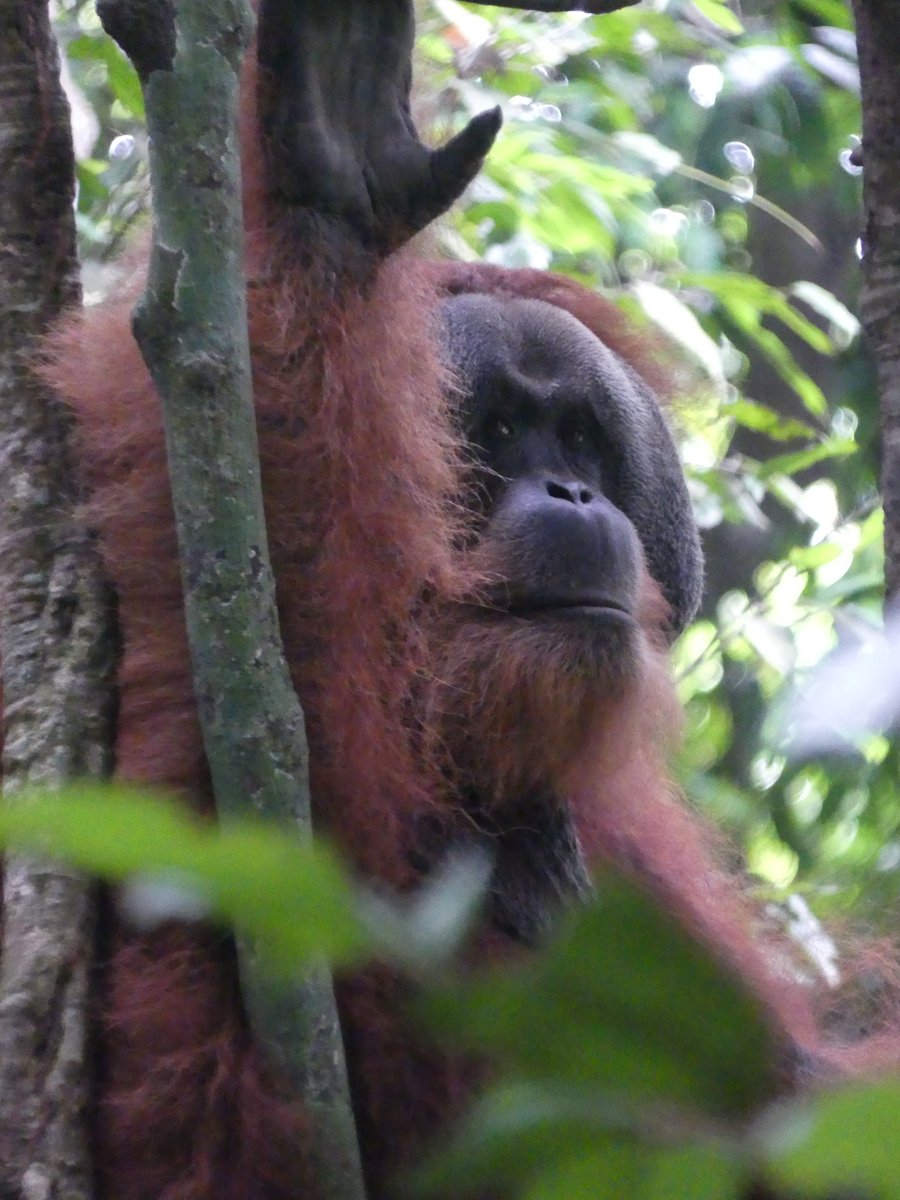
Later we saw more orangutans, including a very large male. This time, instead of a sleeping shape in a nest, we got to watch him actually move — climbing through the trees, and even building a nest to rest in, which the guides said you're lucky to witness. We saw the same monkey species as the day before, and another rhinoceros hornbill, which Noah managed to photograph rather well.
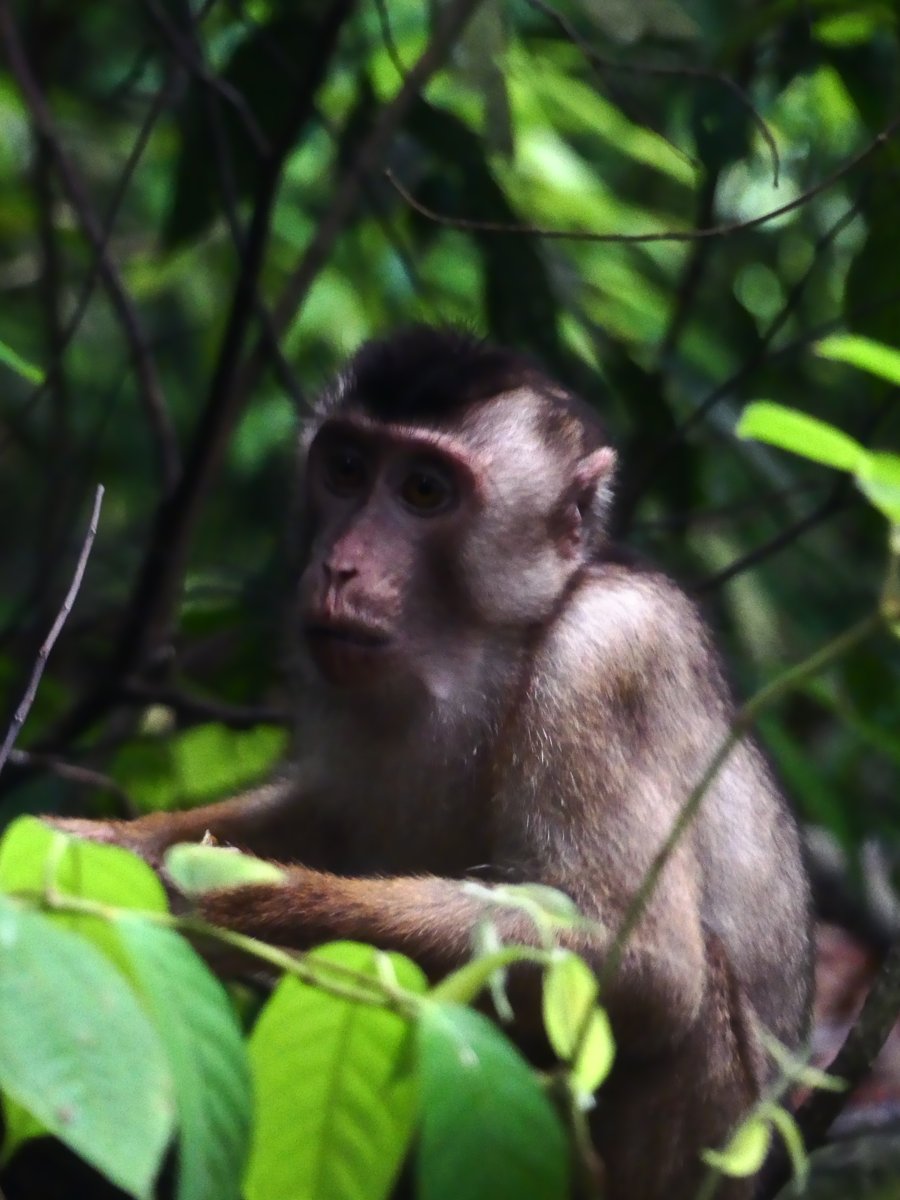
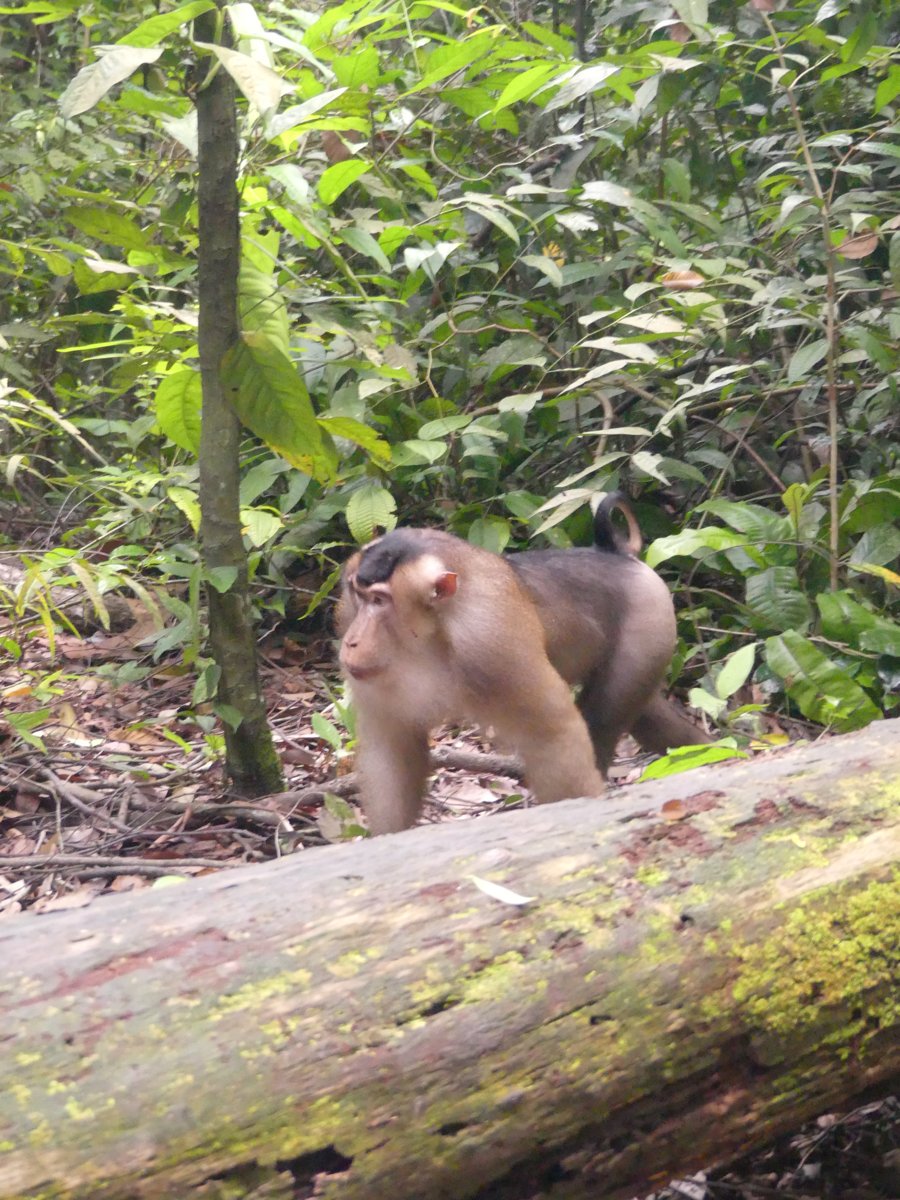
Lunch on day two was a slight downgrade — mostly noodles and prawn crackers, no egg, so less filling — but the fruit was excellent again, and short-tailed macaques came near the lunch spot, close enough for some sweet photos.
Beating the storm back to camp
It was a relatively short hiking day. We came back down to the river, said goodbye to the German couple — they were tubing back to Bukit Lawang that afternoon — had another swim, and Noah spent a happy while skipping stones. Then we climbed back up to the treehouse for afternoon tea and cookies and cards on the terrace.
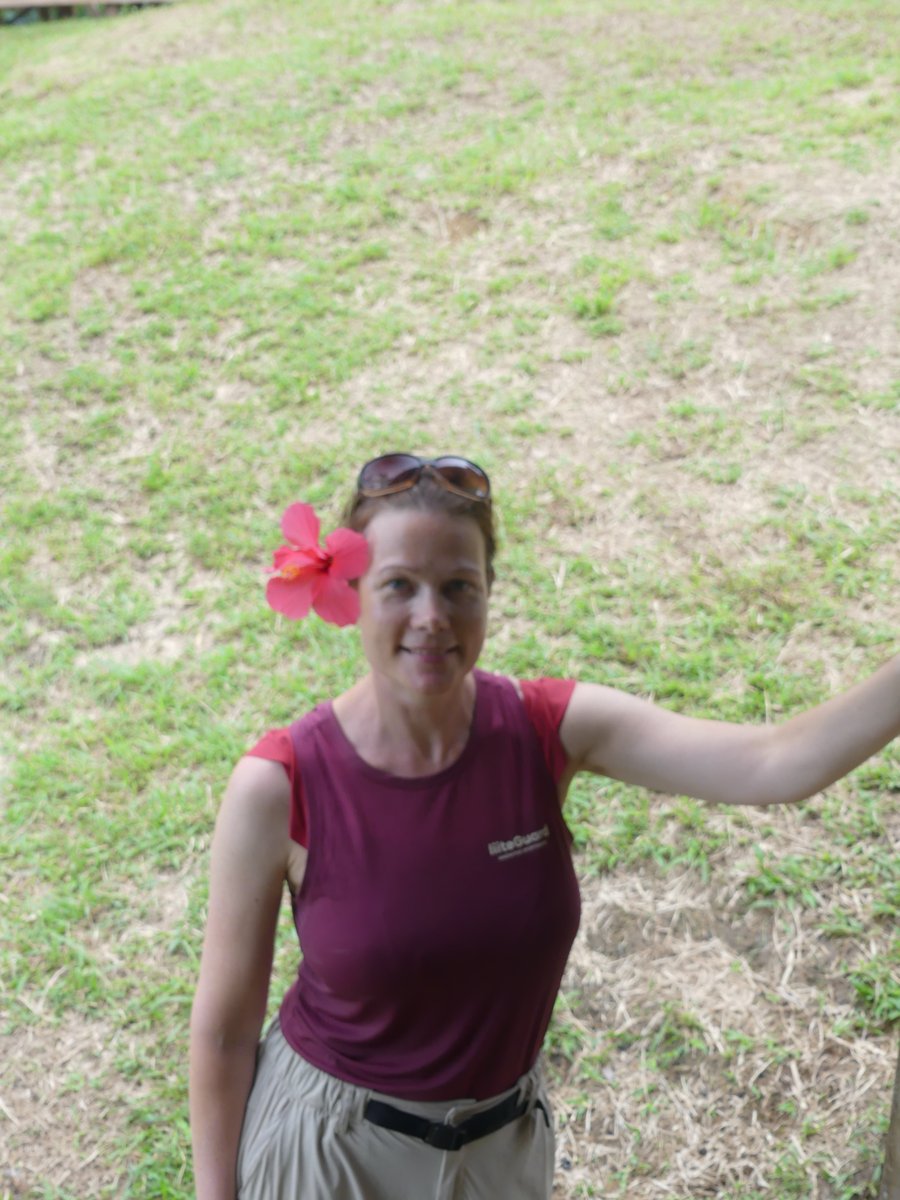
This turned out to be perfect timing. Not long after we got back, heavy rain began — other groups that came in later were absolutely drenched. We had made it up just ahead of the worst.
And the worst was considerable. The rain intensified, then turned into a violent thunderstorm. We started on the lower level of the hut, then retreated higher as it worsened, ending up on the second and finally the third level. The thunder was enormous and came very close. Line did not find this entertaining in the slightest and was genuinely worried about being struck — at one point the gap between lightning and thunder was down to three or four seconds, close enough that everyone felt distinctly relieved when it finally began to drift away.
That evening Malik had to leave despite the weather — there were too few guides for another tour the next day — which left us with Jan, the younger trainee, who sorted our dinner and then ate with us. It became another lovely evening. We talked for ages and learned a lot about local life. The story that stuck with us most was about school and corruption: Jan was still in high school but spent so much time working as a guide trainee that his absences had him at risk of failing. That kind of problem, he explained, could be smoothed over with about 50,000 rupiah and a packet of cigarettes for a teacher — Jesper reckoned that's roughly 20 kroner. A very concrete little window into how differently things can work, and it led to a long, good conversation about money, education and how societies bend around them. Despite the storm, we slept well.
The wet way out — rafting the swollen river
On the third morning it was still bucketing down. Everything was already damp from the humidity and the previous day's rain, and it was obvious we were going to get soaked no matter what. The plan for the day wasn't hiking anyway — it was to leave the jungle by tubing down the river back toward Bukit Lawang. We packed everything into plastic bags, got into swimwear and water shoes, and waited until about half ten to start.
The rafts were gloriously low-tech: several inflated rubber inner tubes lashed together with rope. We'd braced ourselves for something slow and slightly boring. It was the opposite. All that rain meant a fast, full river, and the current gave the whole trip real momentum — genuinely exciting, bouncing down through the rainforest.
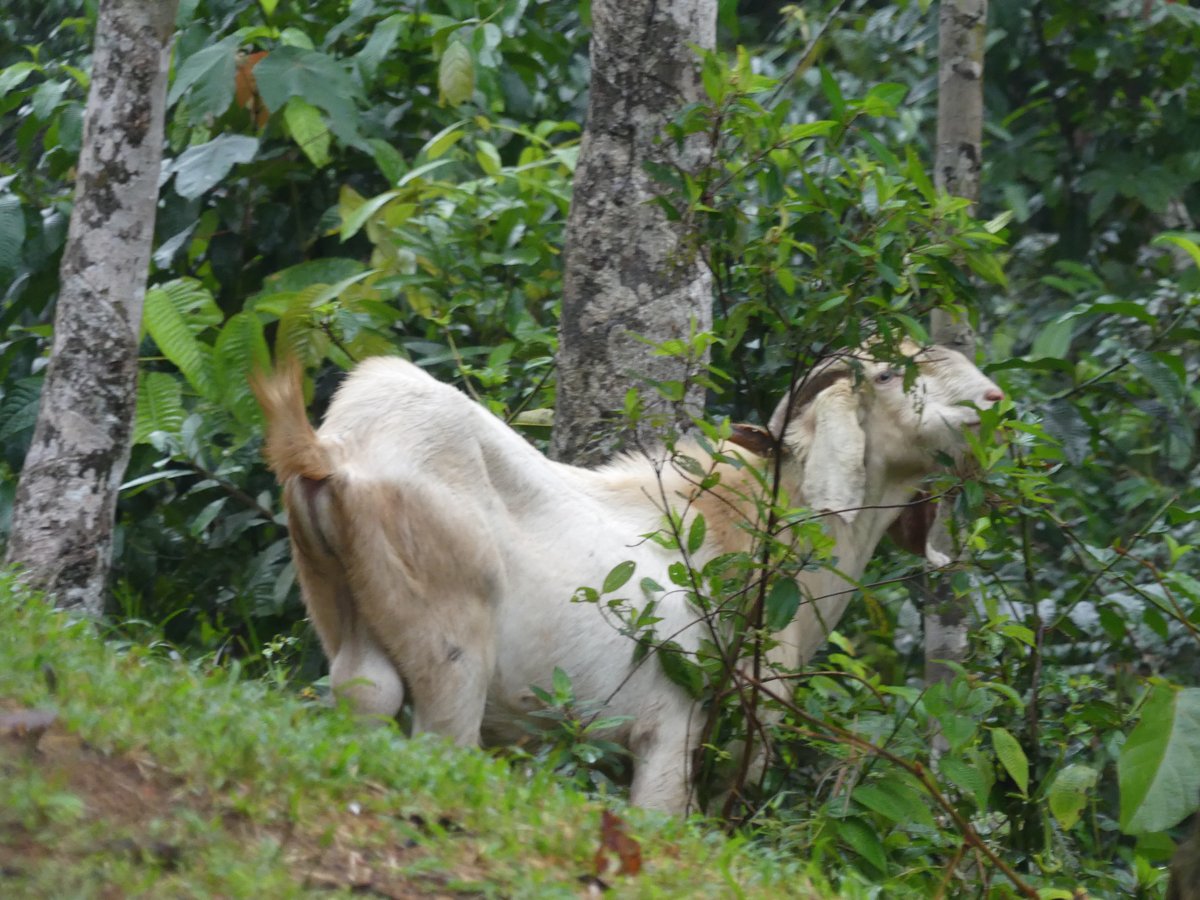
There was also, just before we left, a bizarre cameo from an enormous white goat — described afterwards as nearly the size of a small horse. Even the guides eyed it warily. If anything could draw a tiger, they said, it would be the smell of a goat that size. There are tigers in the area, though none of our guides had ever seen one and sightings are vanishingly rare.
The rafting turned out to be a surprisingly brilliant way to end the trek. We floated down through the forest and back into Bukit Lawang, returned to Adi's for tea, and then climbed into a car for the next long drive — another four to four and a half hours — toward our next stop.
Worth every bit of it
Taken as a whole, the jungle trek was one of the strongest experiences of the trip — all the more so given how badly it began. The arrival was genuinely miserable: a late driver, fuel queues, crawling traffic, a slow dinner, brutal roads, three carsick passengers, a 1 a.m. finish and a grim first room. But the moment the actual jungle began, everything turned around.
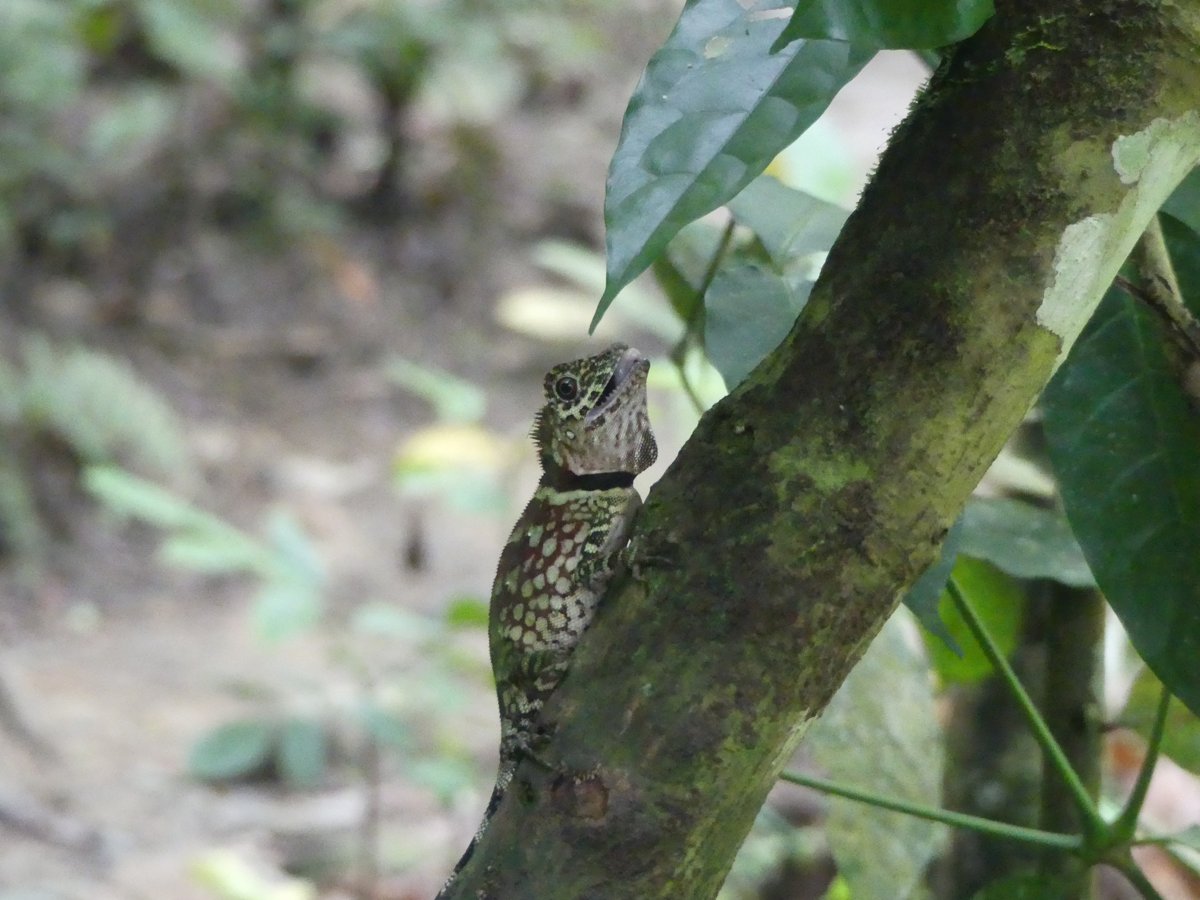
We had skilled, warm, engaged guides with good English. We saw far more wildlife than we'd dared hope — orangutans by the handful, a mother with her baby, a huge male building his nest, macaques, Thomas leaf monkeys, hornbills, even a forest dragon. We collected leeches, swam in the river, survived a monkey raid, ate on the floor with our guides, talked late into the night about Indonesian life and its quirks, sheltered through a proper jungle thunderstorm, and rode a rain-swollen river out at the end. Humid, sweaty, soaking, occasionally uncomfortable — and completely unforgettable. Bukit Lawang and the Gunung Leuser rainforest delivered exactly the kind of adventure we'd come to Sumatra for.
Comments