After the caves, the safari and the great climb up the Lion Rock (all in the Sigiriya post), we cut our stay in the Cultural Triangle short by a day and drove south to Kandy — the old royal and cultural capital of Sri Lanka, set around a lake in the hills. We wanted the extra day here, and it turned out to be a good call.
A spice garden — and a temple — on the way
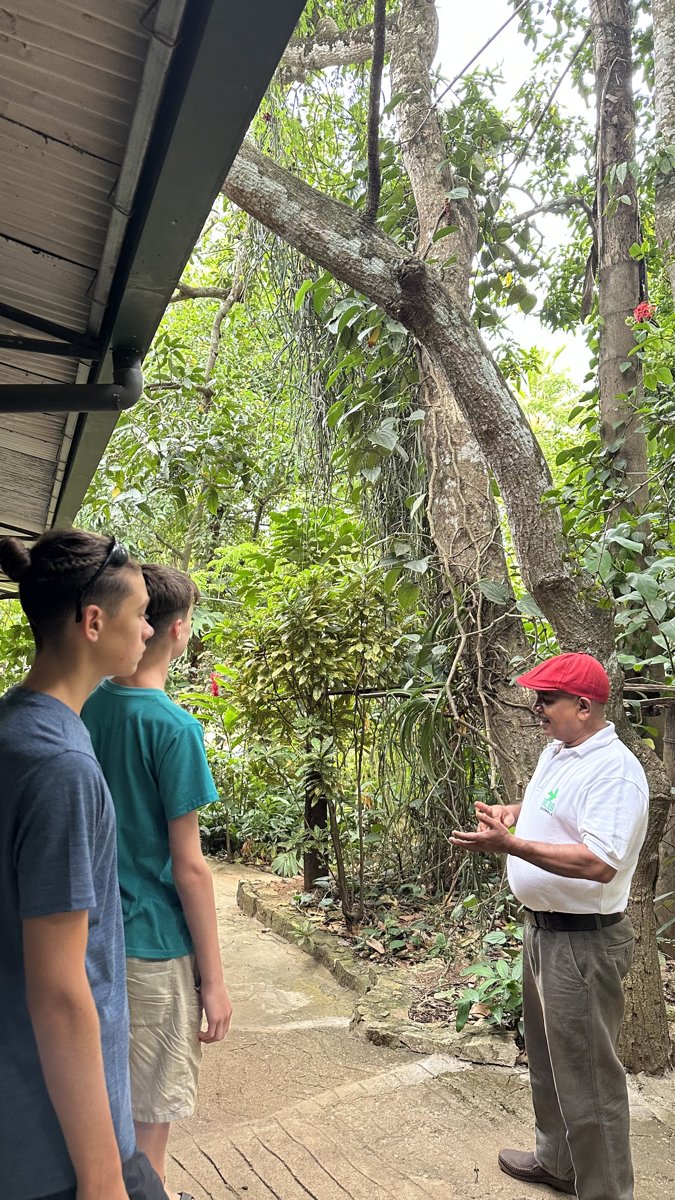
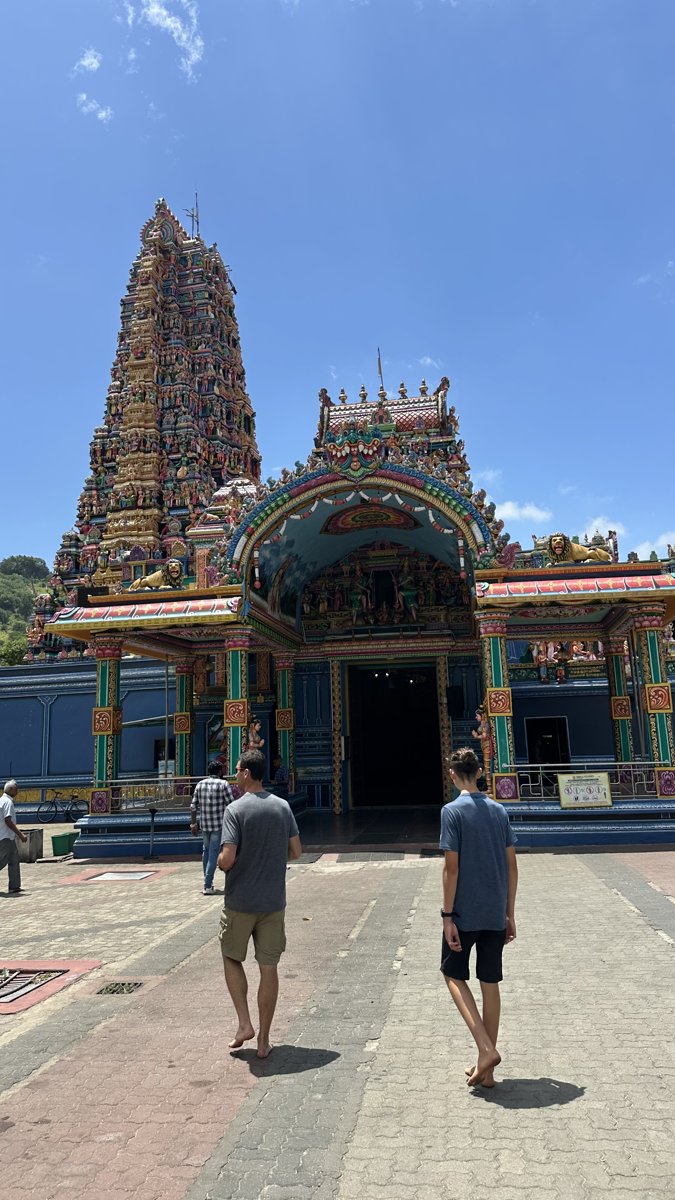
One of the things we'd most wanted to do — given how much we'd fallen for the food, and how much we like cooking it — was visit a spice garden and hear properly about all the spices Sri Lanka uses. So we stopped at one on the road to Kandy. It was, of course, fairly commercial, and everything for sale was far pricier than at a market, but the set-up was big and the tour genuinely informative, so we didn't mind. We came away with a couple of face creams made from local ingredients. Nearby we also passed a wildly colourful Hindu temple, its tower a riot of painted figures, and stopped to have a look.
On the way in we also had our first look at a gemstone place — Sri Lanka has a lot of gemstones — a big, polished showroom of the kind the guides like to steer you towards. We browsed but didn't buy; it felt more tourist-shop than trustworthy, and we wanted to think about it.
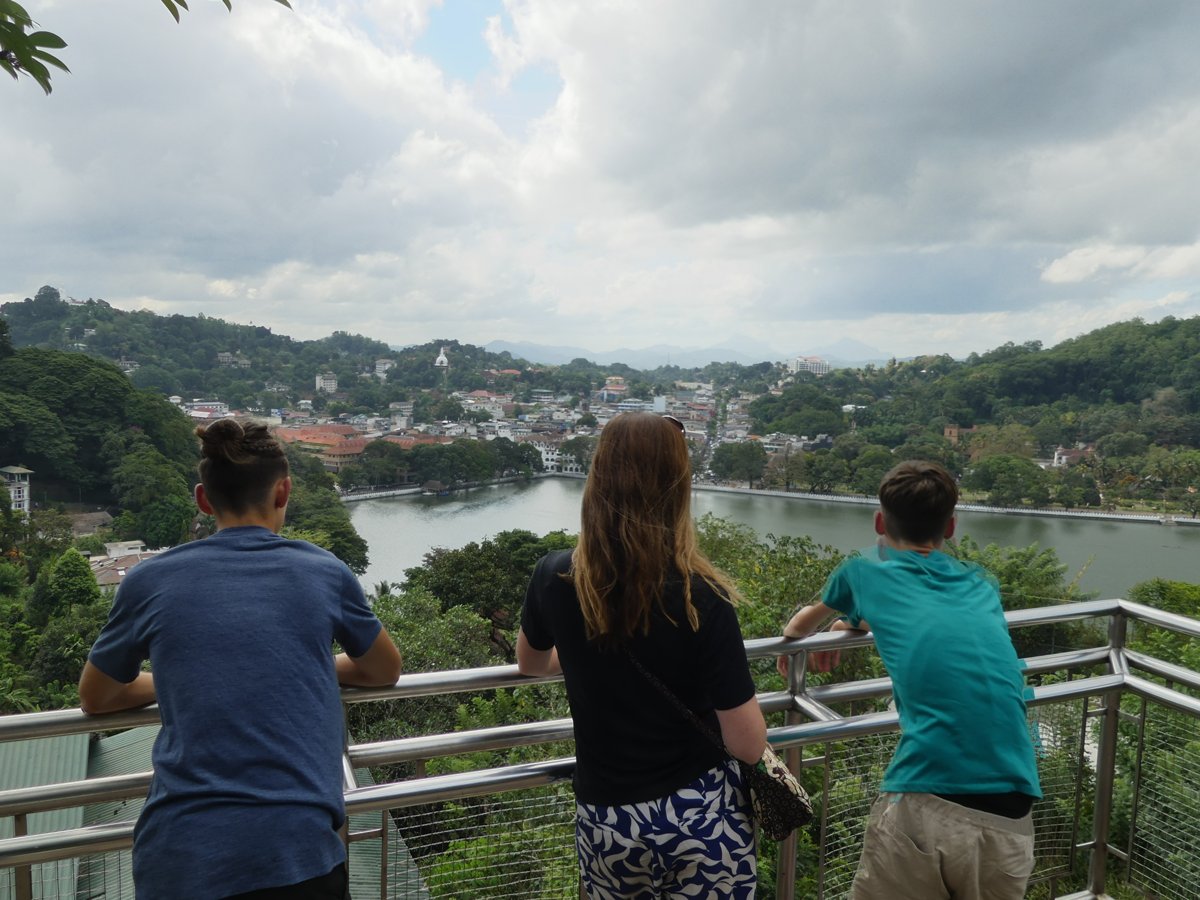
Then it was on into Kandy itself — the old royal and cultural capital, set around a lake in the hills — where we mostly just relaxed for the rest of the day and took in the view over the city.
An evening walk around Kandy Lake
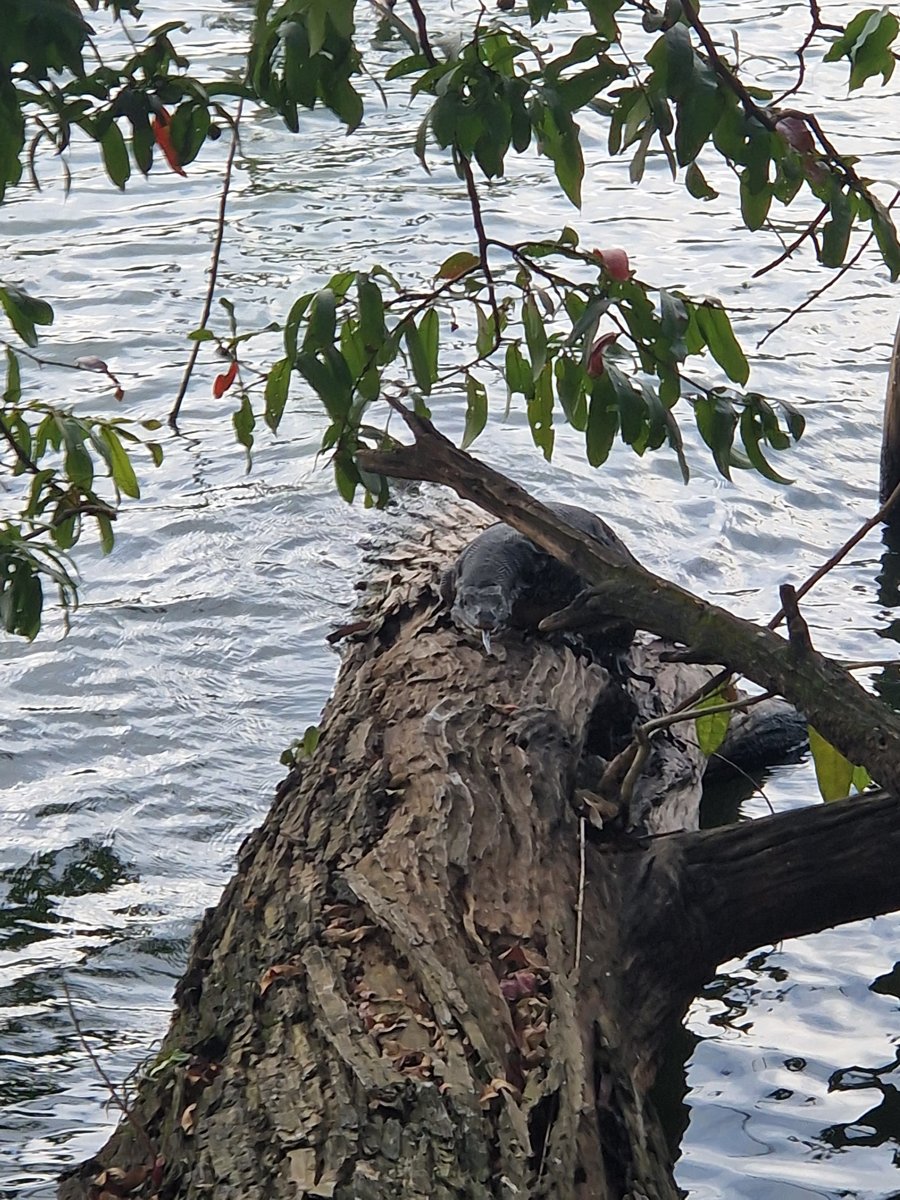
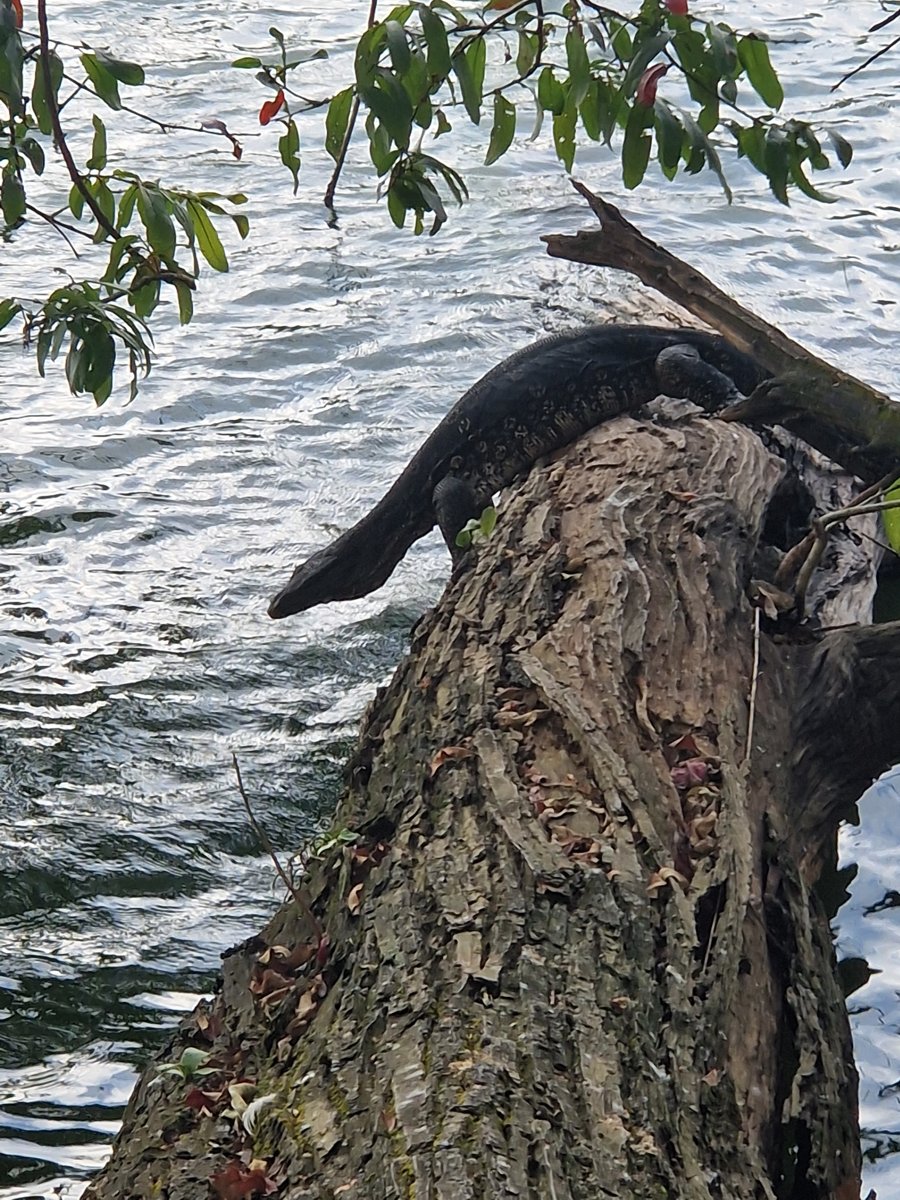
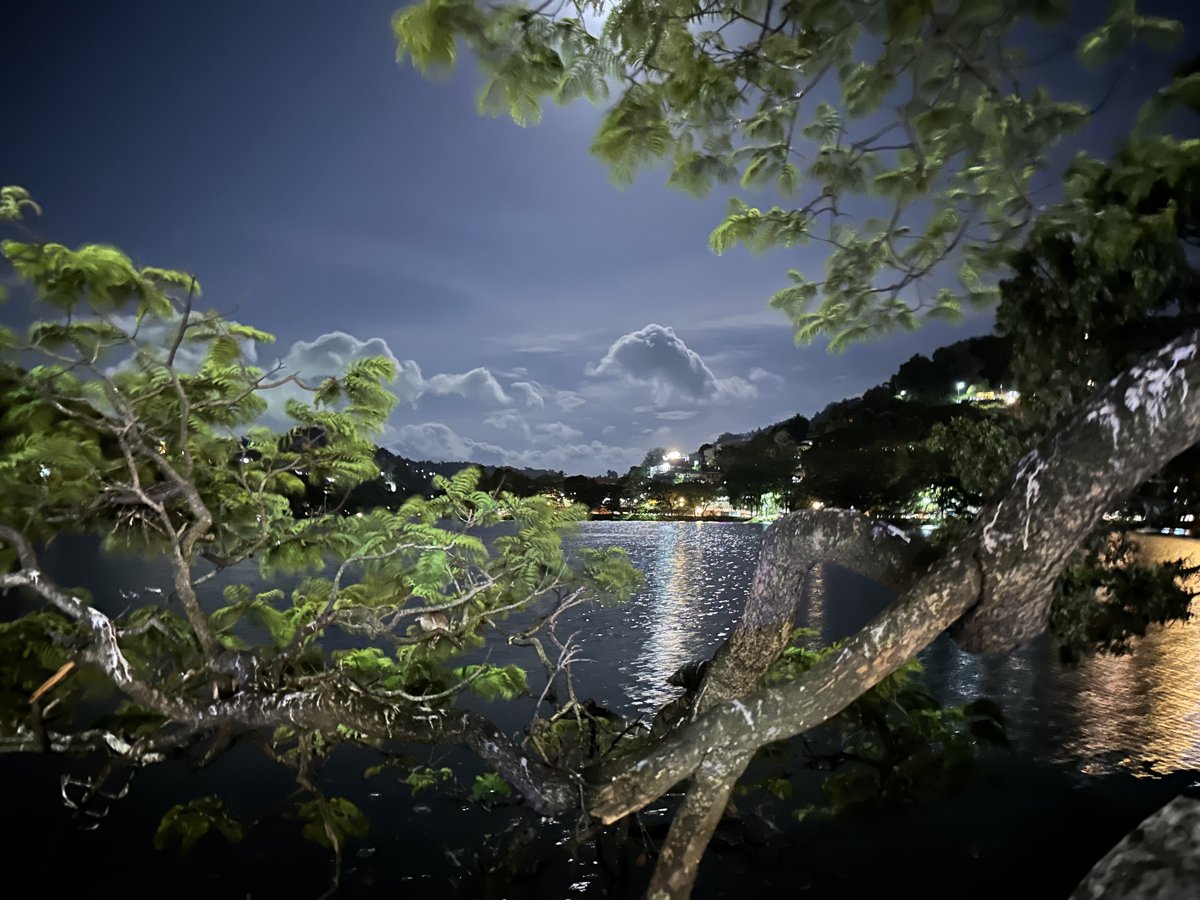
In the evening we walked the loop around Kandy Lake — an artificial lake dug back in the days of the last Kandyan king, before the British took over. It's a lovely walk, if a rather fragrant one: it smells strongly of birds, of which there are a great many roosting in the trees — one of which scored a direct hit on Jesper's trousers. We also spotted a big water monitor lizard along the bank, and stayed out until the city lights came on across the water.
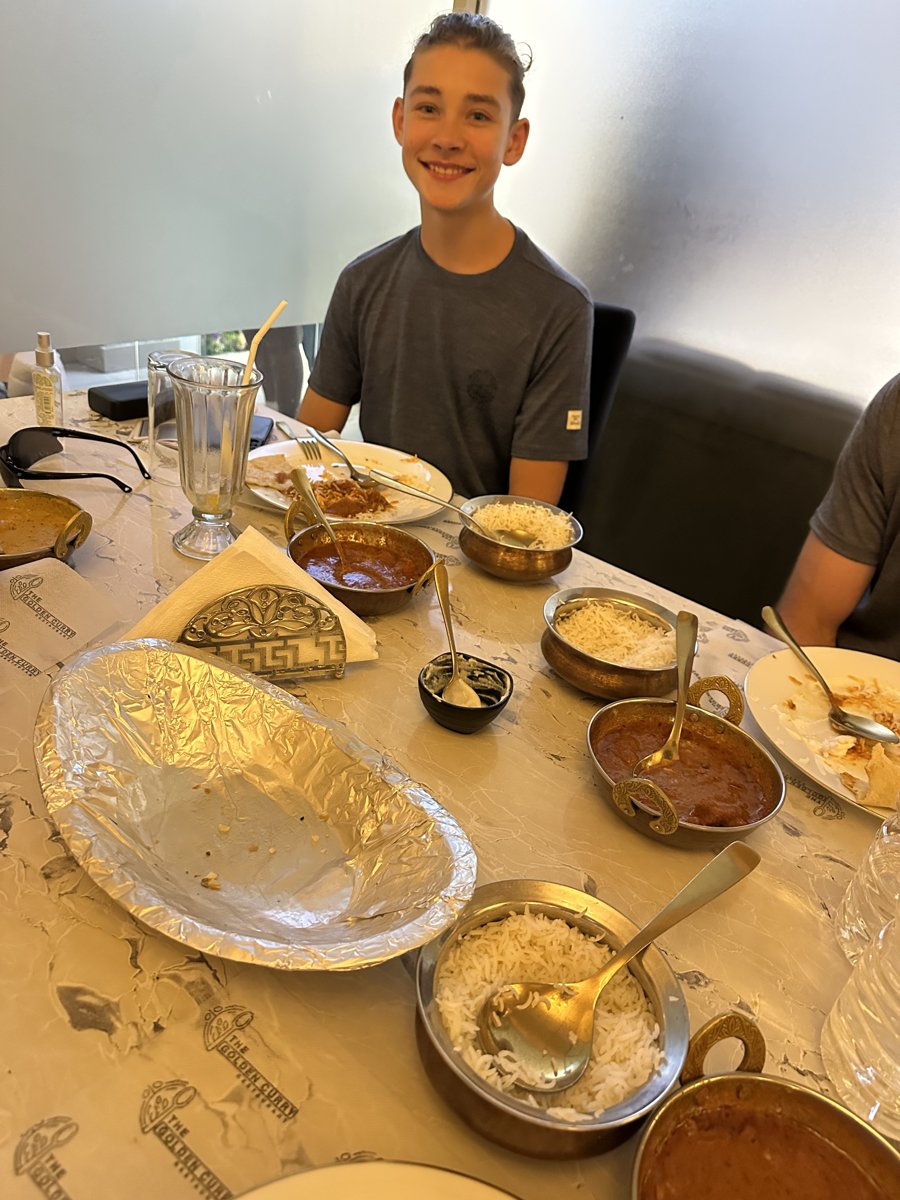
We finished with an Indian meal in town, which Jesper (as ever) found a touch too spicy.
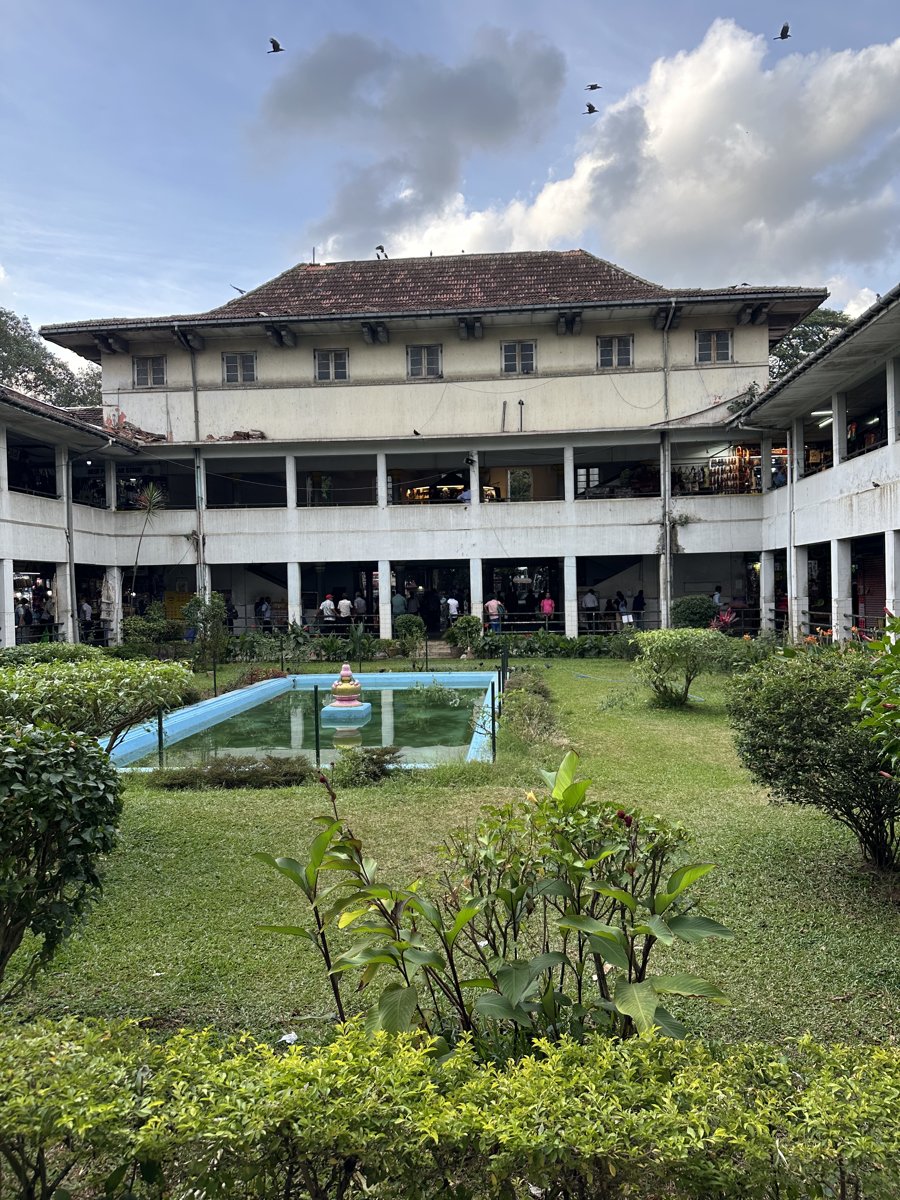
A giant Buddha above the city
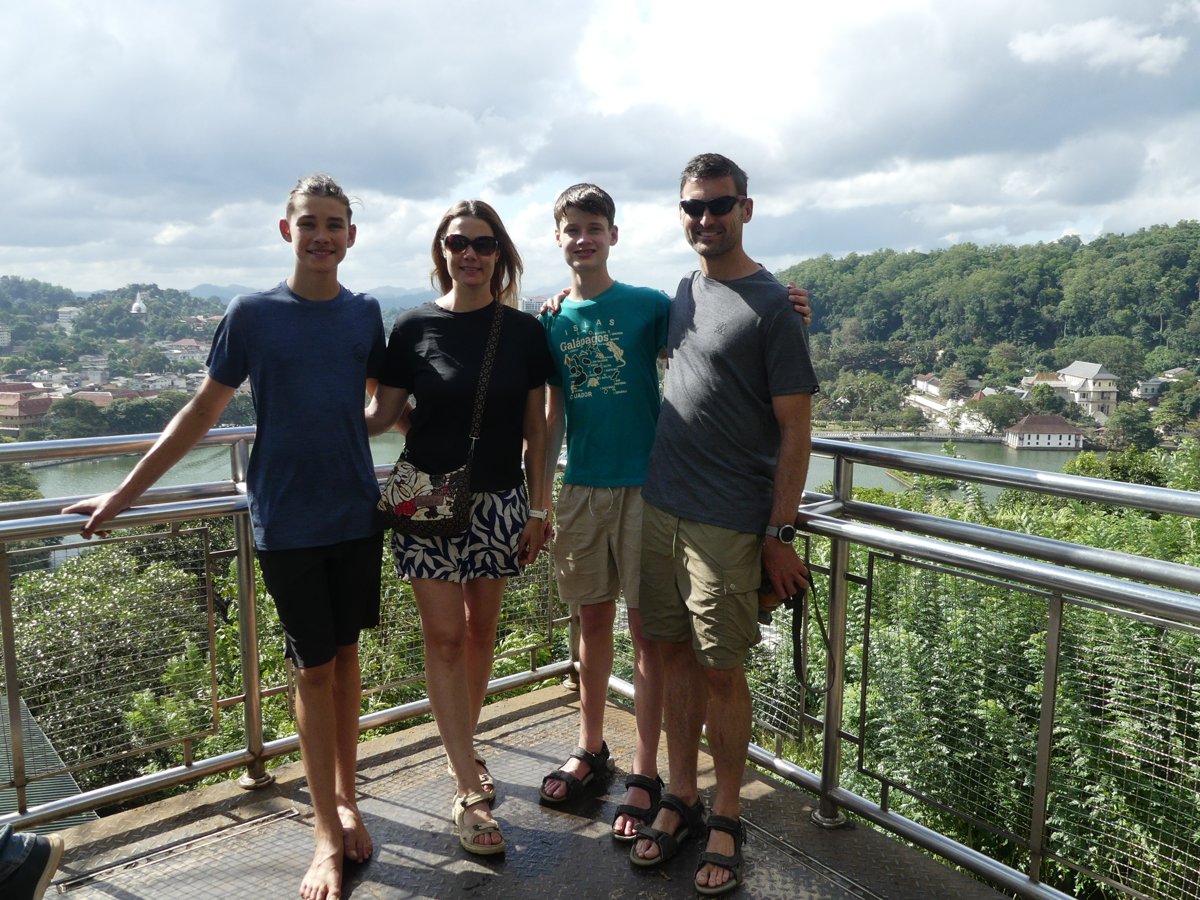
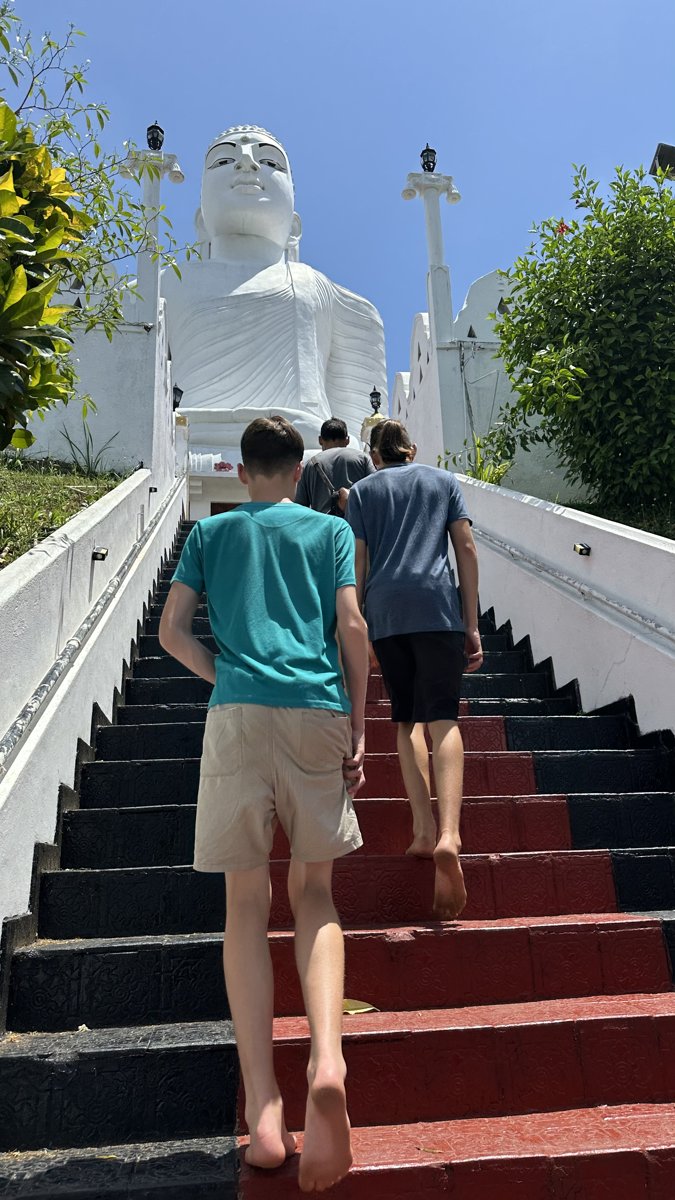
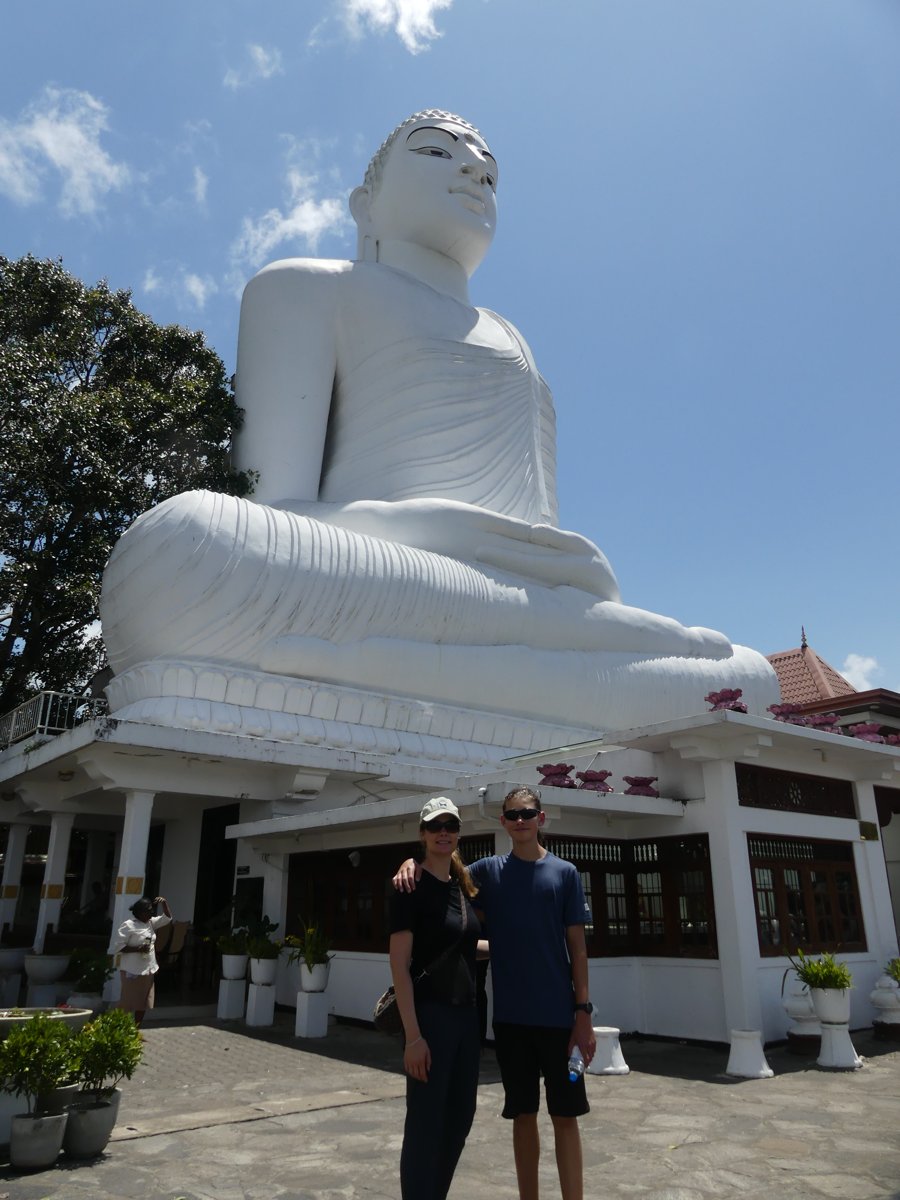
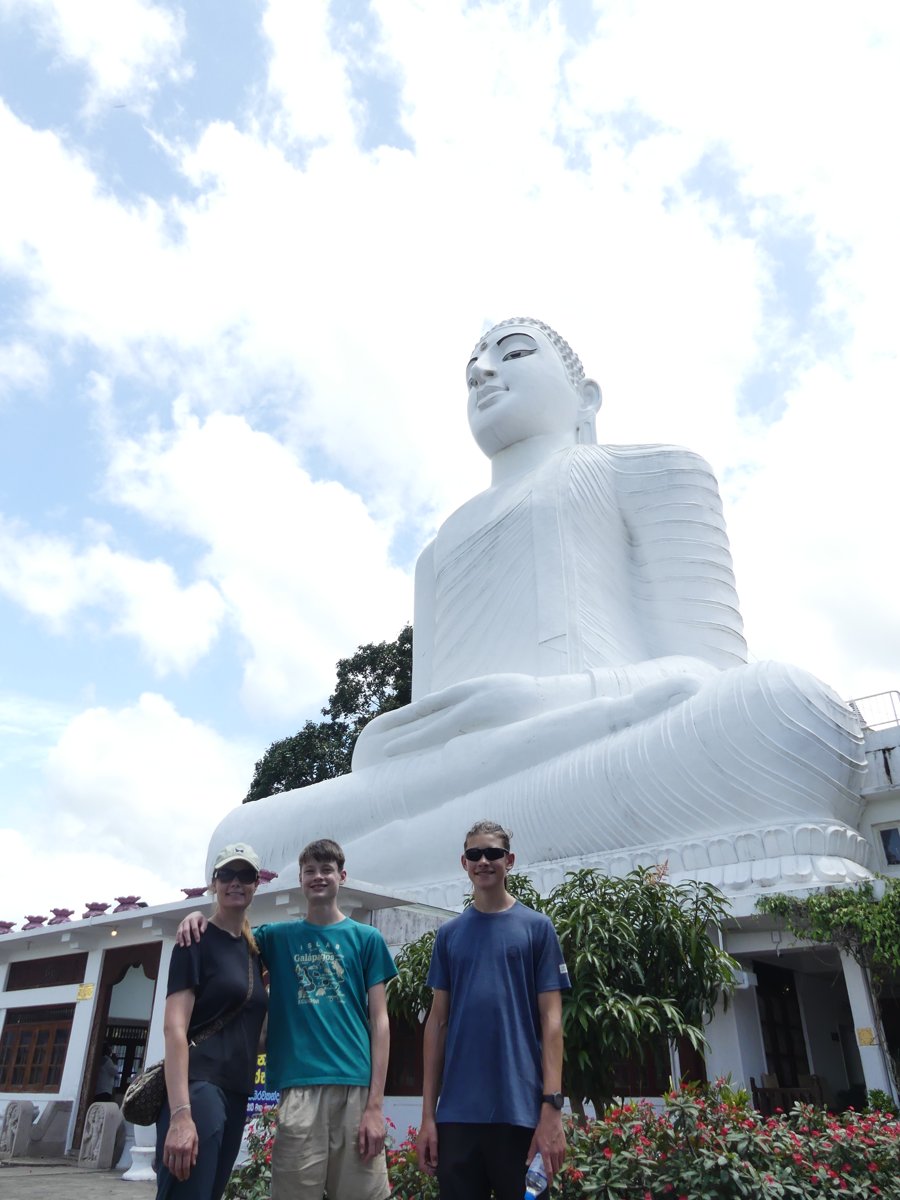
Our full day in Kandy started high up. A giant white Buddha — the Bahirawakanda Vihara — sits on a hill right above the city, and you can climb the steps up to it and out onto the platform behind the head, which makes for a brilliant vantage point over the whole of Kandy.
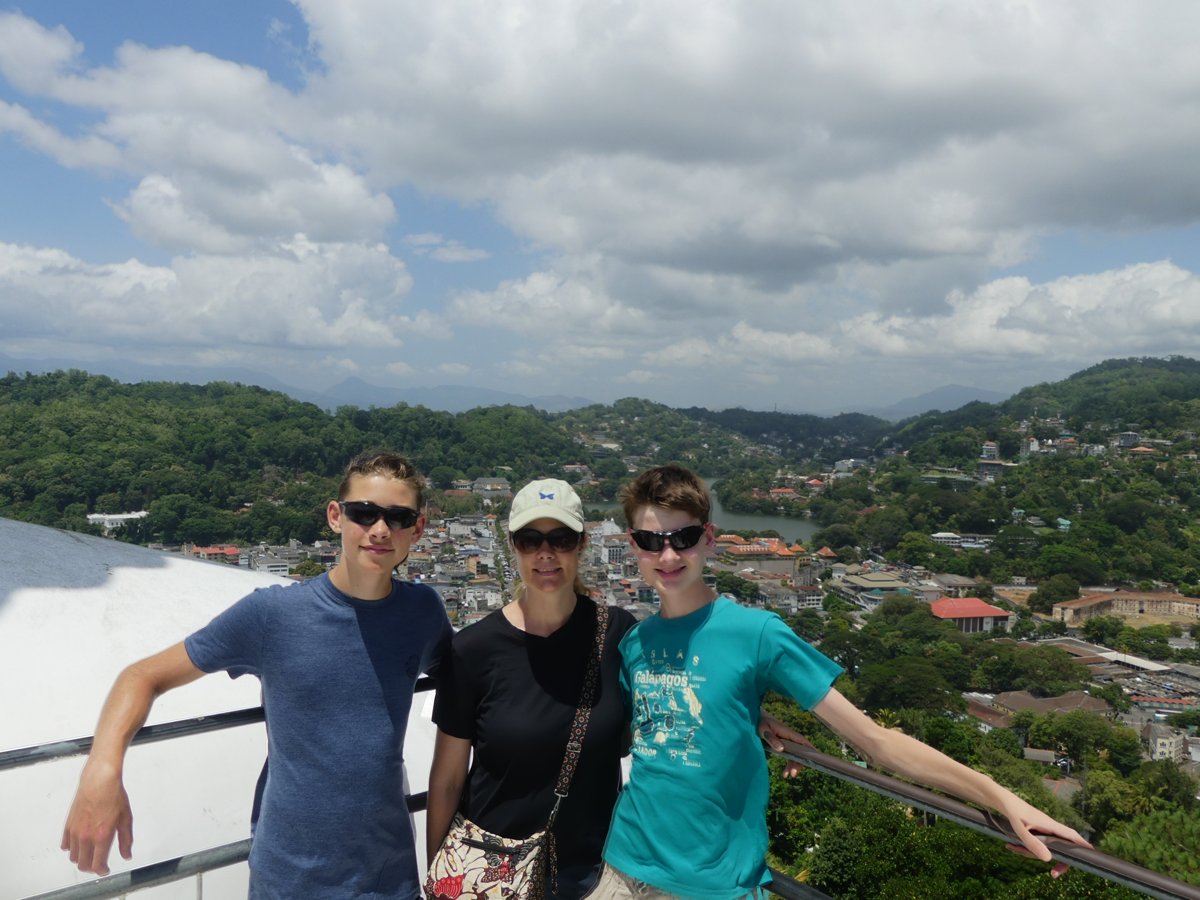
From the terrace behind the statue the city and its lake open right up below you, ringed by the hills.
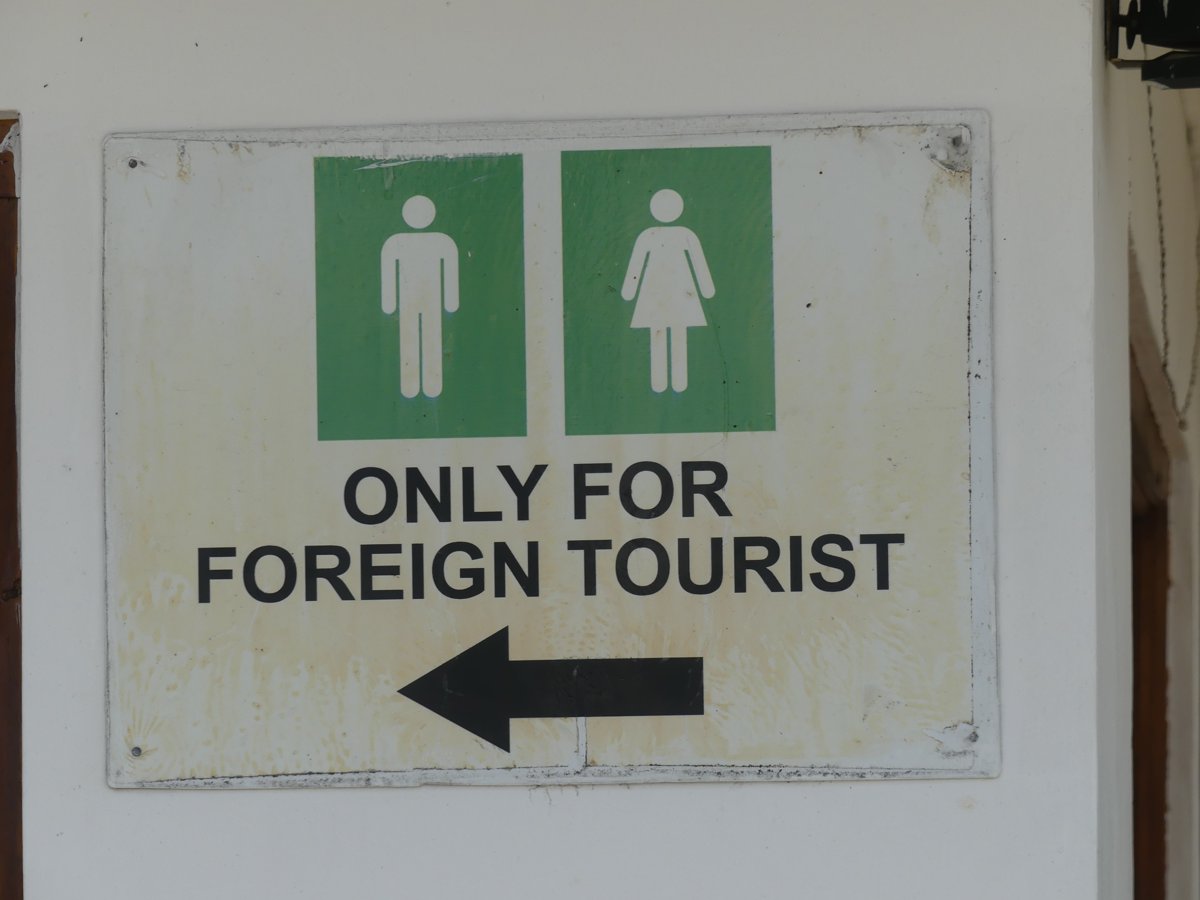
The sign up there gave us a proper double-take: the toilets are marked “Only for foreign tourist.” It turns out to be the flip side of a system you see all over Sri Lanka — locals usually pay a tenth of the entry price, or nothing at all, while foreigners pay full whack. The trade-off is that the toilets are then reserved for the ones who paid. A slightly crazy setup, but you can just about see the logic once someone explains it.
A tea factory running on 1938 machinery
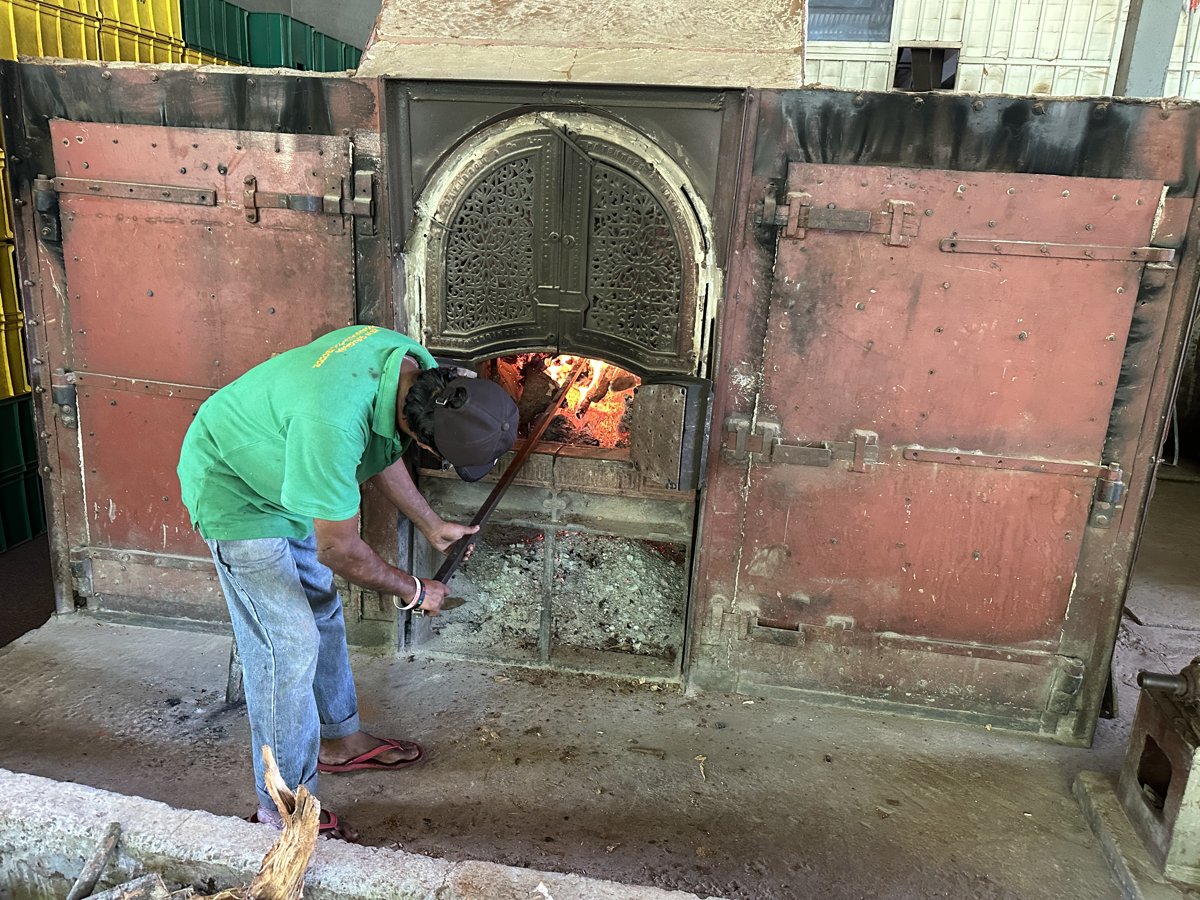
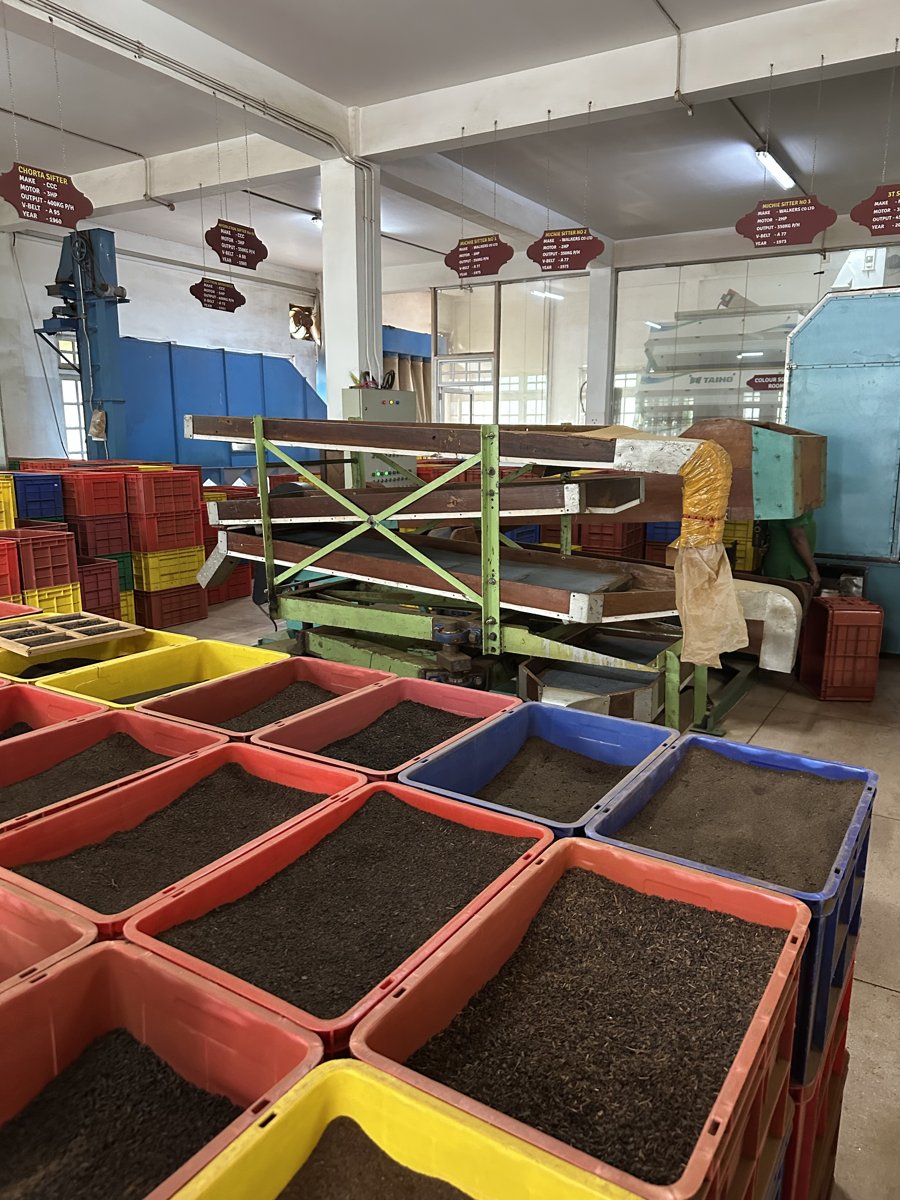
From there we went to see a tea factory — Sri Lanka grows a staggering amount of tea, and it was fascinating to hear about the different types and the processes that produce them. Best of all, much of the machinery dated from 1938 and was still running: great green rolling and pressing machines, and wood-fired ovens with someone feeding the fire to dry the leaves, just as they have for decades.
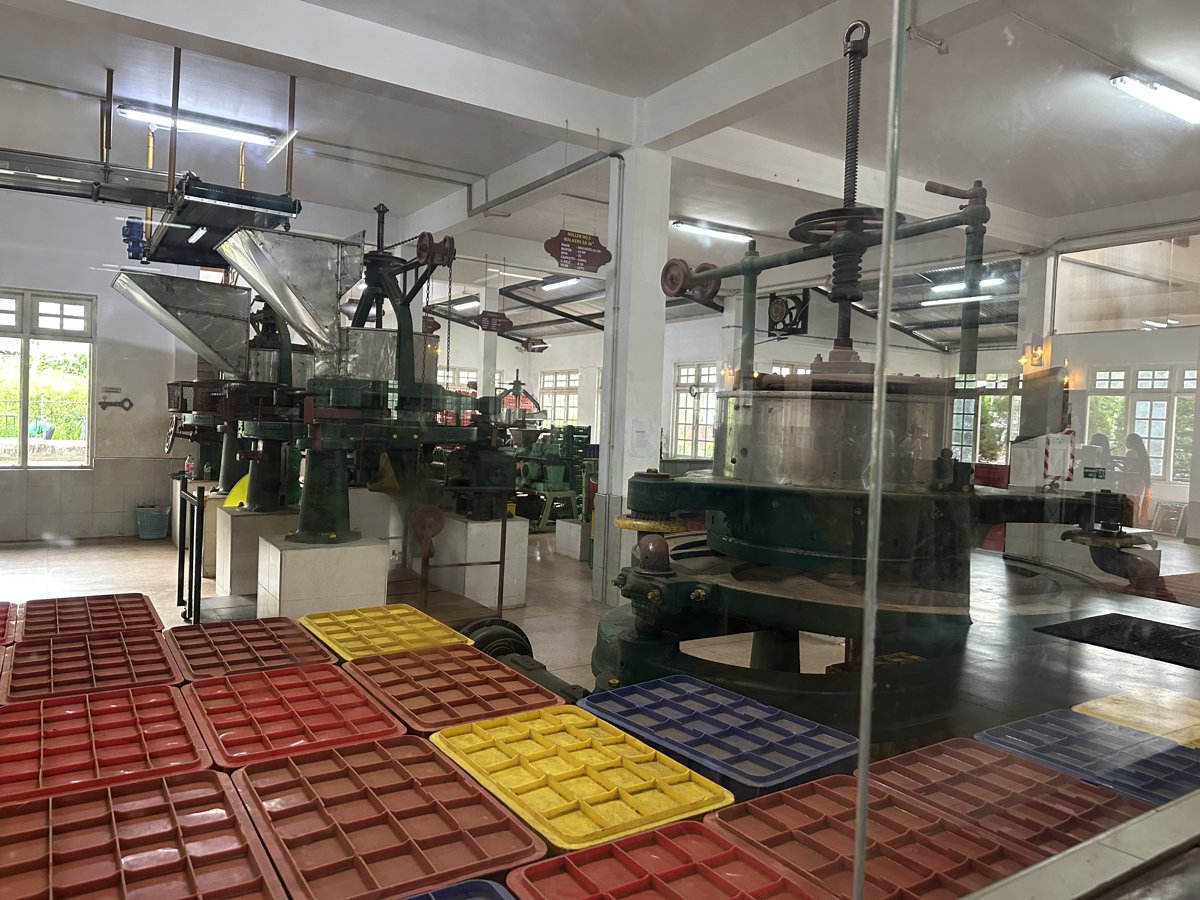
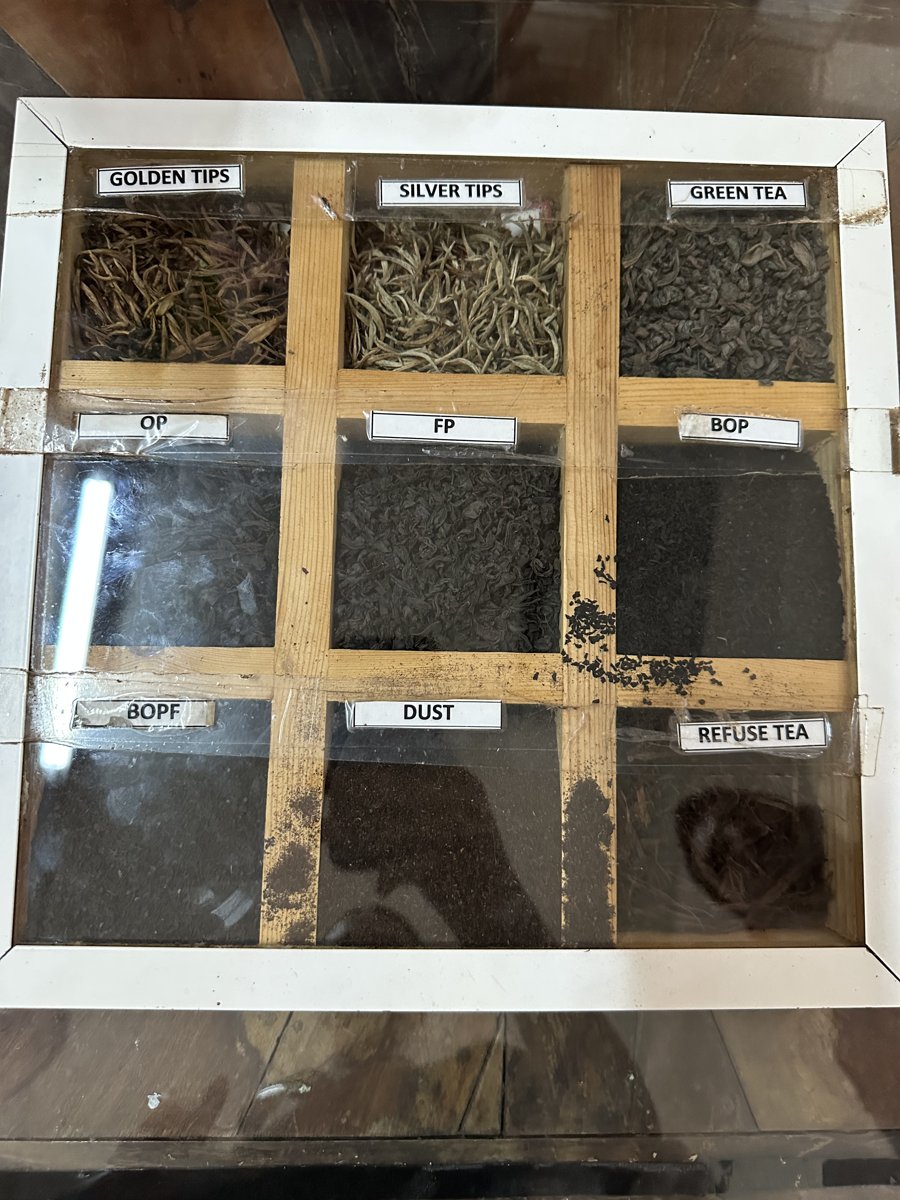
Downstairs the dried leaves are sorted into grades — from Golden Tips and Silver Tips down through the black-tea grades to the dust — laid out in bins and a labelled display case.
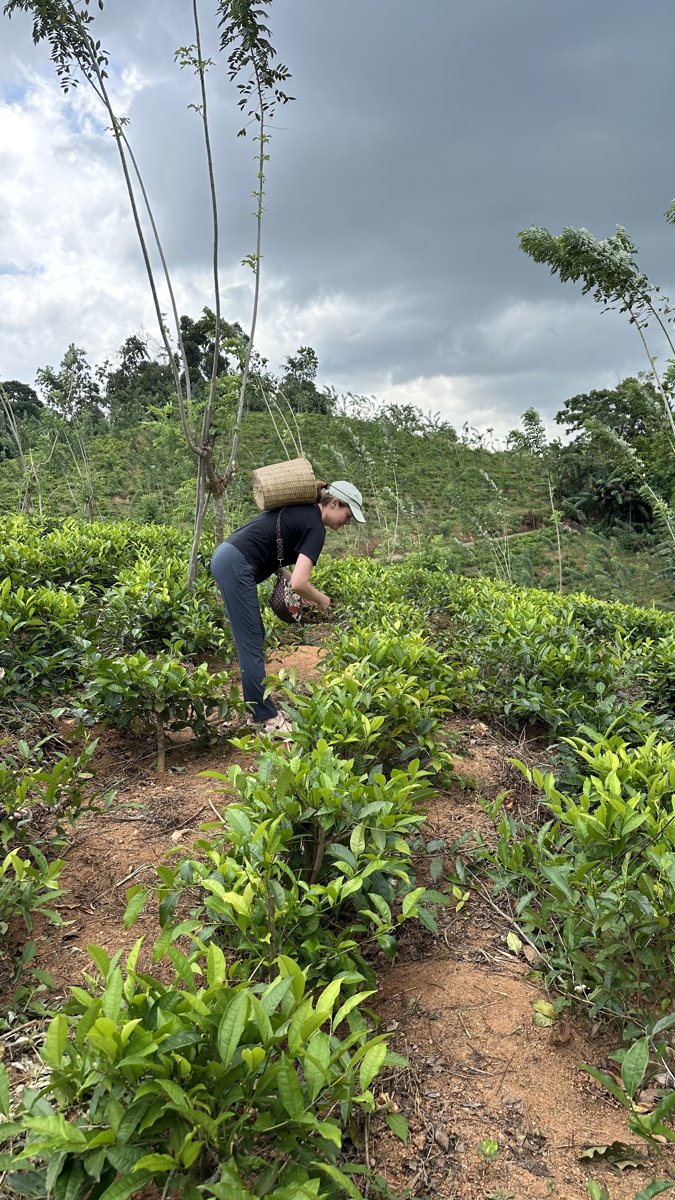
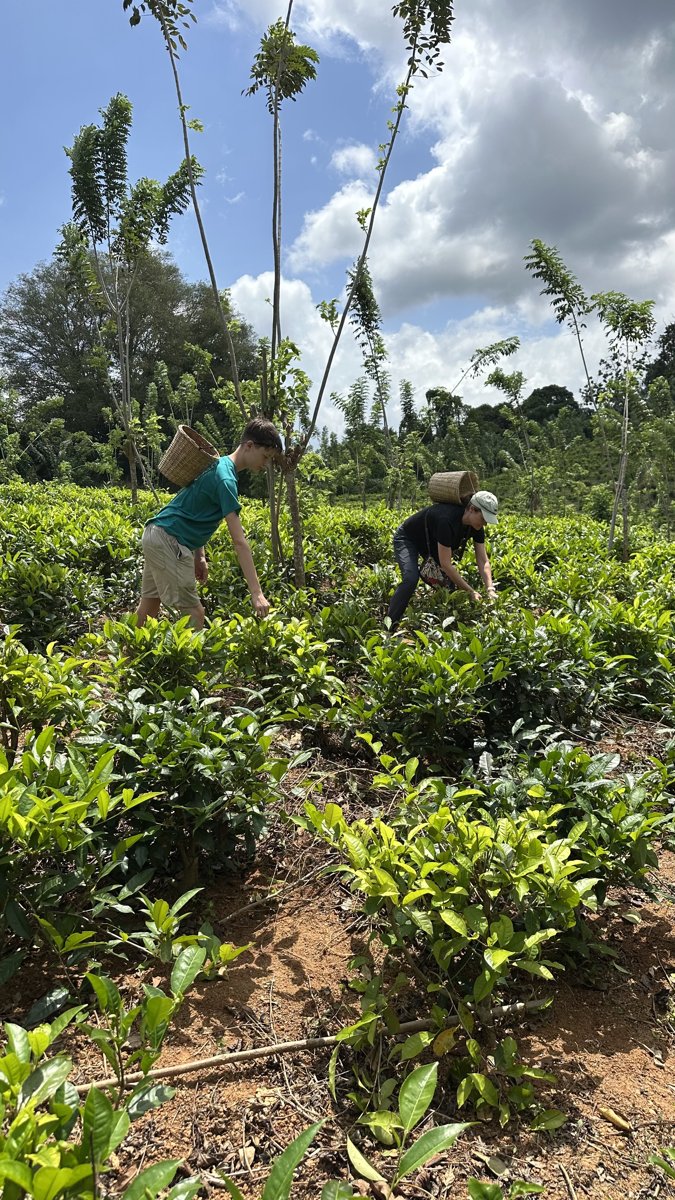
Then we walked out among the tea bushes on the hillside and had a go at picking a few leaves ourselves, which went about as well as you'd expect from four clumsy amateurs.
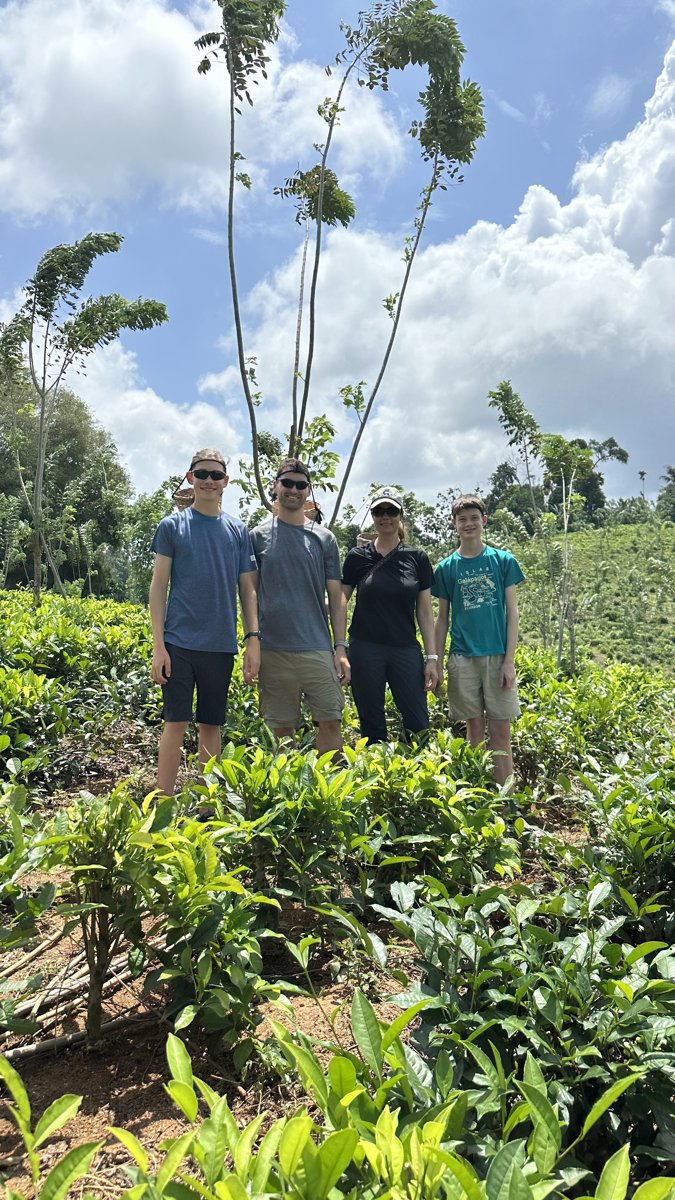
The way it works here is neat: the factory tour itself is free, and afterwards you're led into the shop, where you effectively pay for the tour by buying something. We were happy to — we had a cup, smelled our way through the different varieties, and bought a few nice tins of the ones we liked to bring home, both to support the place and because they were genuinely good.
A forest walk at Udawattakele
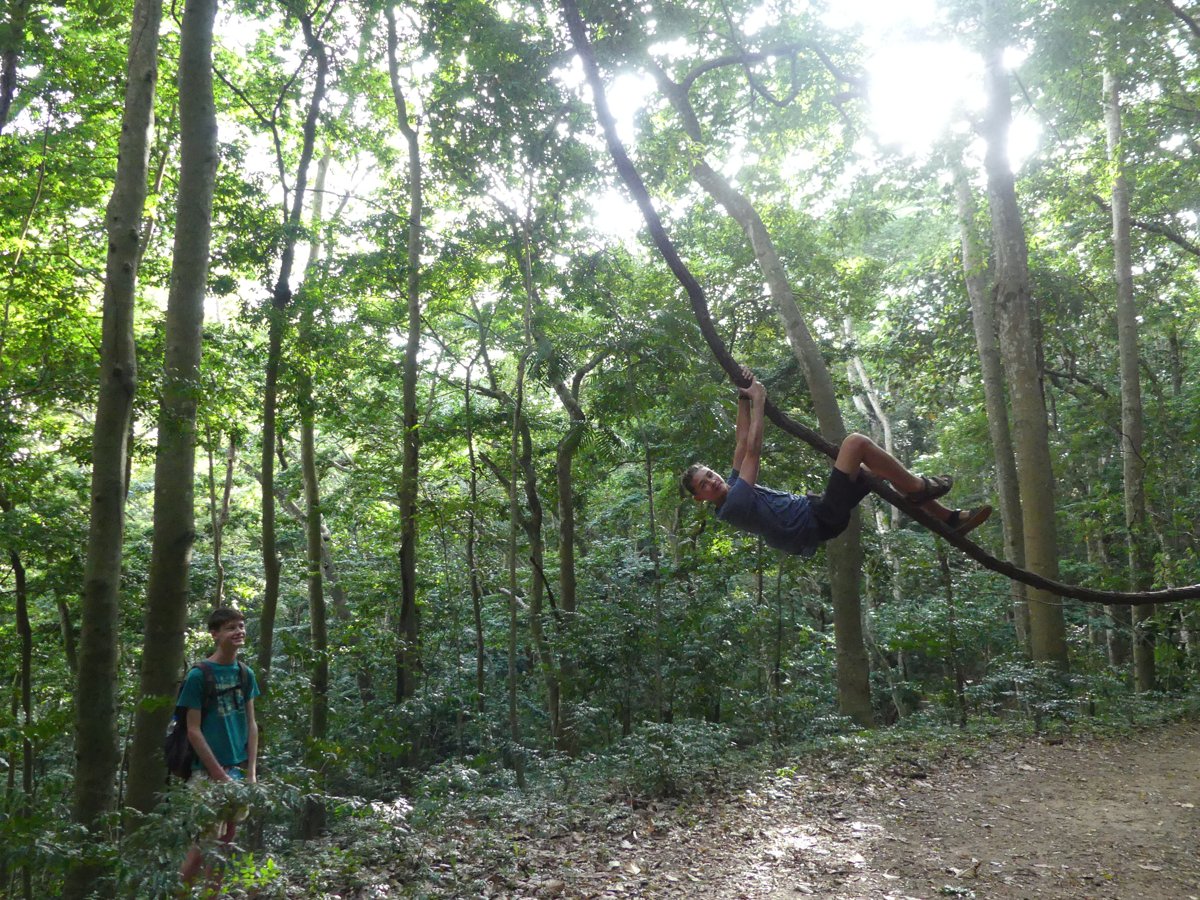
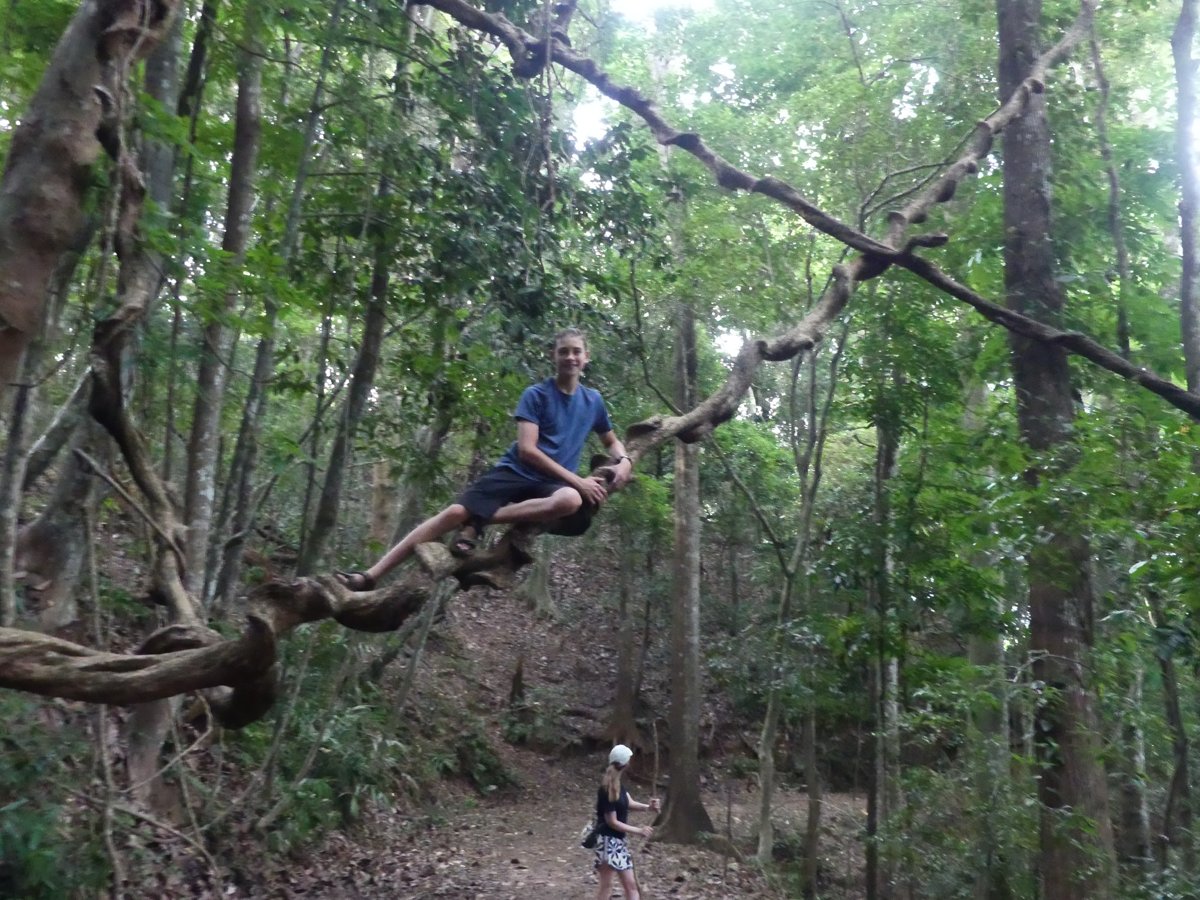
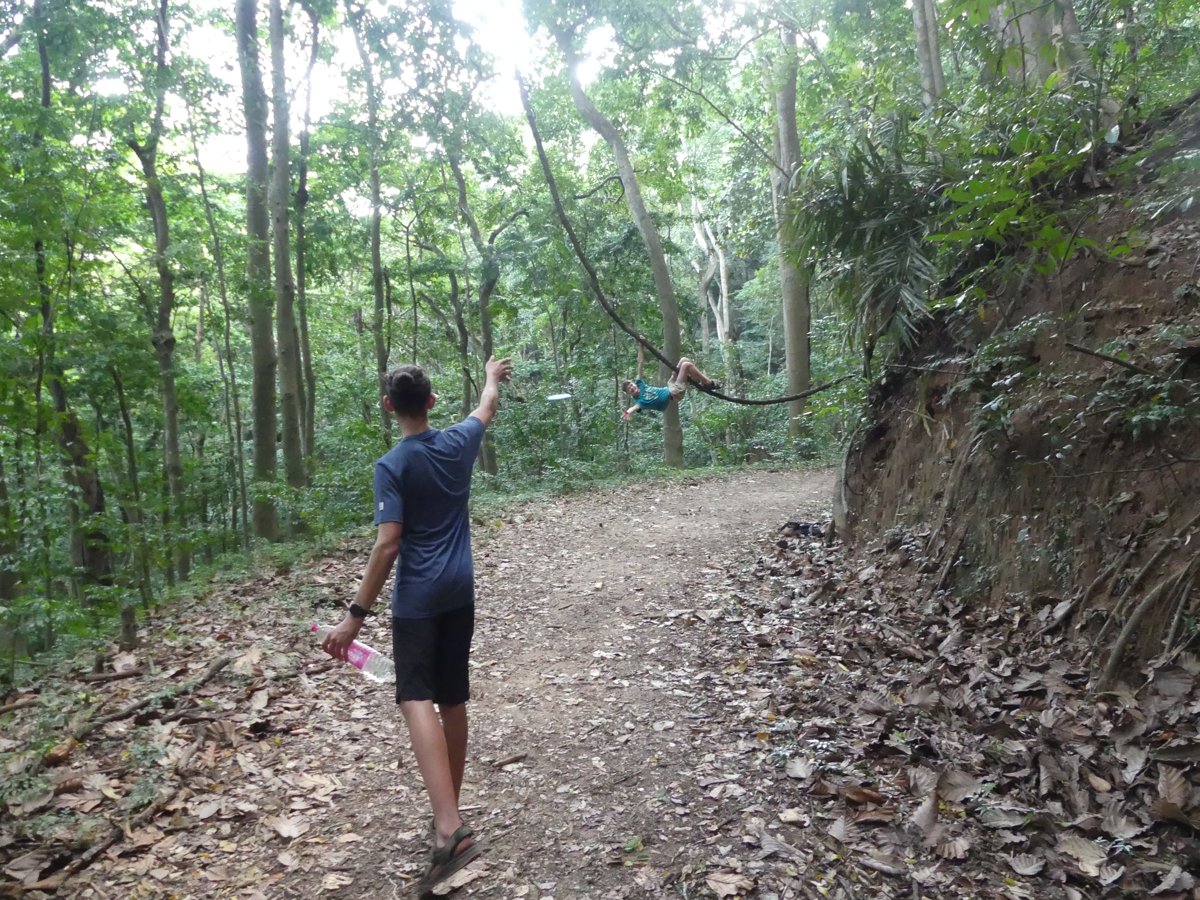
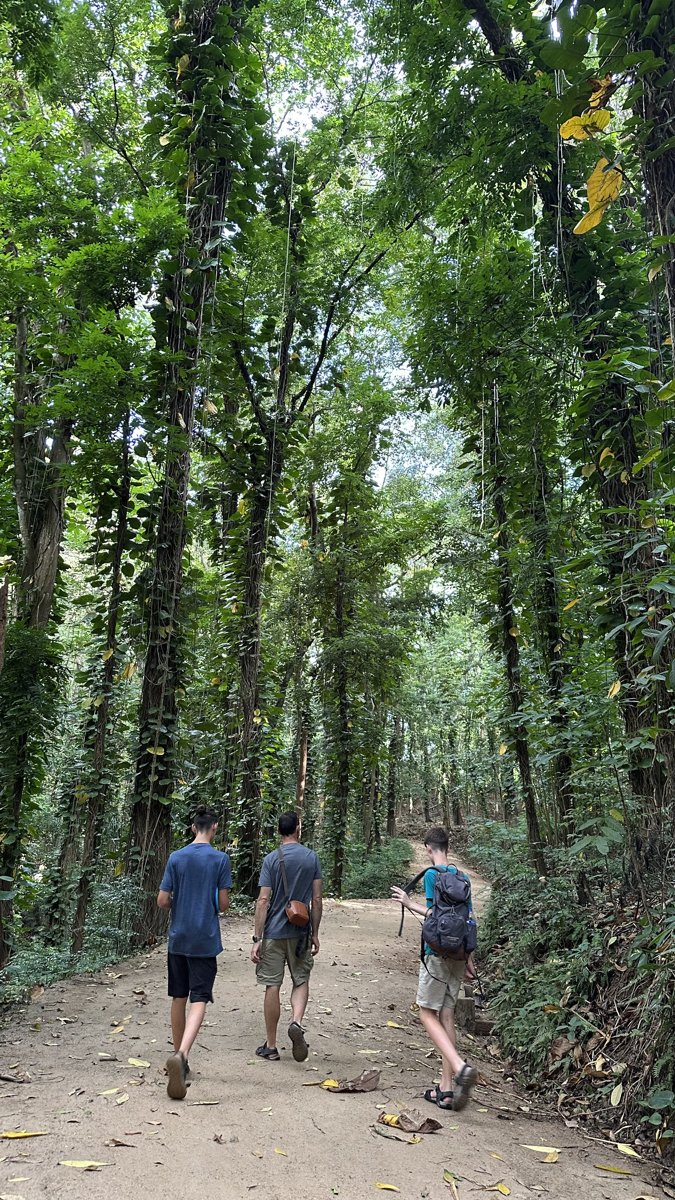
We also took a walk through the Udawattakele forest reserve, the old royal forest on the hill behind the Temple of the Tooth. It's a proper little pocket of jungle right in the middle of the city, with huge lianas draped between the trees — irresistible to the boys, who spent most of the walk climbing and swinging on them. Noah brought along the frisbee we'd picked up in Kuala Lumpur (a quick Decathlon stop on the way from Indonesia) and threw it down the trail as we went.
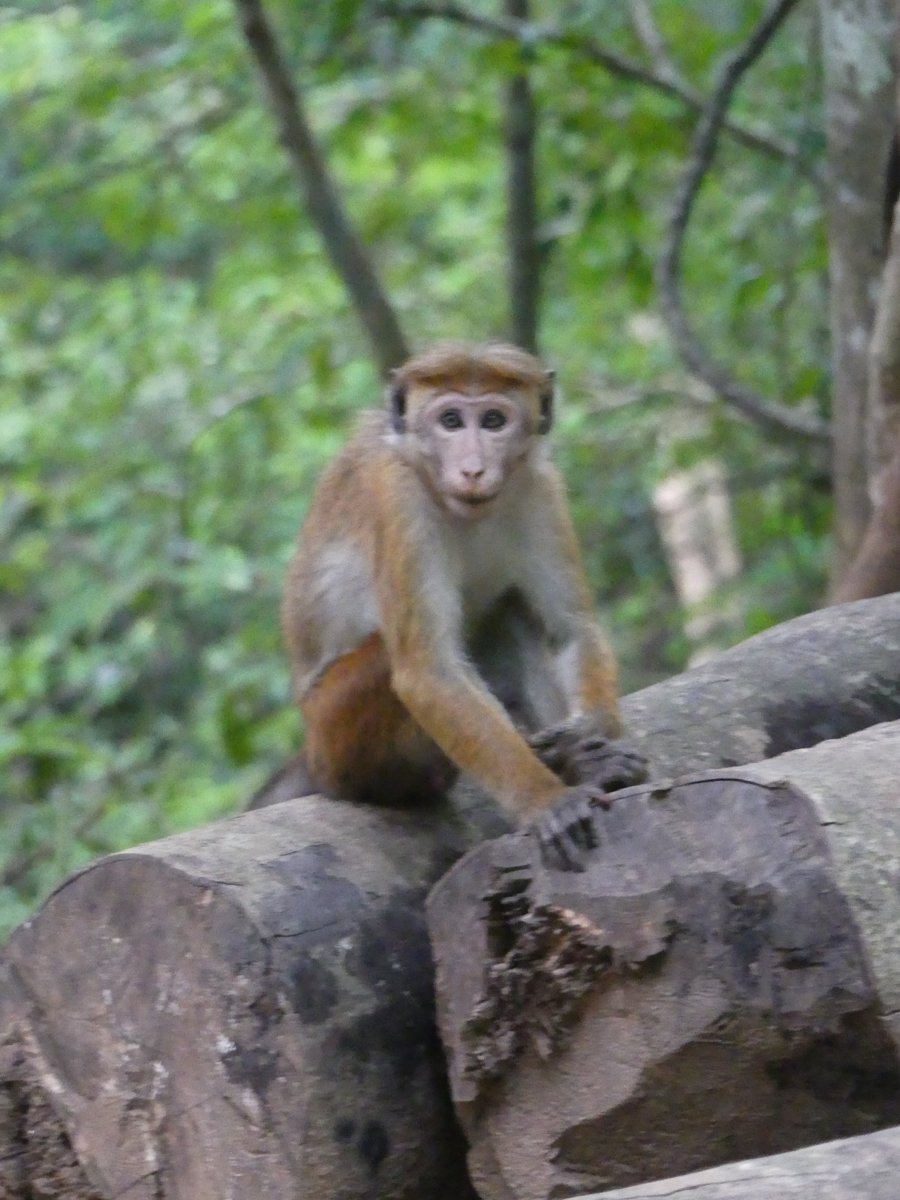
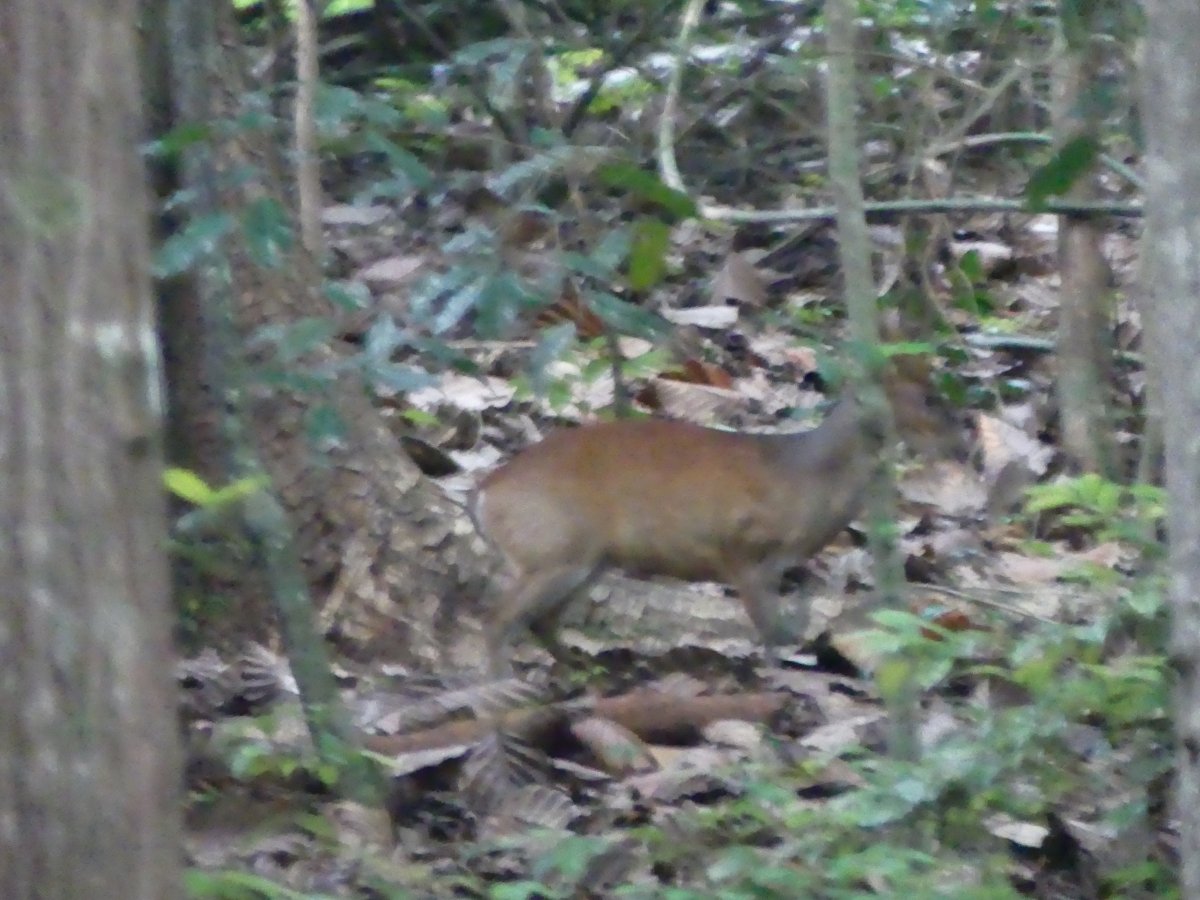
There was wildlife, too: a toque macaque sitting on some cut logs, and a small reddish mouse-deer that came bounding out of the undergrowth and across the trail before vanishing again.
A full moon at the Temple of the Tooth
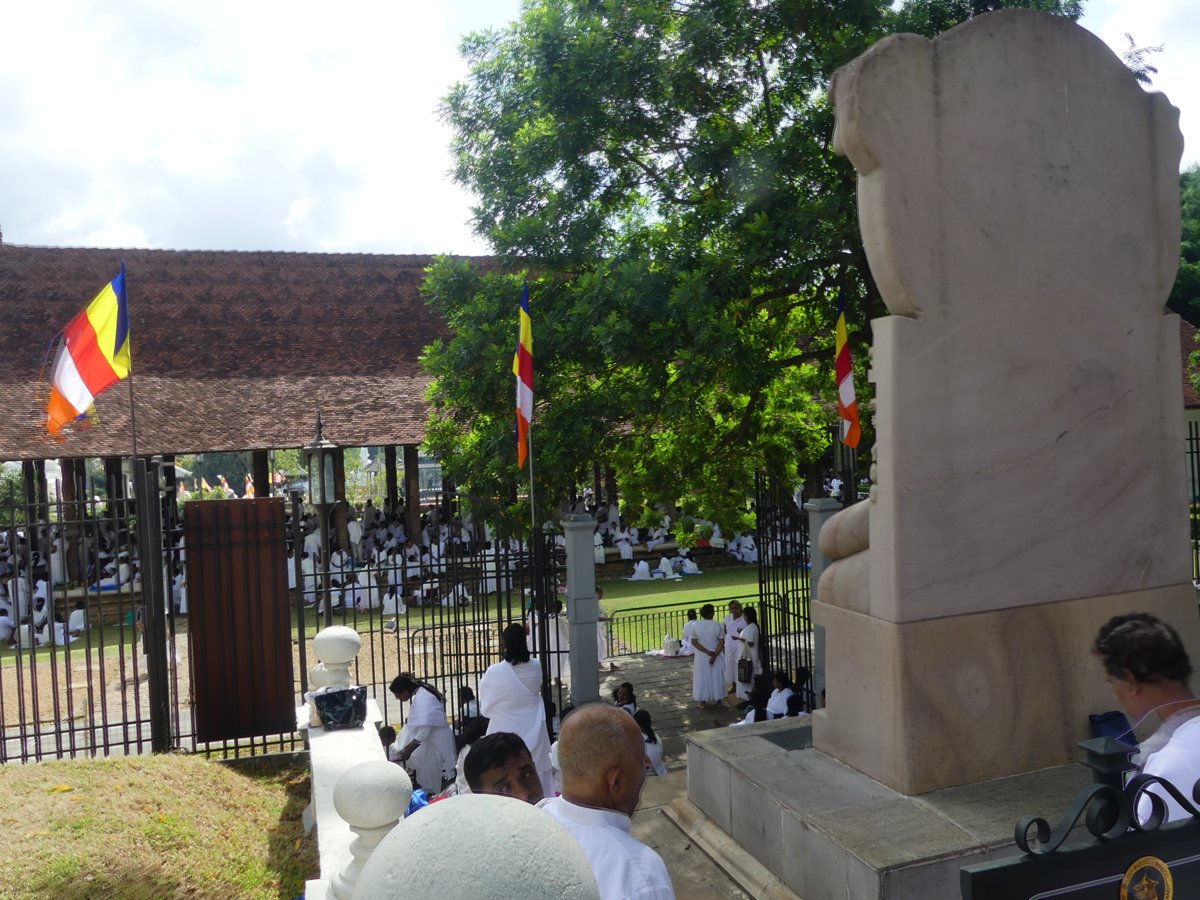
Kandy's most famous site is the Temple of the Sacred Tooth Relic, which is said to house one of the Buddha's teeth. We chose not to go inside, but we walked around it — and, by luck, we were there on a full-moon Poya, the monthly Buddhist holy day, when the temple holds a festival. The grounds were filled with worshippers dressed in white, Buddhist flags everywhere; watching the ritual and getting a glimpse of that side of the culture from the outside was one of the nicest things we did in Kandy.
For dinner we went back to the same Indian restaurant as the night before. We'd scouted an alternative that offered much the same food at roughly double the price, and decided we'd rather return to the place we already knew — which was, once again, excellent. Noah, at least, had no complaints about the spice level.
We'd also gone back to the gemstone idea. Rather than the big showroom from the first day, we found a smaller local place that felt genuinely trustworthy, and Line picked out a couple of topaz stones to be set into earrings. They promised to have them ready and hand them over on our way out of Kandy, which, remarkably, they did.
The next morning we drove out of Kandy and up into the hill country — to Nuwara Eliya, "Little England," and the famous scenic train to Ella — but that's a story for the next post.
Comments