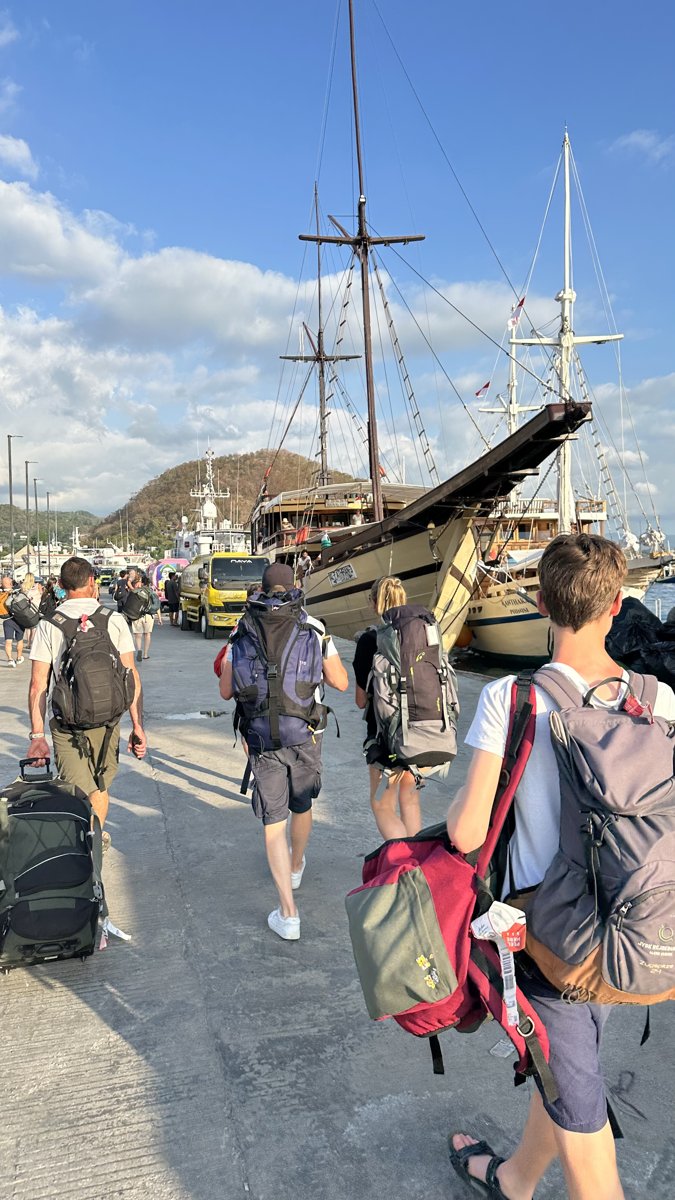
After three big days in Labuan Bajo, it was time for the part of the trip we'd been building up to for months: a multi-day liveaboard through Komodo National Park, sailing all the way from Flores to Lombok. We were picked up from the hotel in the afternoon, driven down to the harbour, and boarded the Alfathran III — a big traditional wooden phinisi that would be home for the next few days.
Boarding the Alfathran III
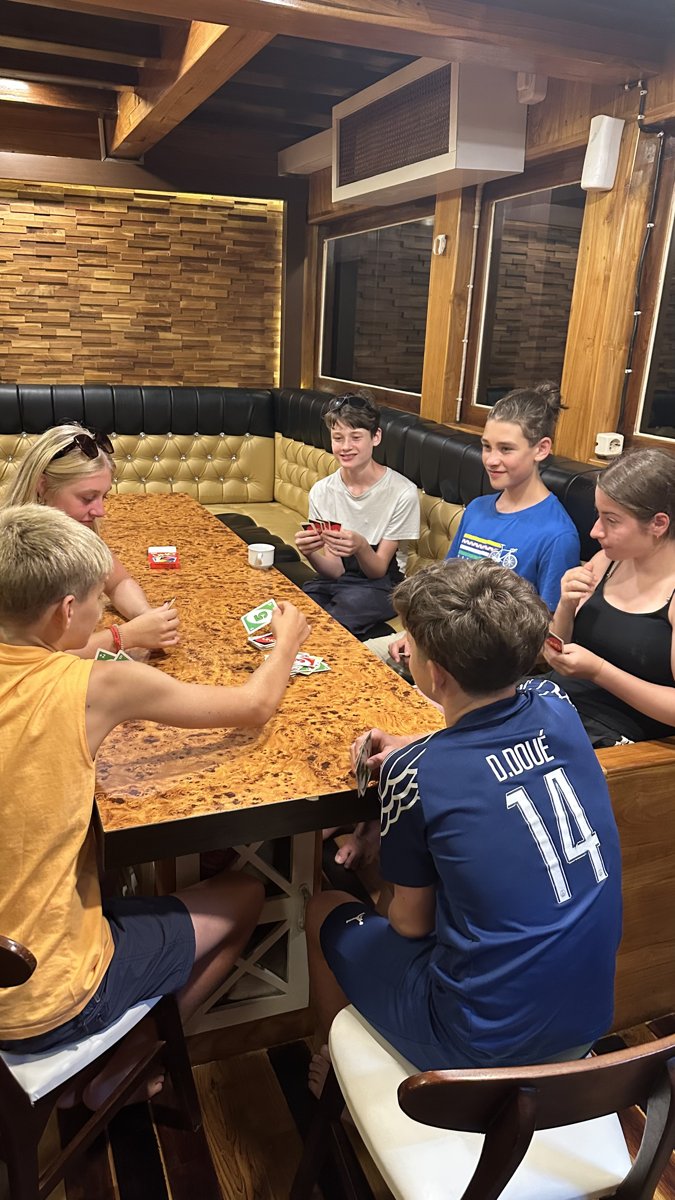
The boat was bigger than we'd expected. Around 33 guests and something like 13–14 crew, spread over several decks. The best surprise came almost immediately: several other families were aboard with kids and teenagers around Noah and Vitus´ age. Within an hour the young ones were already talking and dealing out Uno — which, it turned out, would become one of the defining threads of the whole trip.
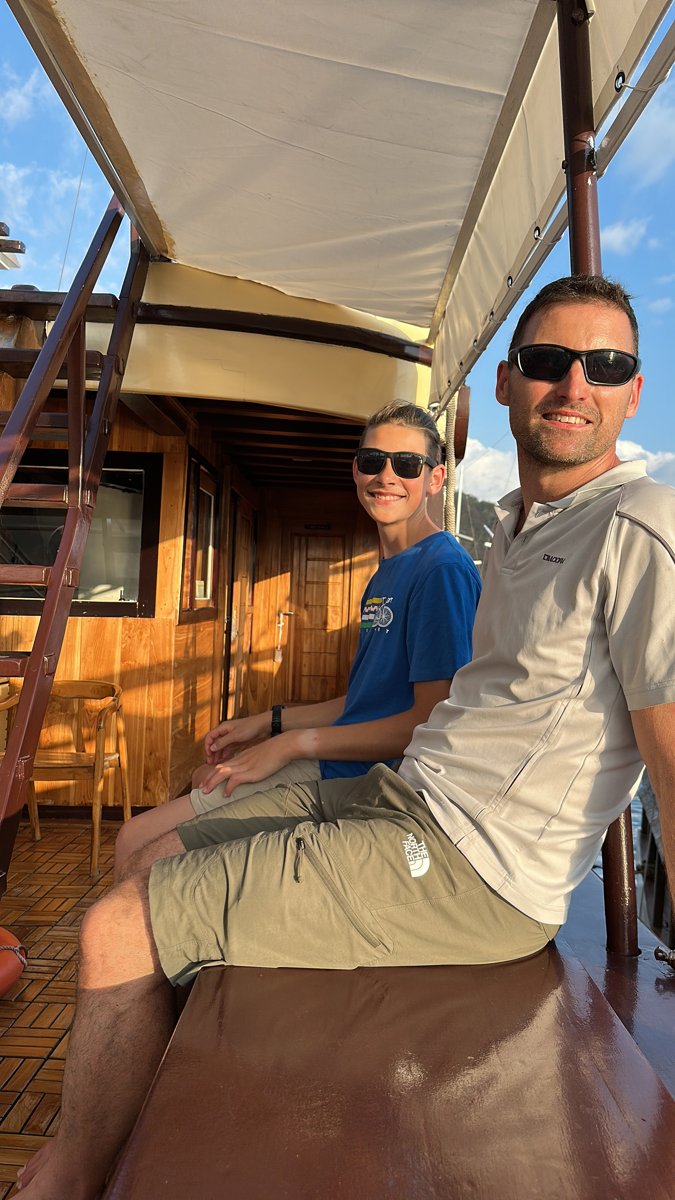
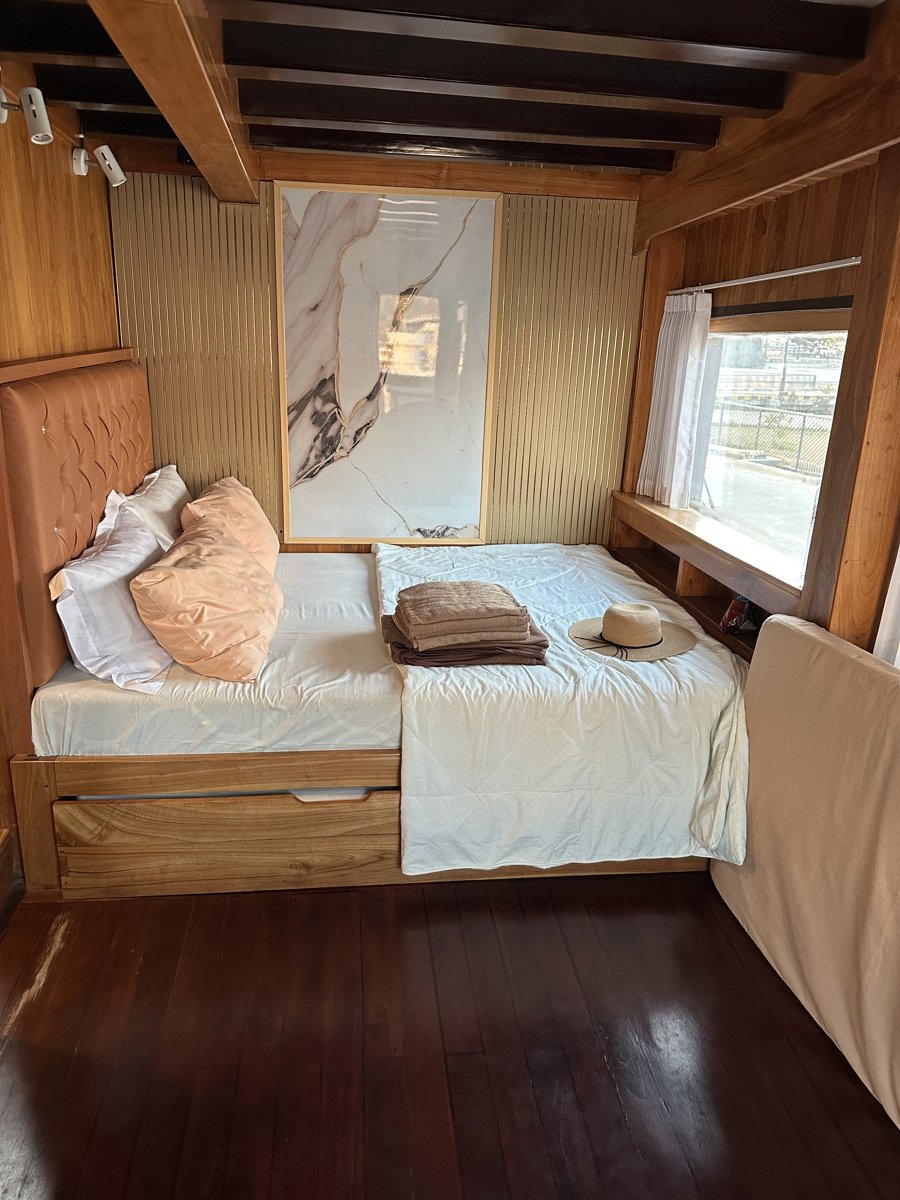
After settling into our rooms and a briefing about the next day, we sat down to the first dinner — and it was not promising. Mostly rice and cold chicken, small portions, nothing to write home about. We went to bed quietly worried that this was the standard for the whole trip. (Spoiler: it wasn't. The food improved a lot over the following days.) There wasn't much else to the first evening: the boat started sailing, and we turned in early, because the next morning would begin in the dark.
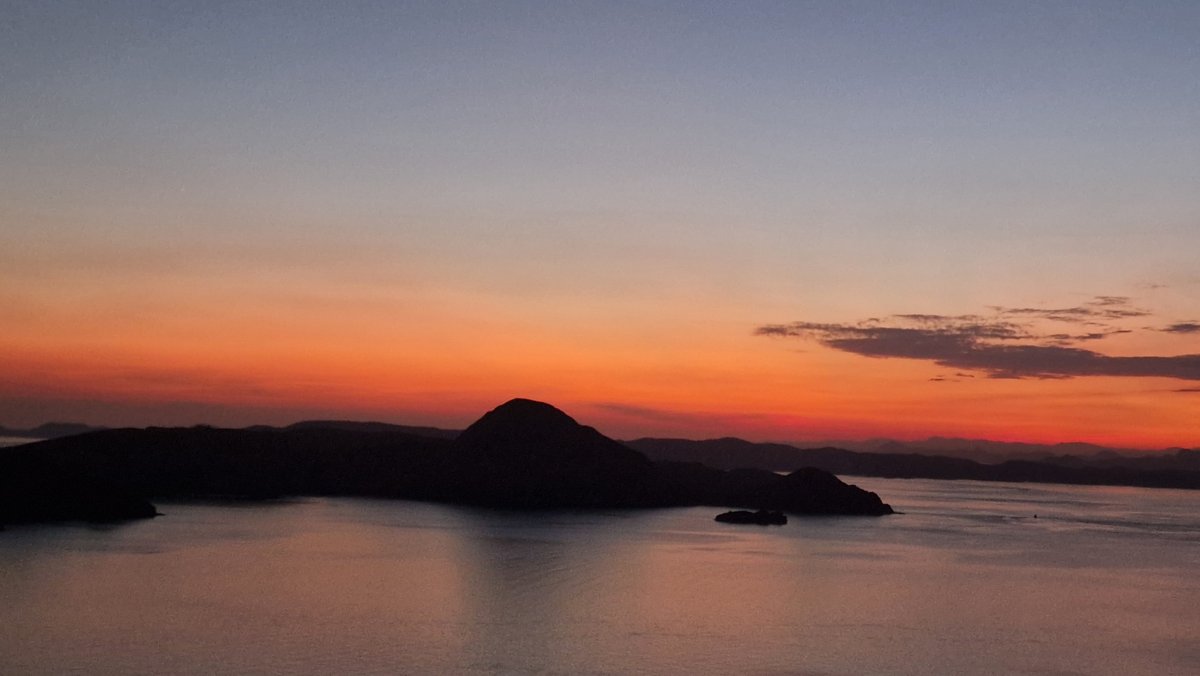
4:30am — sunrise on Padar Island
The alarm went at around 4:30am. Padar Island — the one whose curved bays appear on every Komodo postcard — has a viewpoint you climb in the dark to catch the sunrise, and that was the plan. Everyone was shattered, Vitus especially. We had peanut-butter sandwiches on the boat so there was at least something in our stomachs before the climb.
Because everyone had to be ferried ashore in small boats, the group got split. Noah and Vitus made the first transfer and started climbing while it was still properly dark, catching the very first red and orange light on the horizon. Jesper and Line were meant to follow right after — but two French guests had overslept, and rather than leave, the whole second boat had to wait while the crew tried to wake them. So we sat there, getting lighter by the minute, knowing the boys were already well up the hill. Frustrating in the moment, and a small lesson in liveaboard logistics.
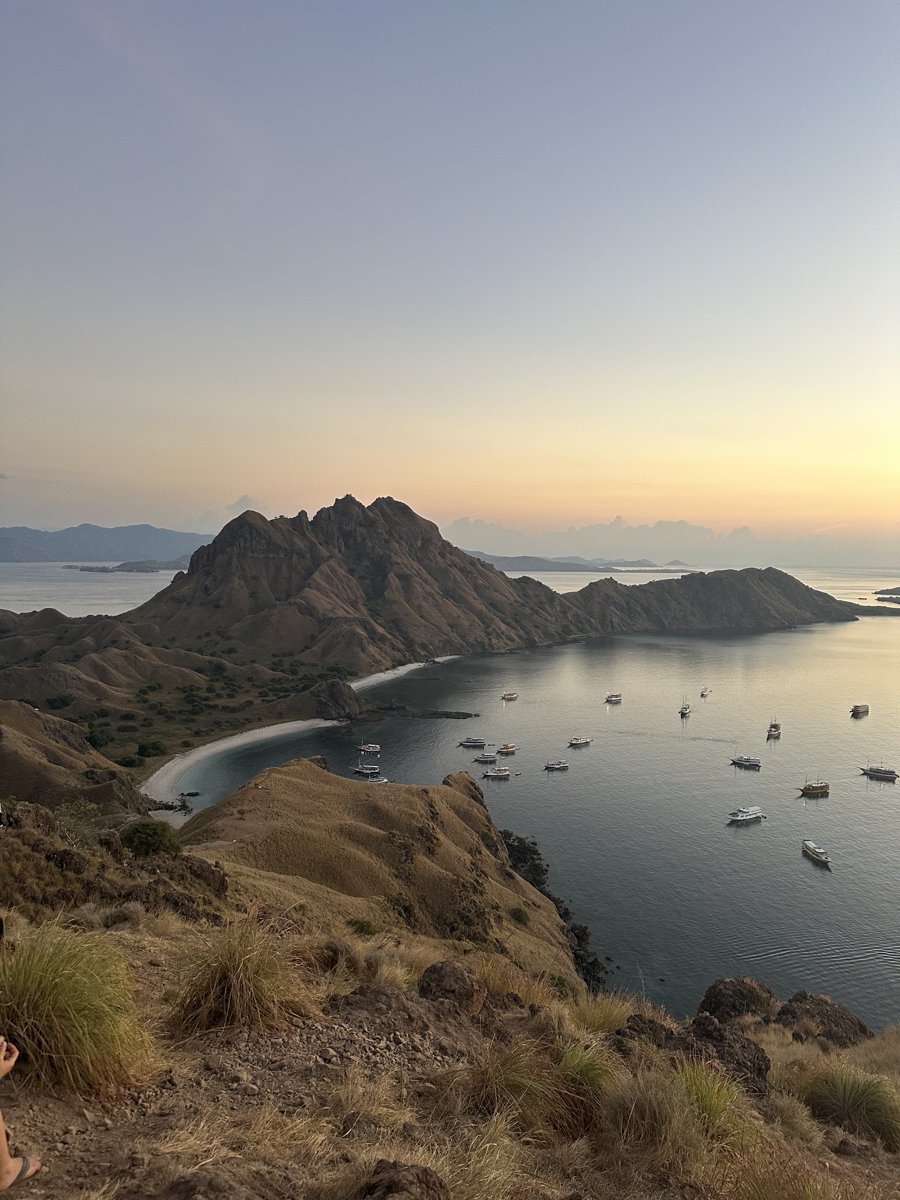
We reached the top in time for most of the sunrise itself, if not the full experience of walking up in the dark. And honestly, no photo does the view justice — the dramatic ridges and three curved bays laid out below, the anchored boats like toys in the water, the light going from grey to gold. One of those views that earns the early alarm.
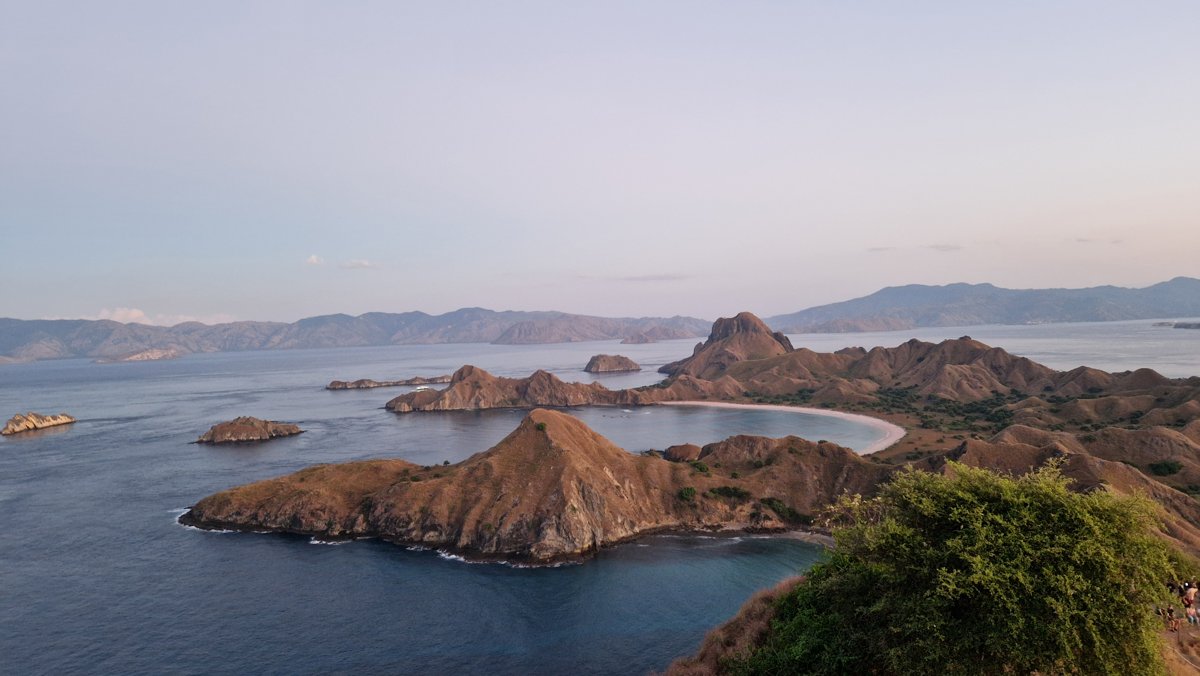
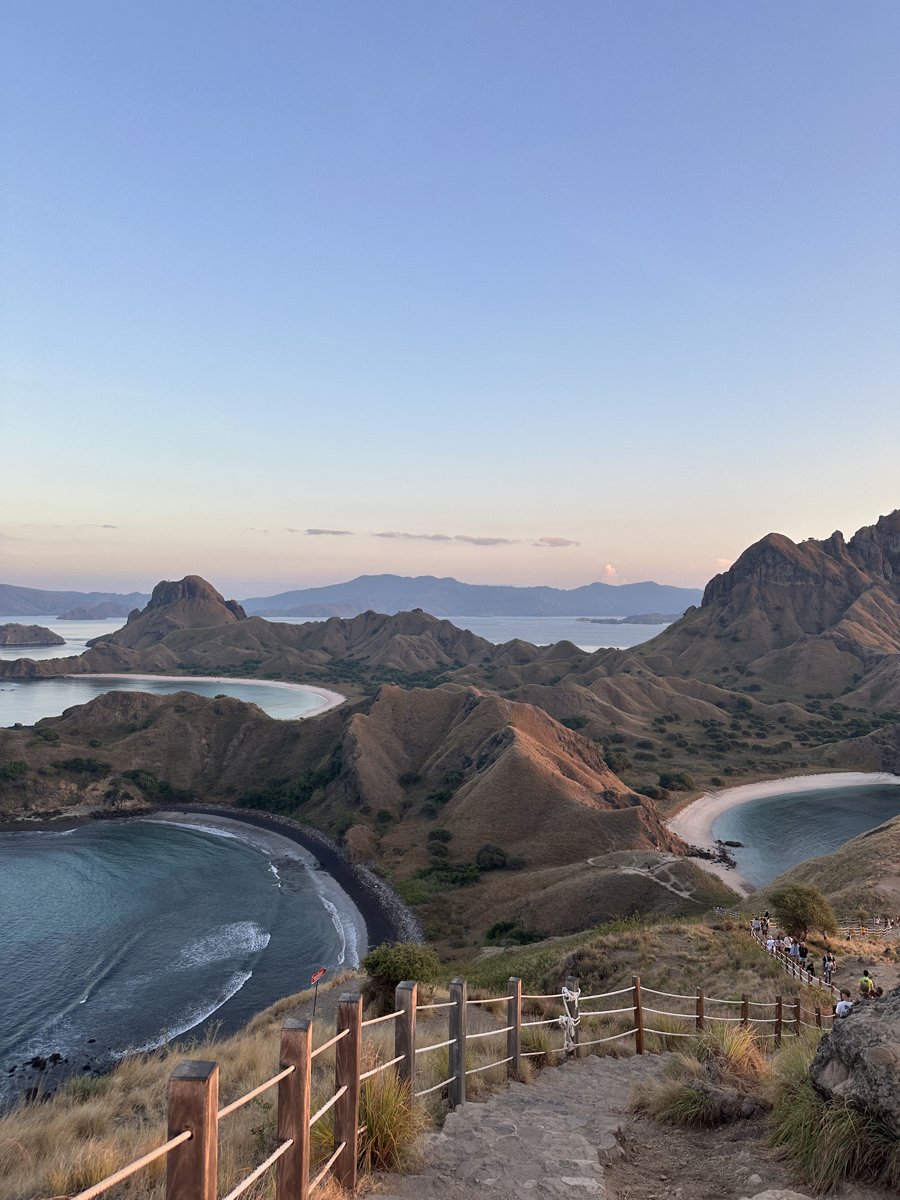
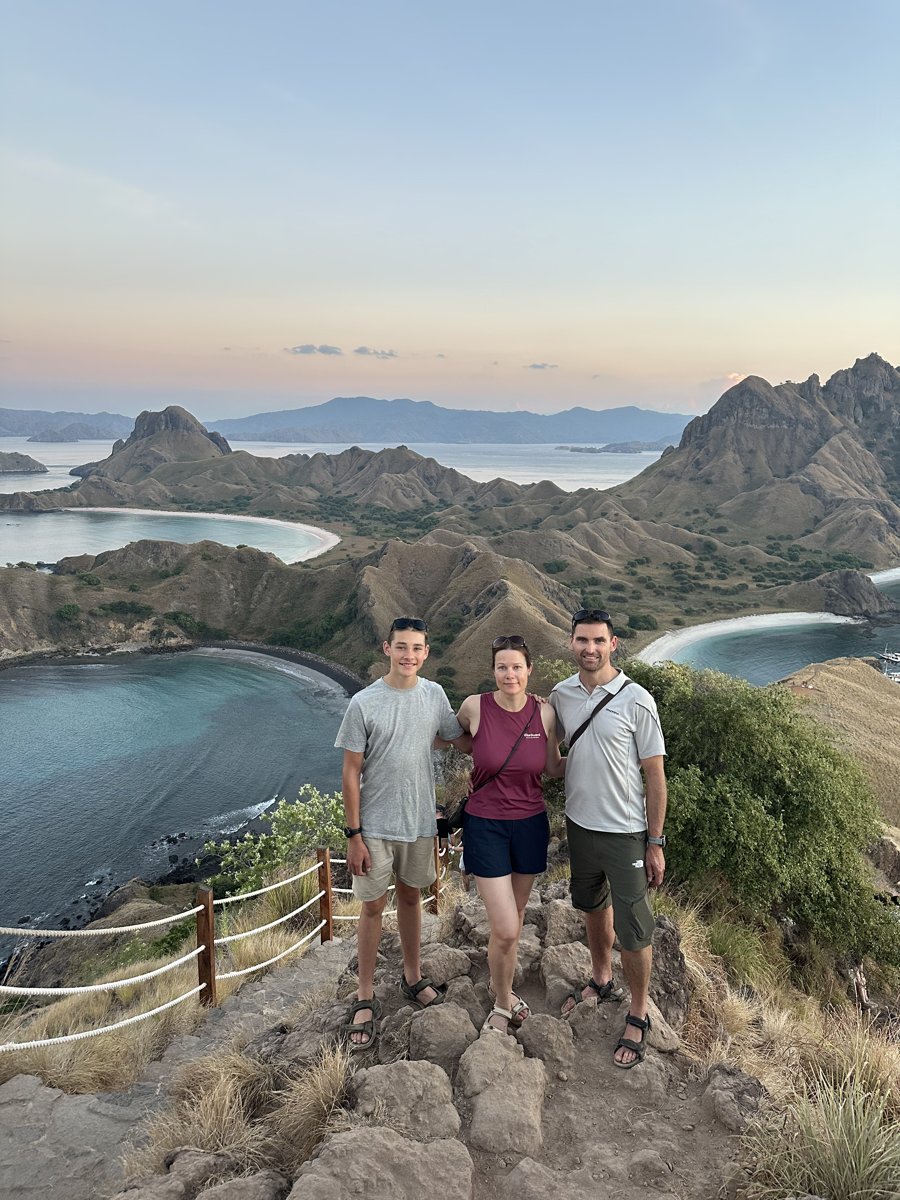
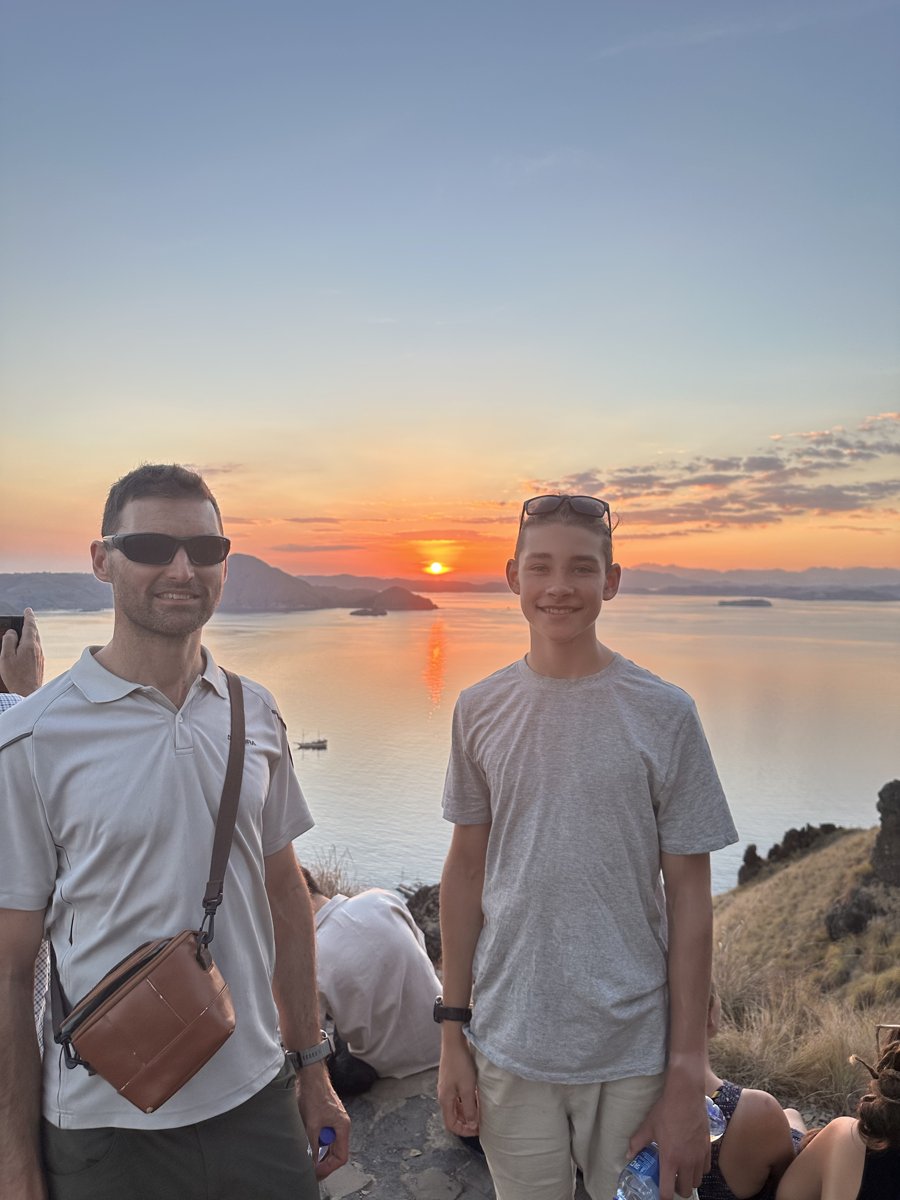
Everyone was tired — Vitus most of all — but the reward for coming down was a much bigger, much better breakfast back on board, and then we were off to the next stop.
Pink Beach — less pink than the brochures, still lovely
Next up: Pink Beach. In the promotional photos it glows an intense rose colour. In reality it's far more subtle — mostly ordinary-looking sand with a faint pinkish-red tint right down at the waterline, where crushed red coral mixes in. With the right light (or the right filter) you could absolutely make it look pinker than it is. But subtlety aside, it was a lovely stop.
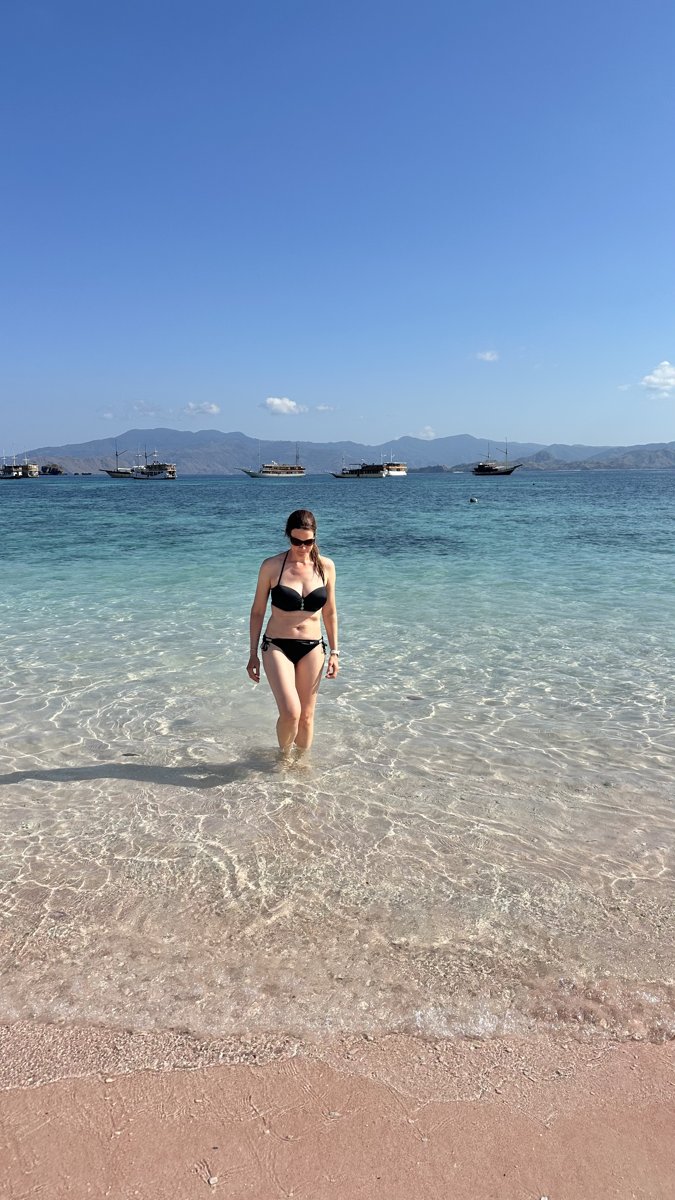
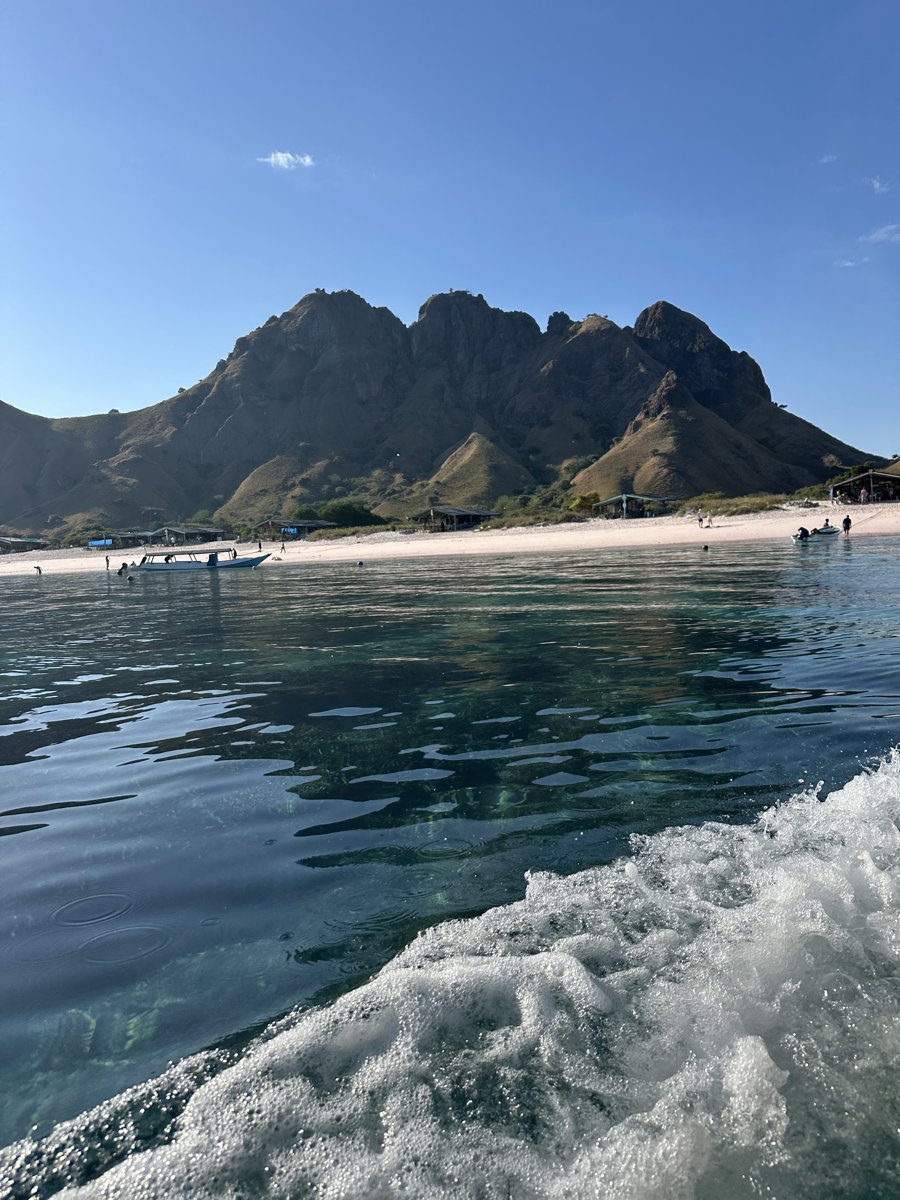
Some people snorkelled, others just swam and lazed. The snorkelling was better than billed — a nice reef right off the beach, which Jesper and Noah in particular went to explore. Line was more cautious: her snorkel had developed that same habit of cutting off her airflow, which had understandably made her wary of it after the little shark drama in Labuan Bajo. There was a social side too, with the whole group mucking about for photos and videos while a drone buzzed overhead.
Komodo Island — a hot walk and four dragons
From Pink Beach we sailed on to Komodo Island itself for a guided walk with a ranger. The route was about 2.5km and staggeringly hot. We'd been warned in advance that it was mating season, which meant many of the dragons might be hidden away or underground — no guarantees of seeing any at all.
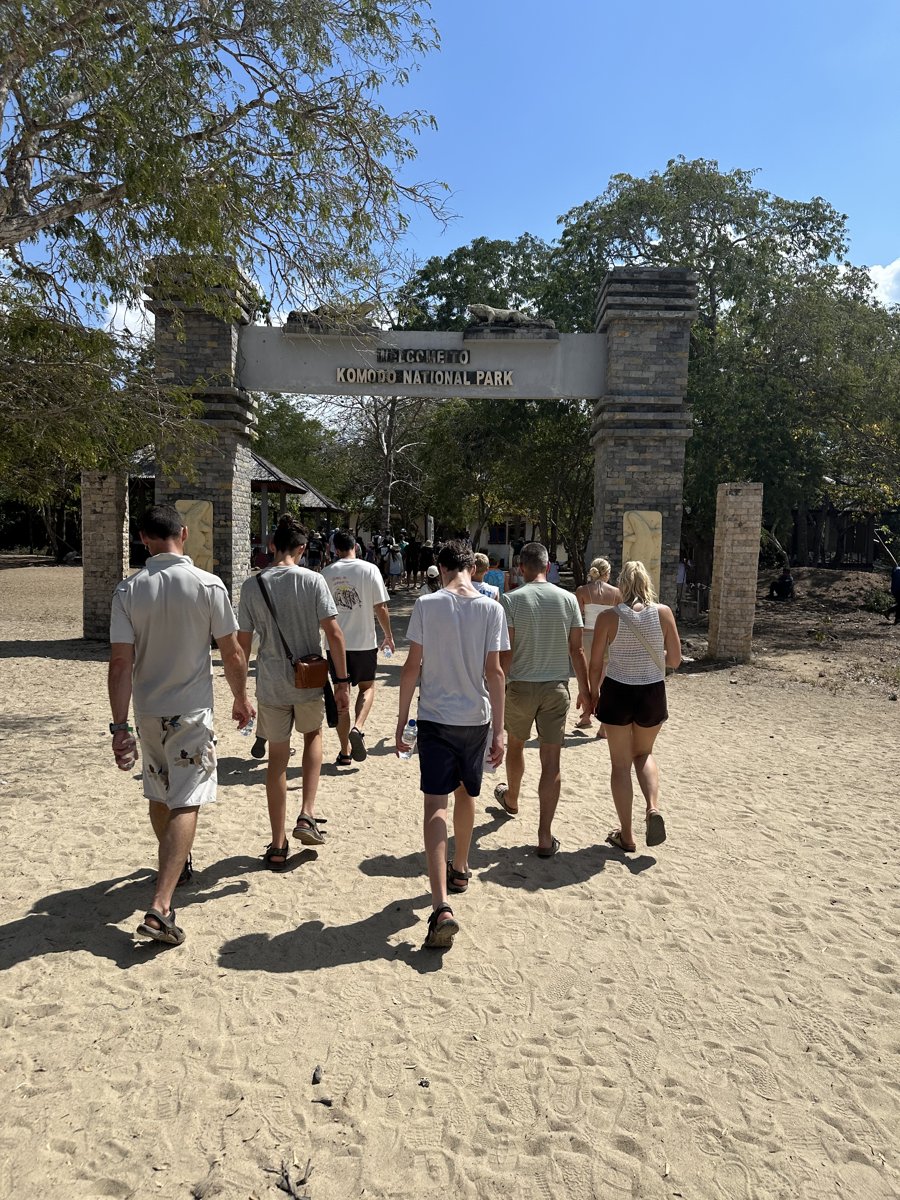
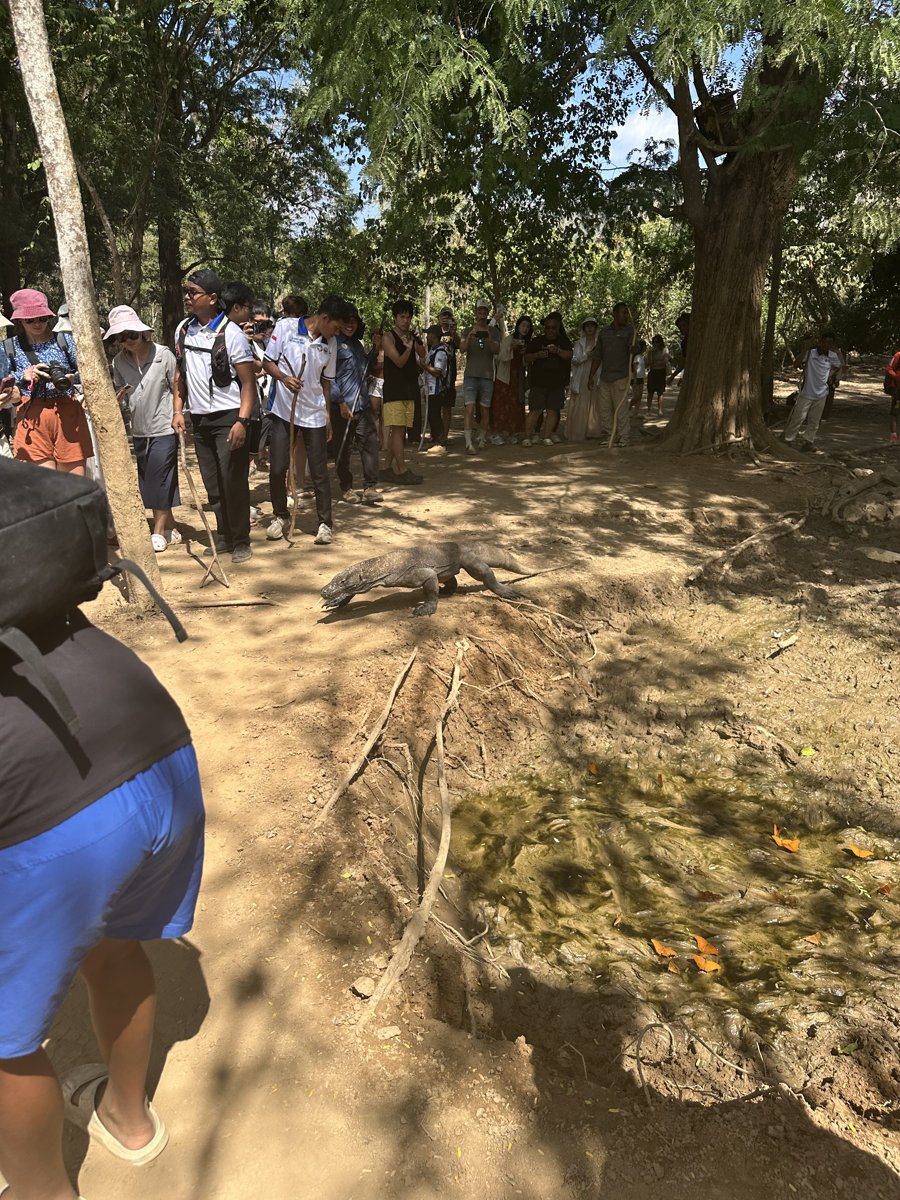
We needn't have worried. About five minutes in, we met our first one — a big adult near a nearly dried-out waterhole. That first sighting came with a crowd of maybe 50 tourists and a rather unpleasant smell off the mud, and after a while the dragon clearly tired of the audience and lumbered off into the forest.
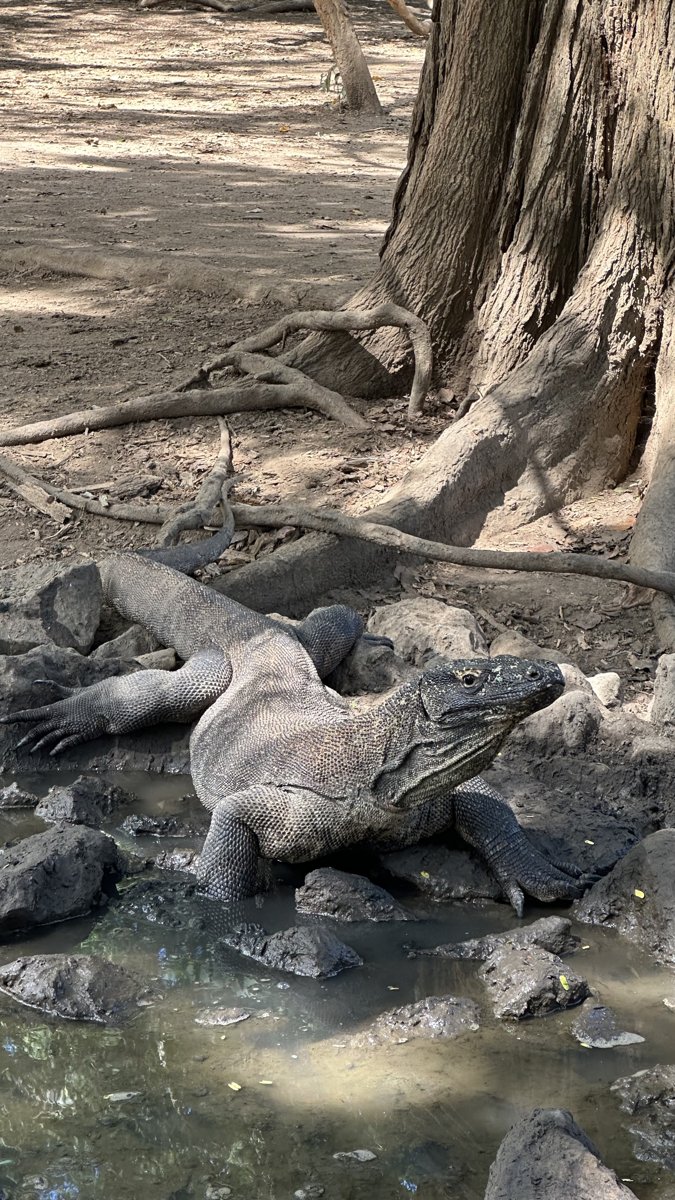
The ranger told us not to expect more. Then our luck turned right at the end: another dragon along the beach with far fewer people around it, then a second large adult, and finally — near the little market by the start — a tiny young dragon, maybe a year old, slipping through the bushes. So although a few of the group first counted three, we actually saw four Komodo dragons in total, baby included. The one slightly wearing part came at the end: a crowd of souvenir sellers on the beach who worked the passing tourists pretty aggressively — enough that the hard sell rather had the opposite of the intended effect on us.
Manta Point
After Komodo Island we carried on to Manta Point. Once again expectations had been carefully lowered — cold currents can mean the mantas are absent or hanging deep — and once again we got lucky. How lucky depended entirely on where you happened to be in the water: different members of the family saw somewhere between one and four manta rays gliding past, and the wider group probably saw more across the site. Vitus also spotted a stingray, and he wasn't the only one.
It's a place that's really only about the big rays. There were very few fish, little coral, not much else to look at compared with the richer reefs elsewhere on the trip — but a manta sailing under you in open water is worth the whole stop on its own. There was some current and a bit of chop, but nothing unmanageable. Our one regret: this was the day we'd forgotten the underwater camera, so the mantas live mostly in memory and in the guides' footage.
That evening the wind picked up and the sea started to build — the beginning of the long, rough crossing away from Komodo toward Lombok. But that, along with whale sharks on Noah's birthday and a pod of dolphins, is the next story.
Next: The crossing to Lombok — whale sharks, dolphins and a Bounty island →
Comments