Mount Rinjani was the reason we stayed on Lombok at all — and the biggest single thing we've done on this whole trip. At 3,726 metres it's Indonesia's second-highest volcano, famous for being both staggeringly beautiful and staggeringly hard. Over three days we would climb to the crater rim, up to the summit for sunrise, down into the crater to its lake and hot springs, back up and over the far crater wall, and finally all the way down the other side. It's hard to convey, before you do it, quite how much mountain that is.
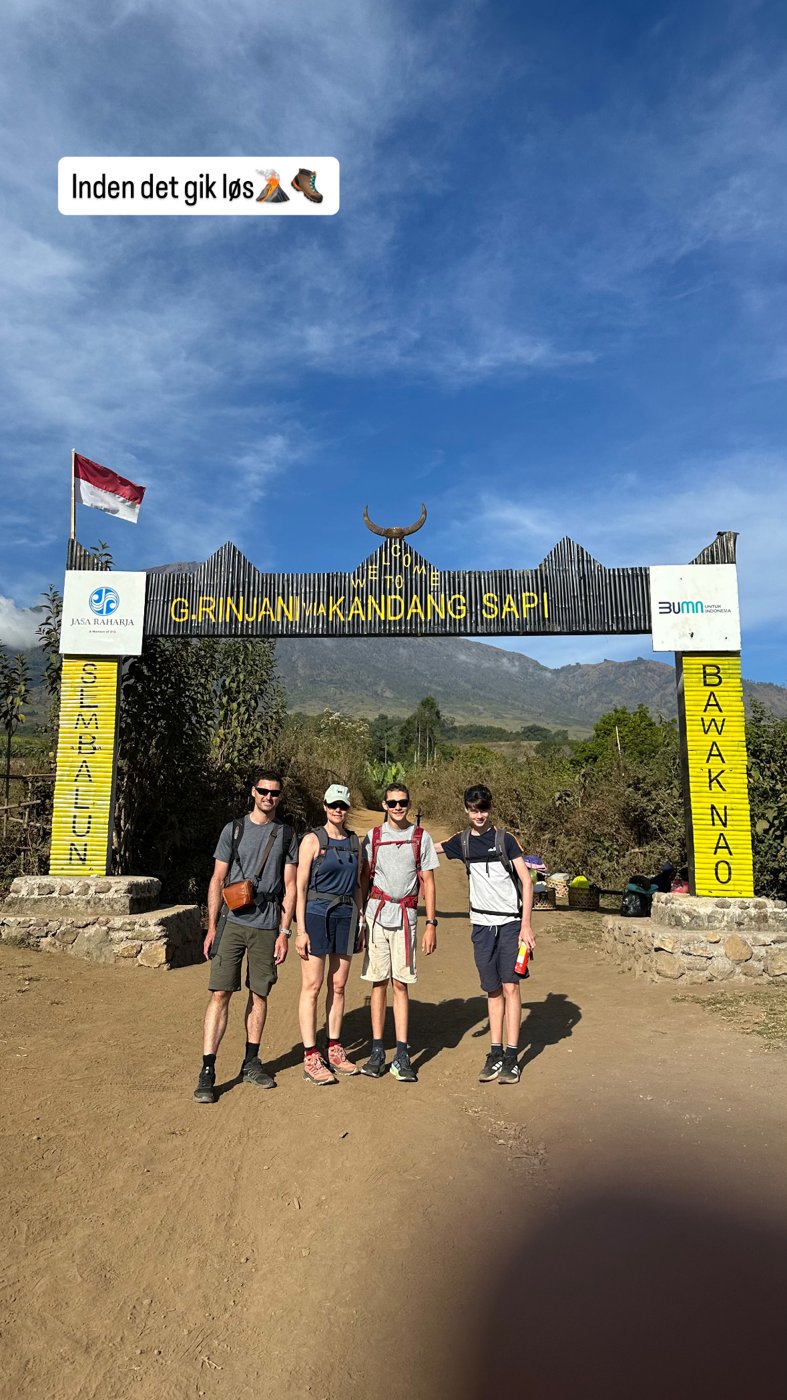
We were picked up (late) and driven about an hour — on the open back of a truck, cold in the early-morning hill air — to the village of Sembalun, where the route was reversed from what we'd expected: start at Sembalun, finish down in Senaru. A few last snacks bought (Noah stocked up on an extra 30% pack of Oreos, ending with two packs and three Snickers "which was of course far too little," as he learned), and we set off.
Day one — up to the crater rim
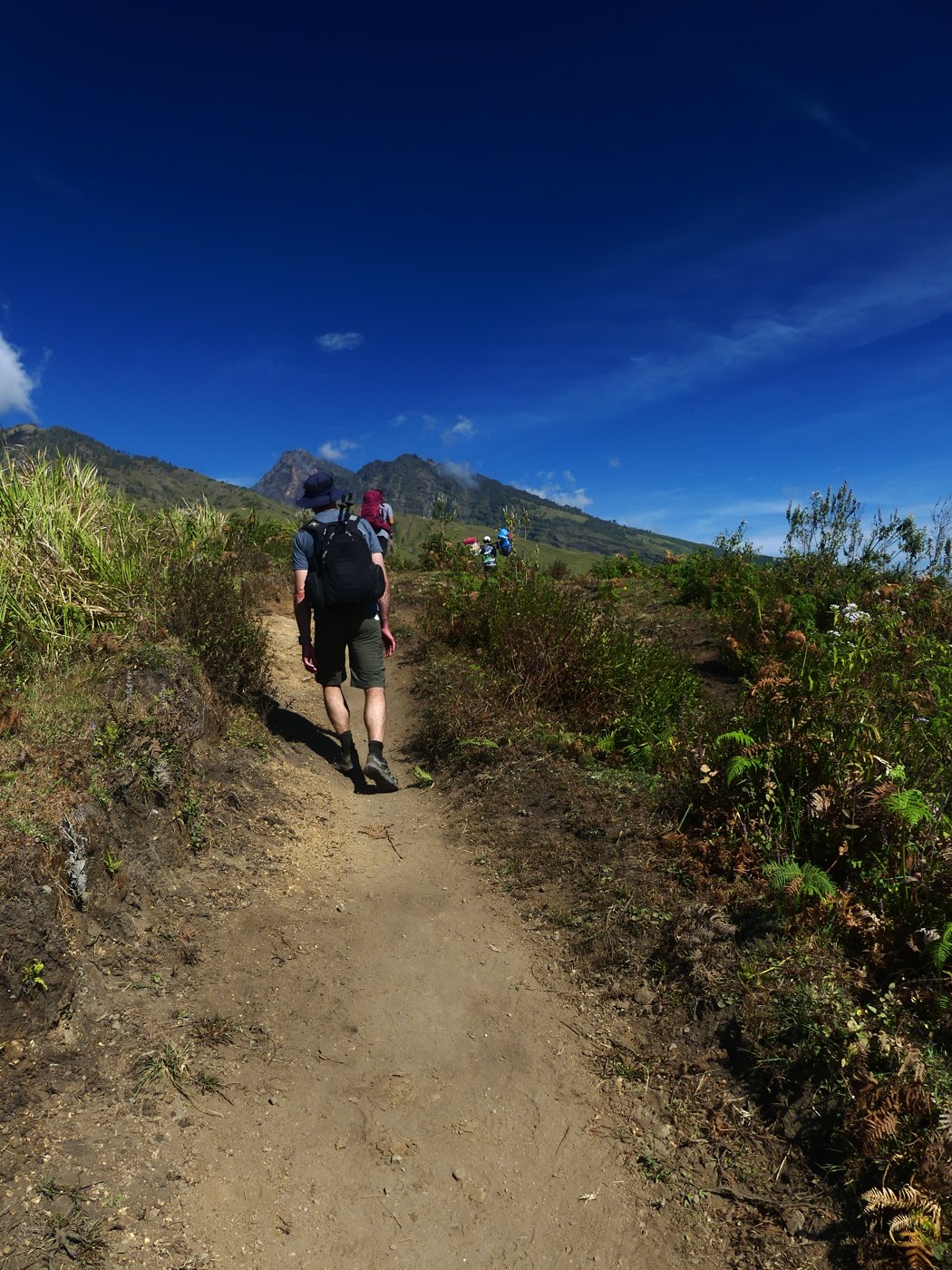
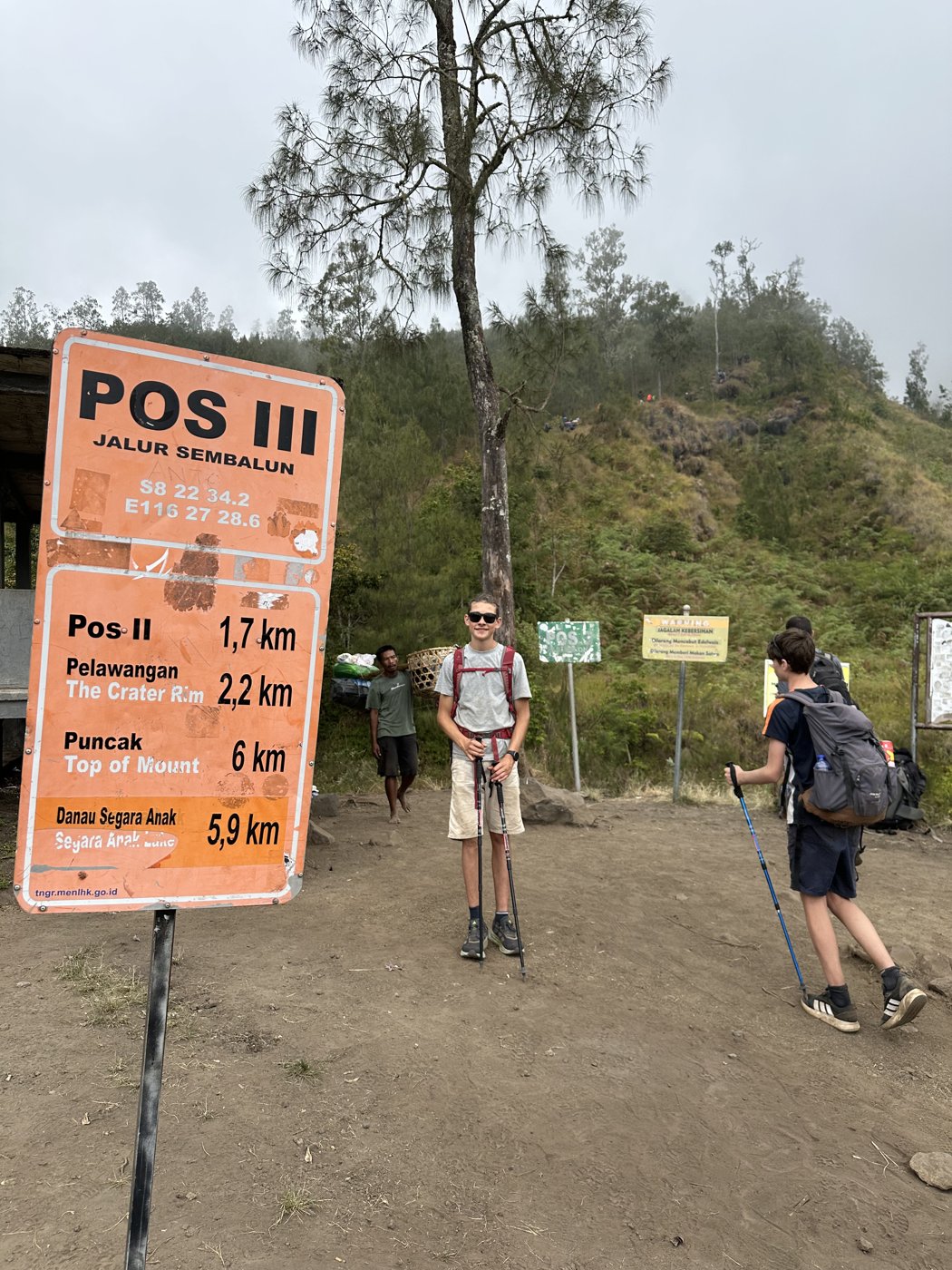
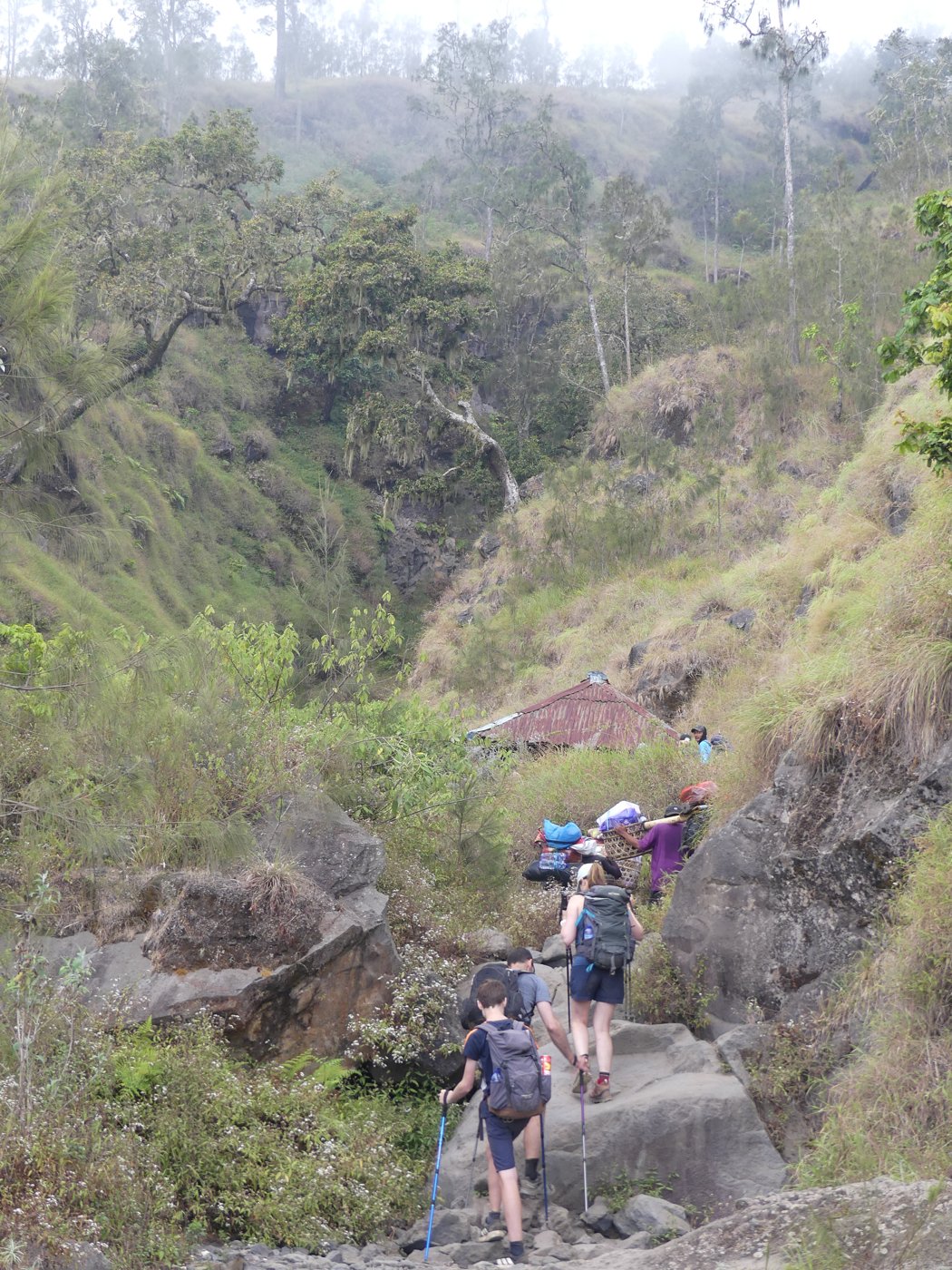
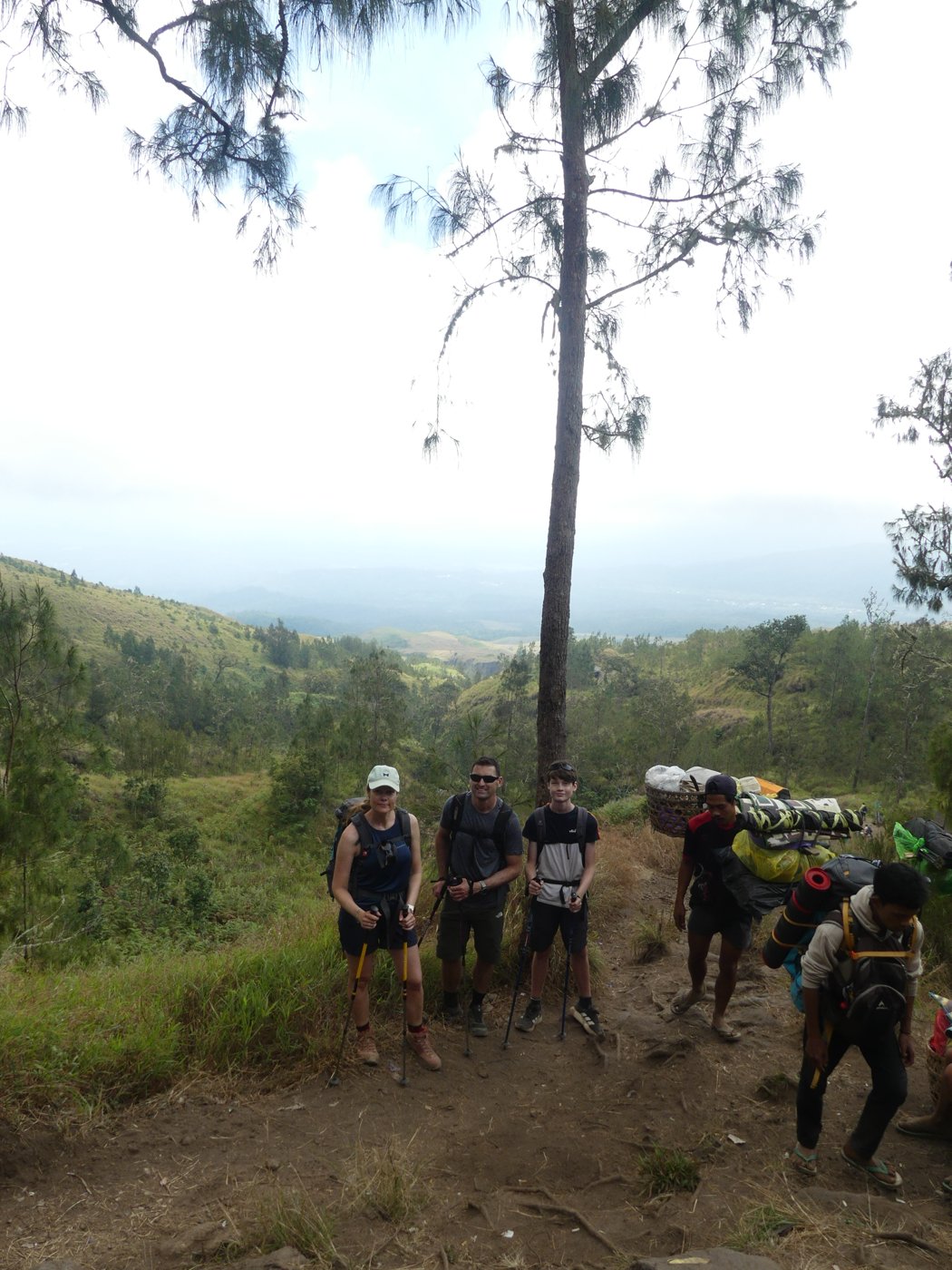
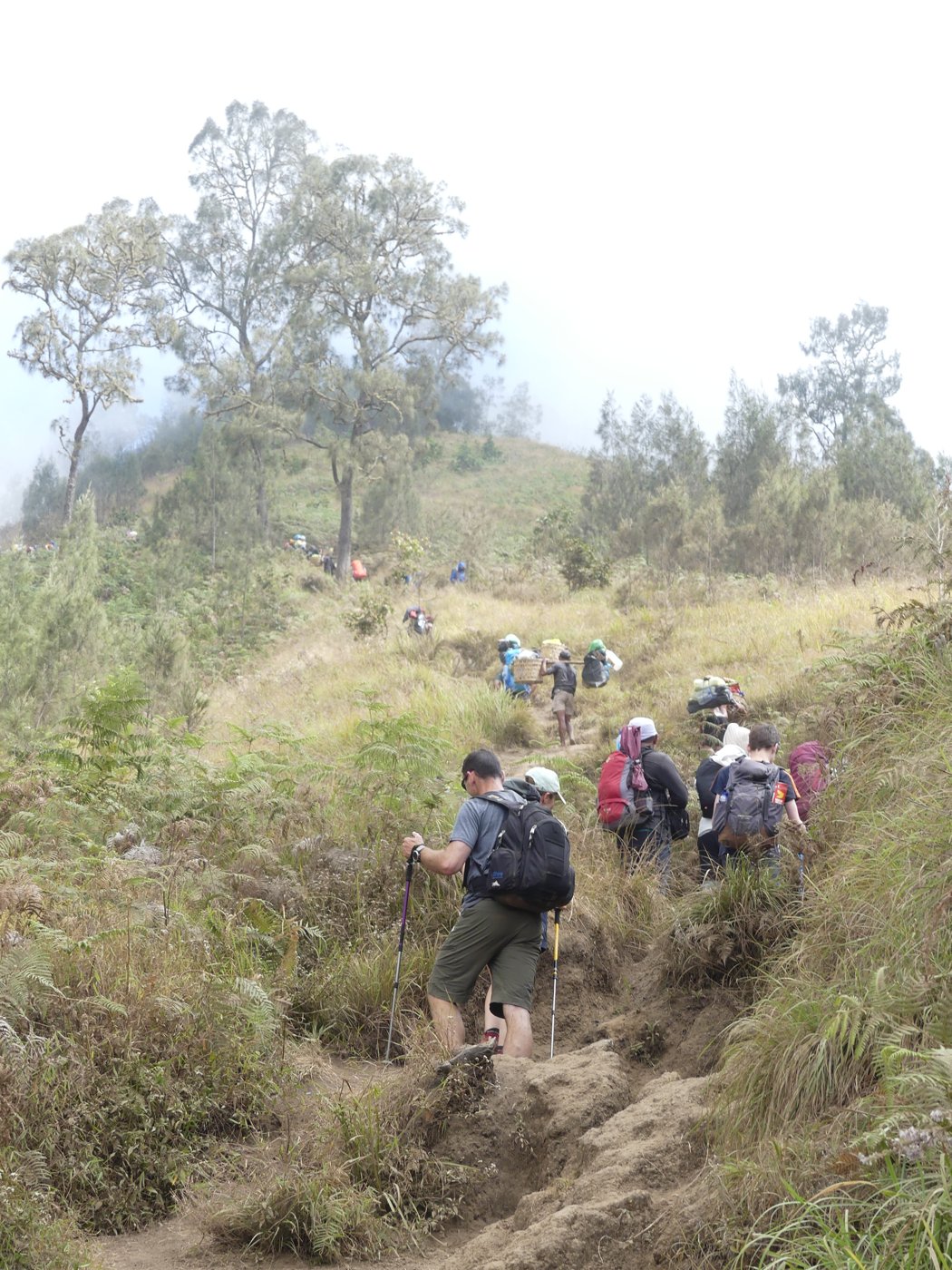
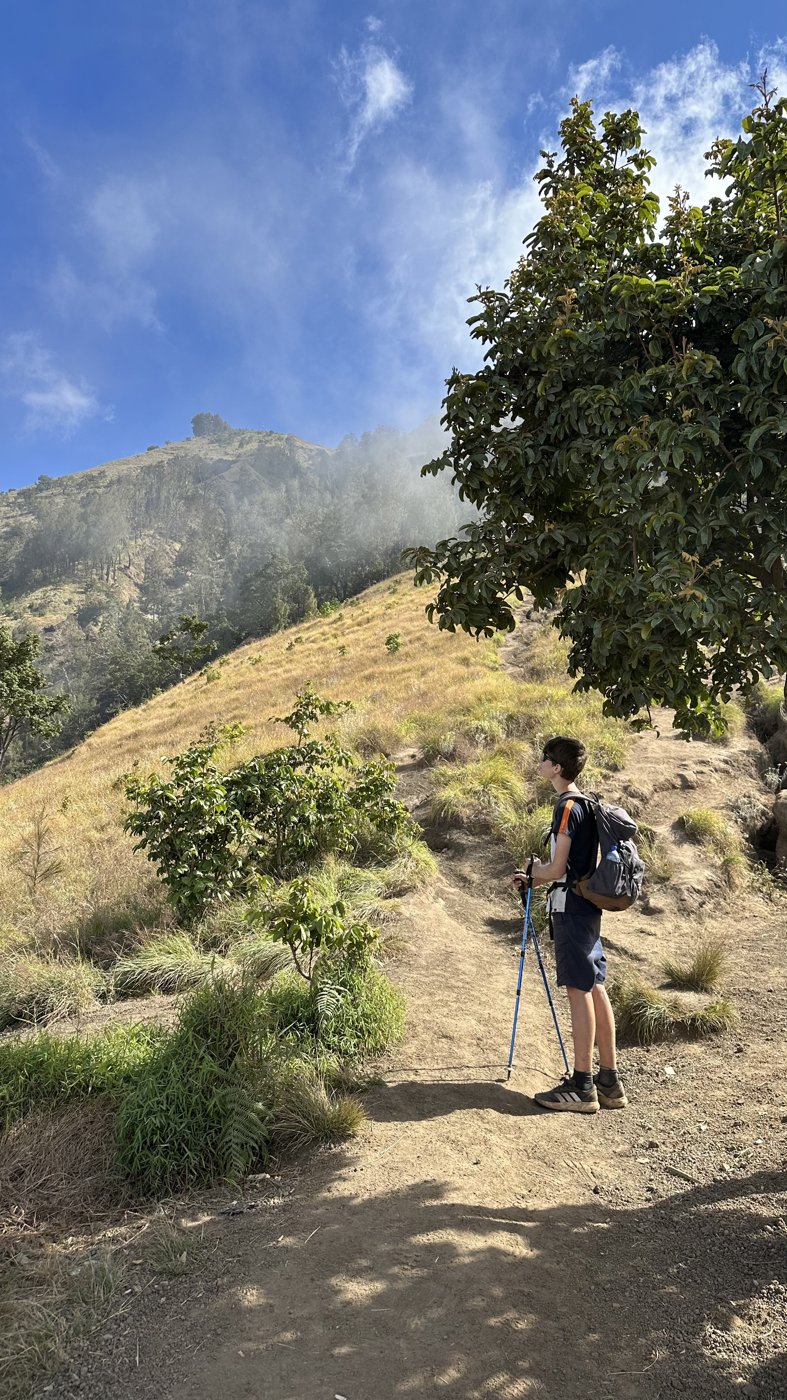
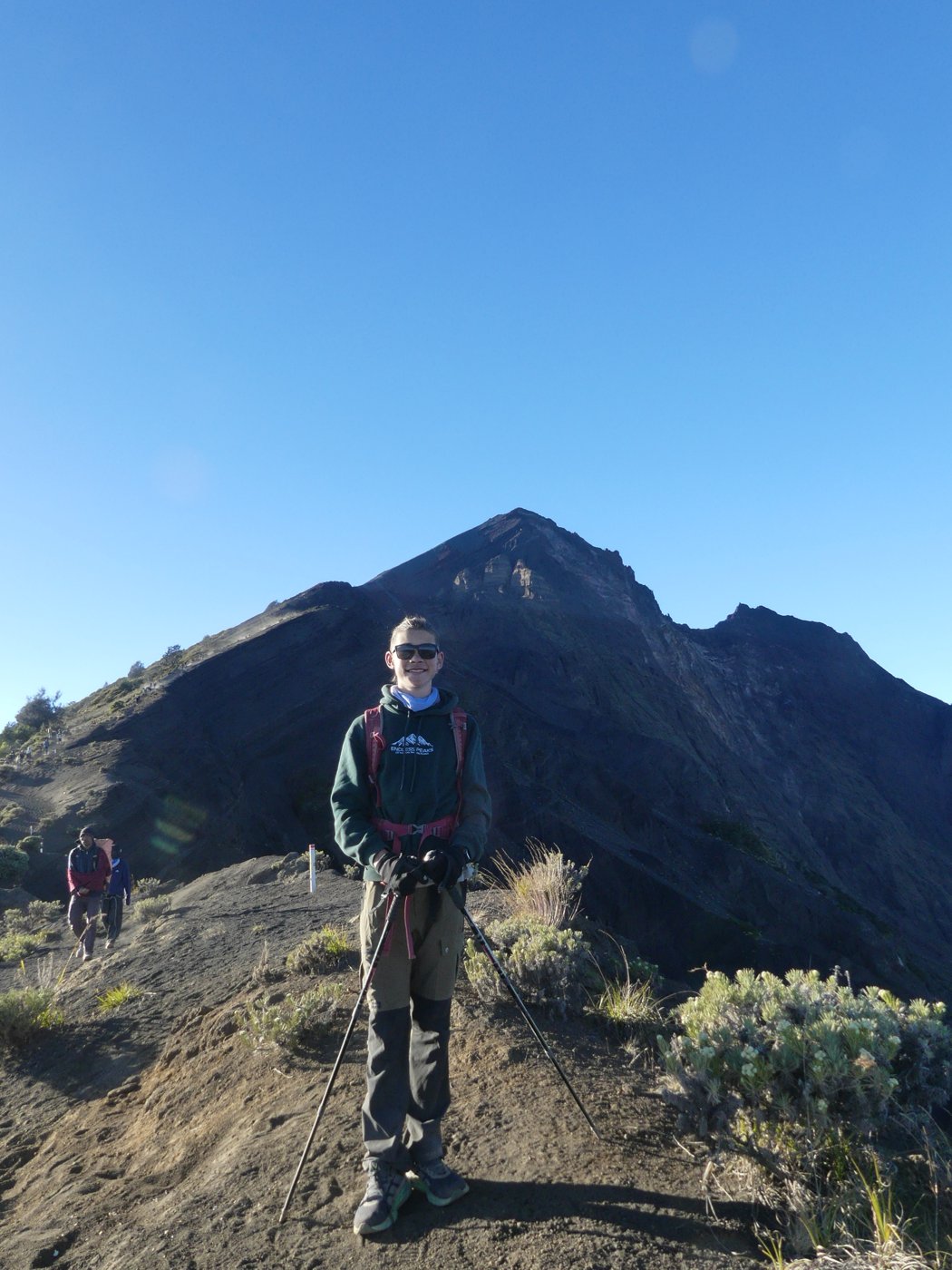
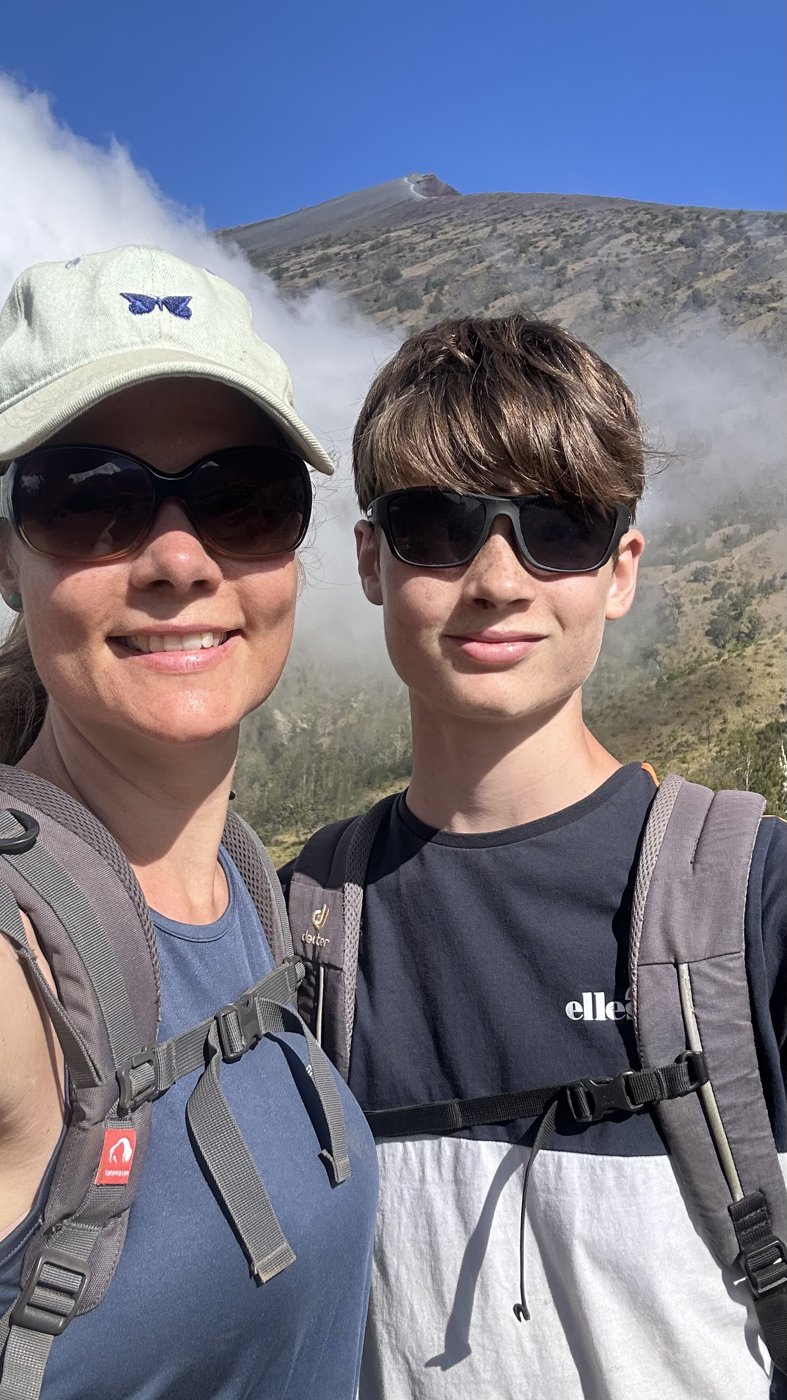
The first day climbs from around 1,100m up to a basecamp on the crater rim at roughly 2,600m. It's a long, hot, relentless slog through changing landscapes: open grassland, then jungle-ish scrub, then bare stony trails, with huge views opening up the whole way. The kids did really well — Vitus took a while to find his walking legs and got them at last late in the day, powered along by talking non-stop about Pokémon Go. Noah had energy to burn and kept running ahead and back to photograph everyone.
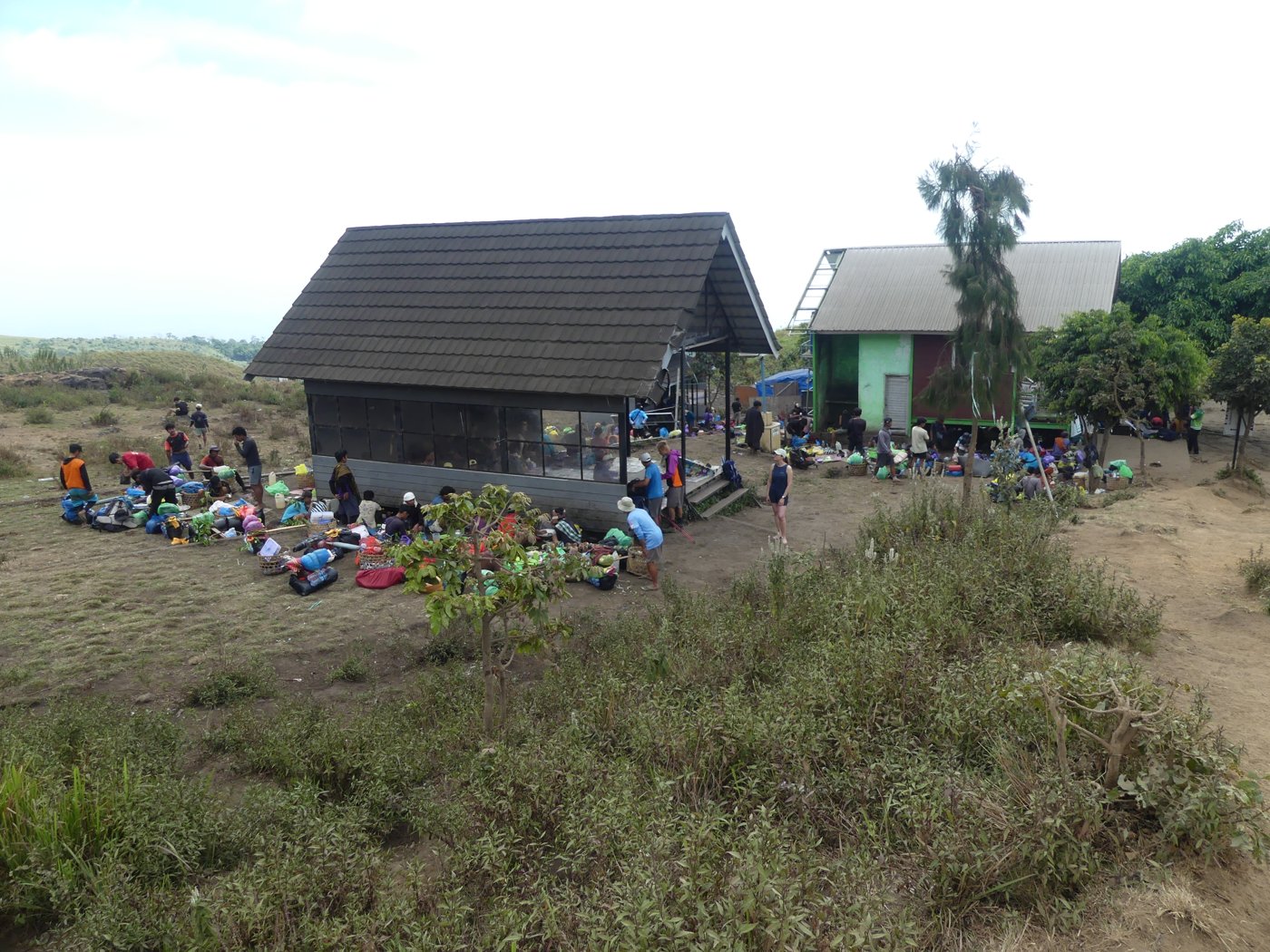
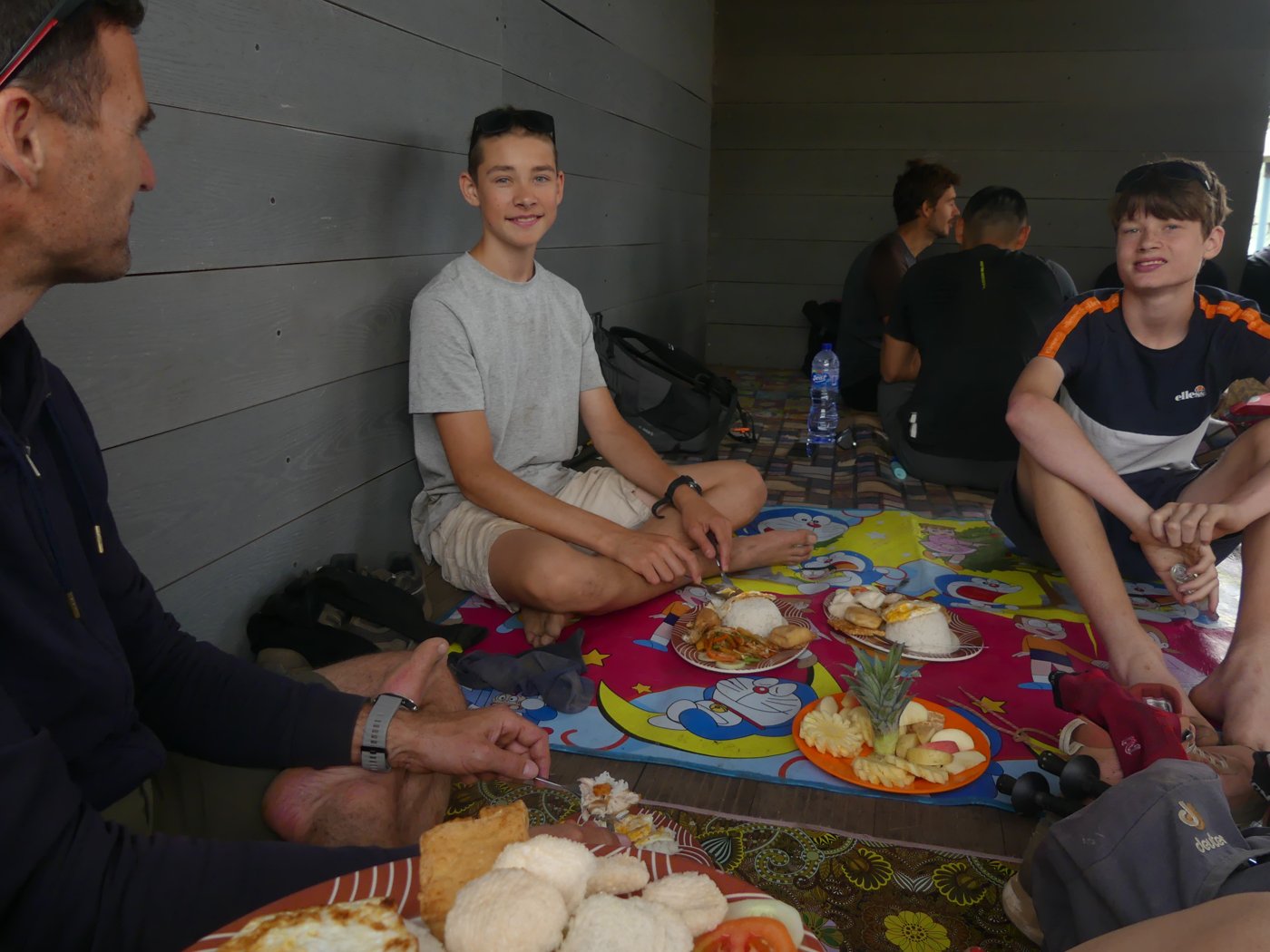
The heroes of any Rinjani trek are the porters. They carry all the gear — tents, water, food — 30 to 40 kilos slung on a shoulder-pole with a basket at each end, over the most broken, stony trails imaginable, often in flip-flops, and they run ahead to have lunch cooked and tents up before you arrive. Every group's food was excellent; ours cooked us lovely meals in the middle of nowhere with barely any equipment. Endlessly impressive, and a little humbling.
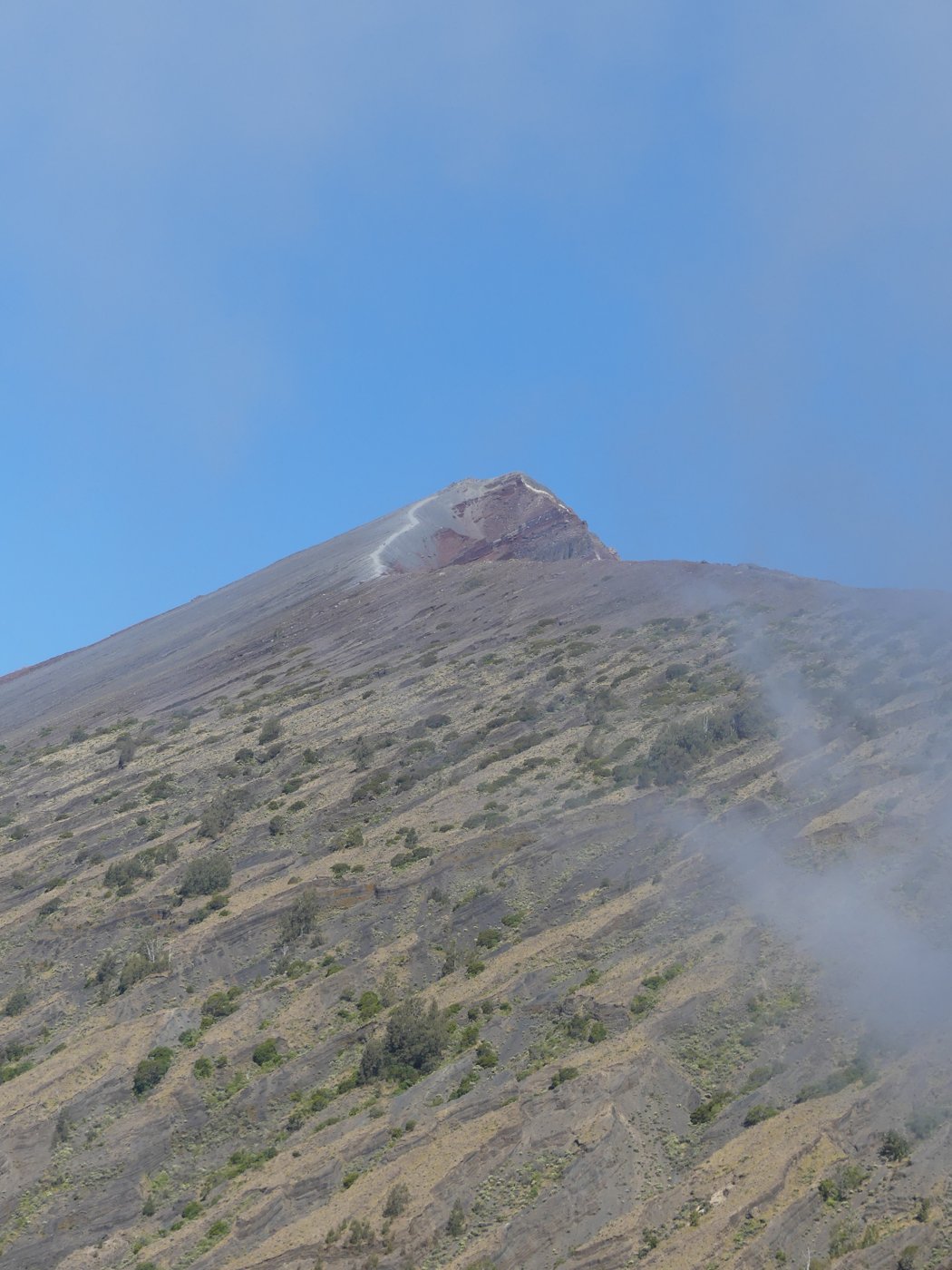
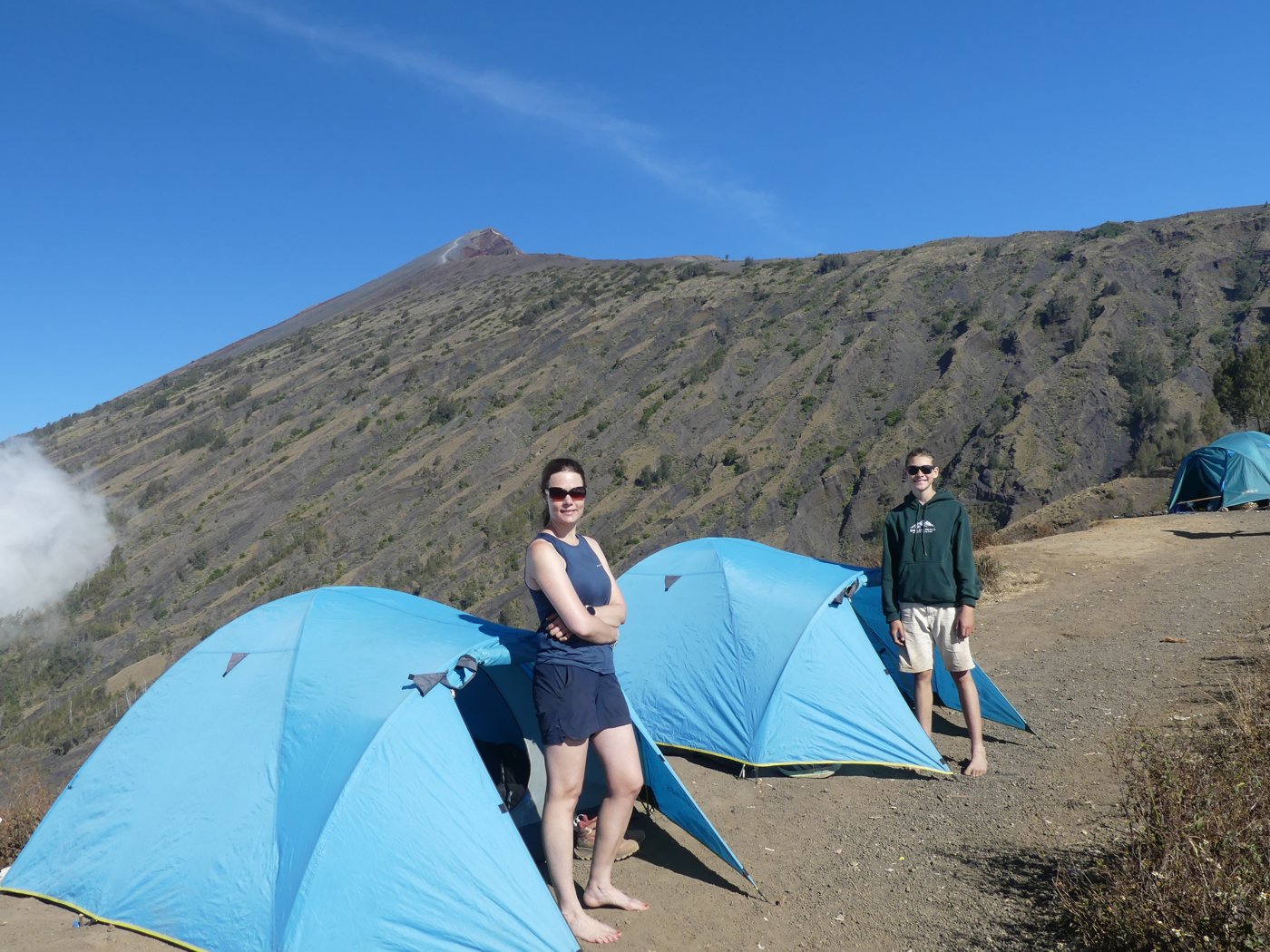
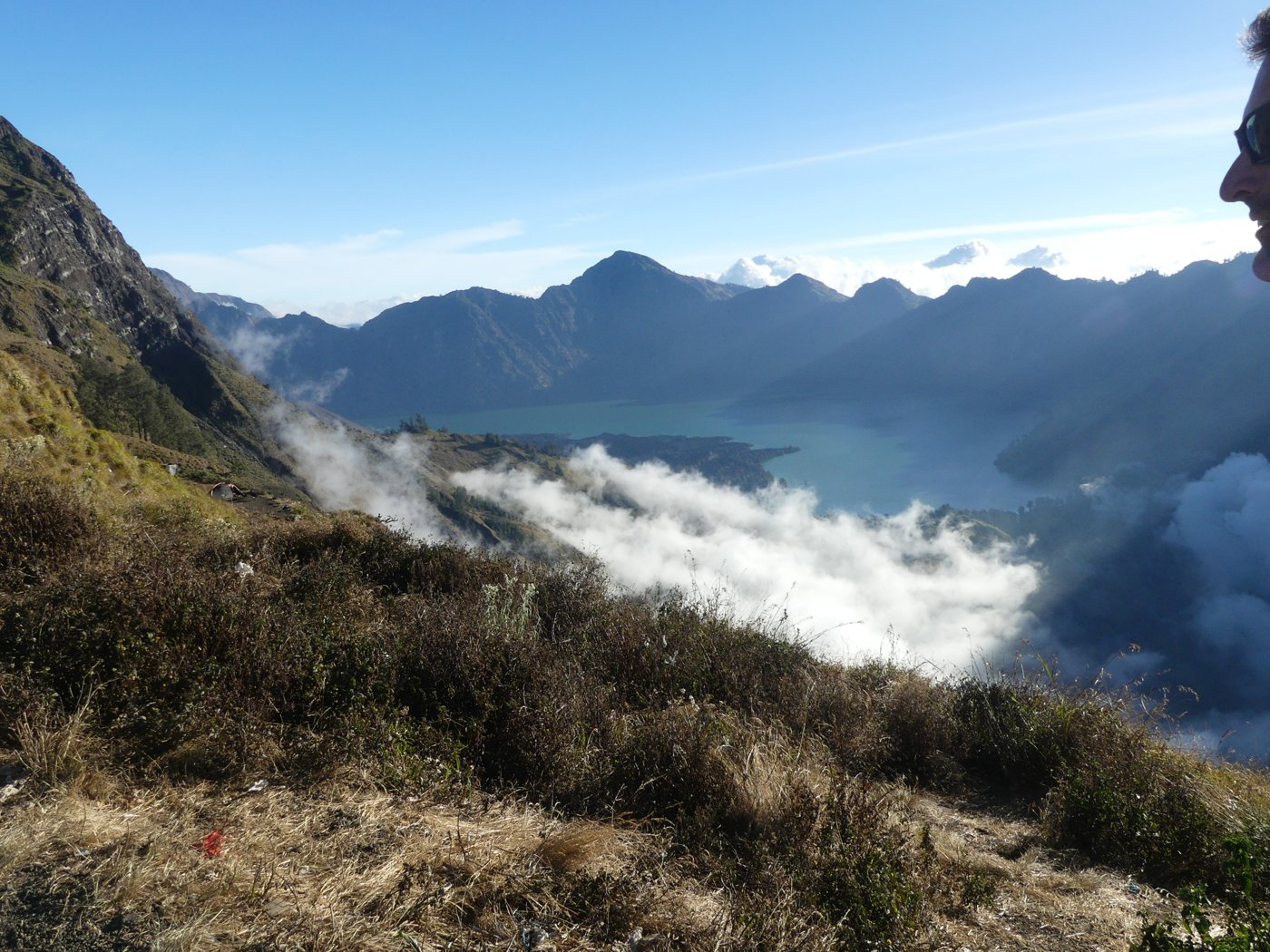
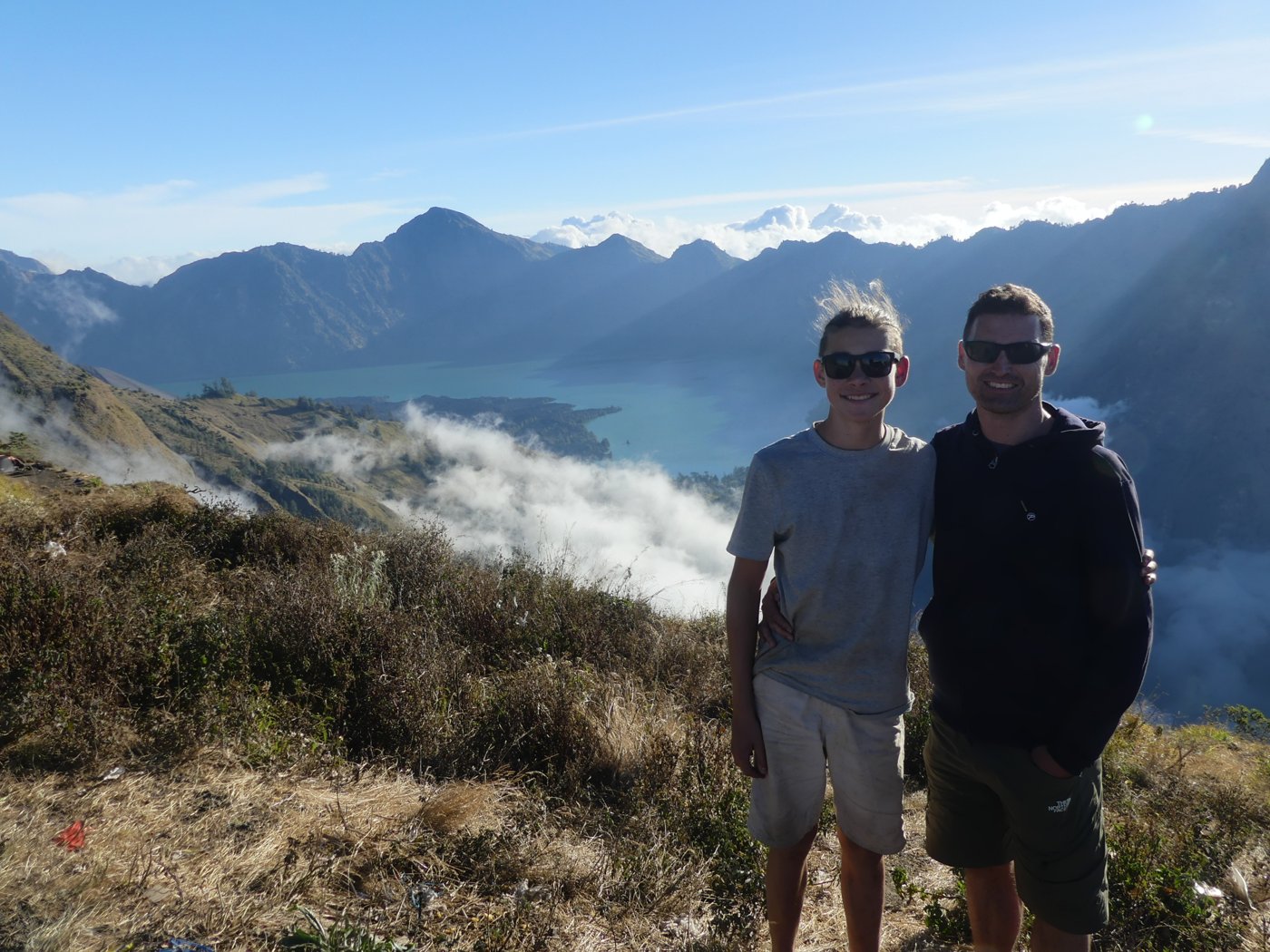
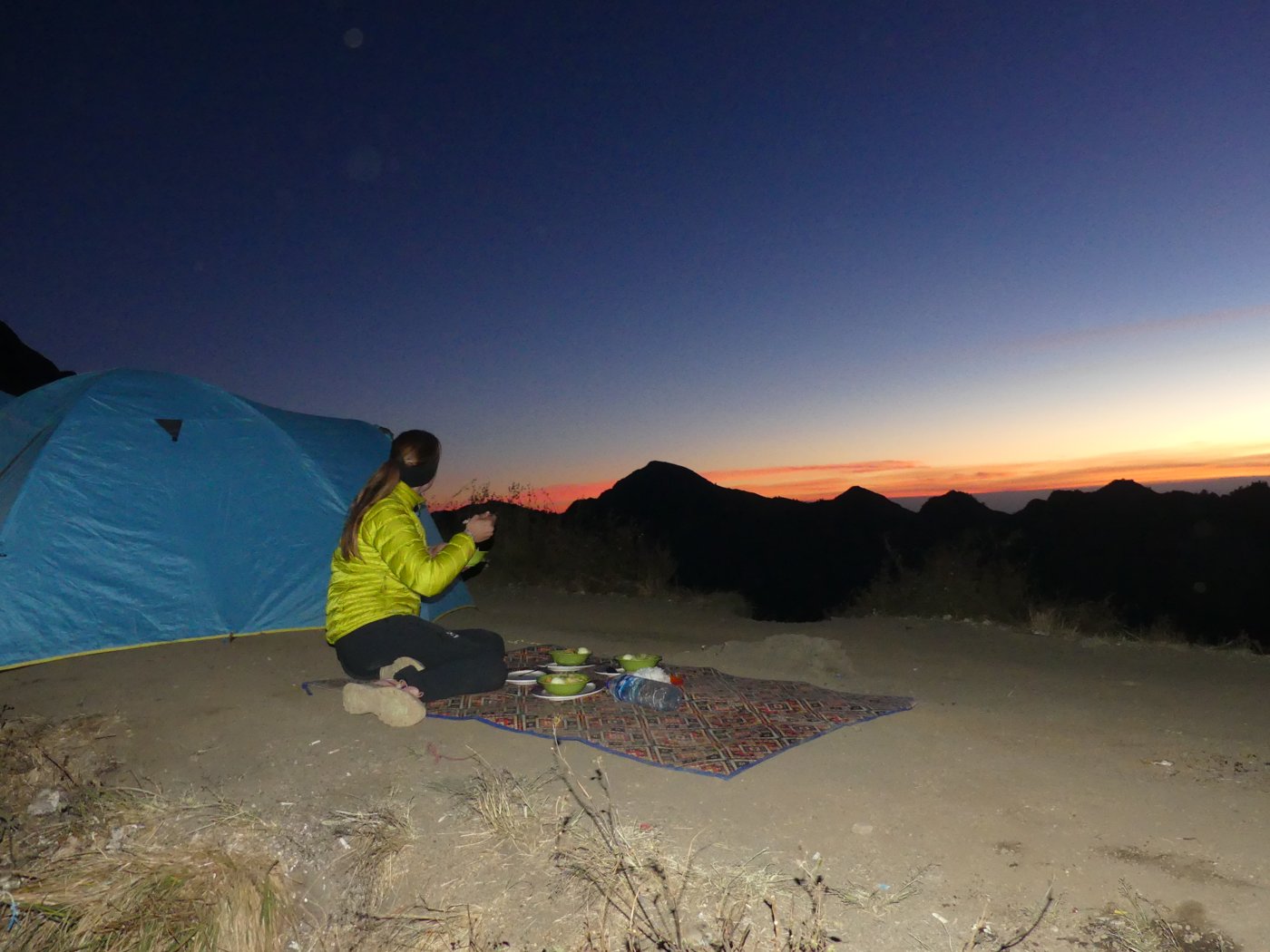
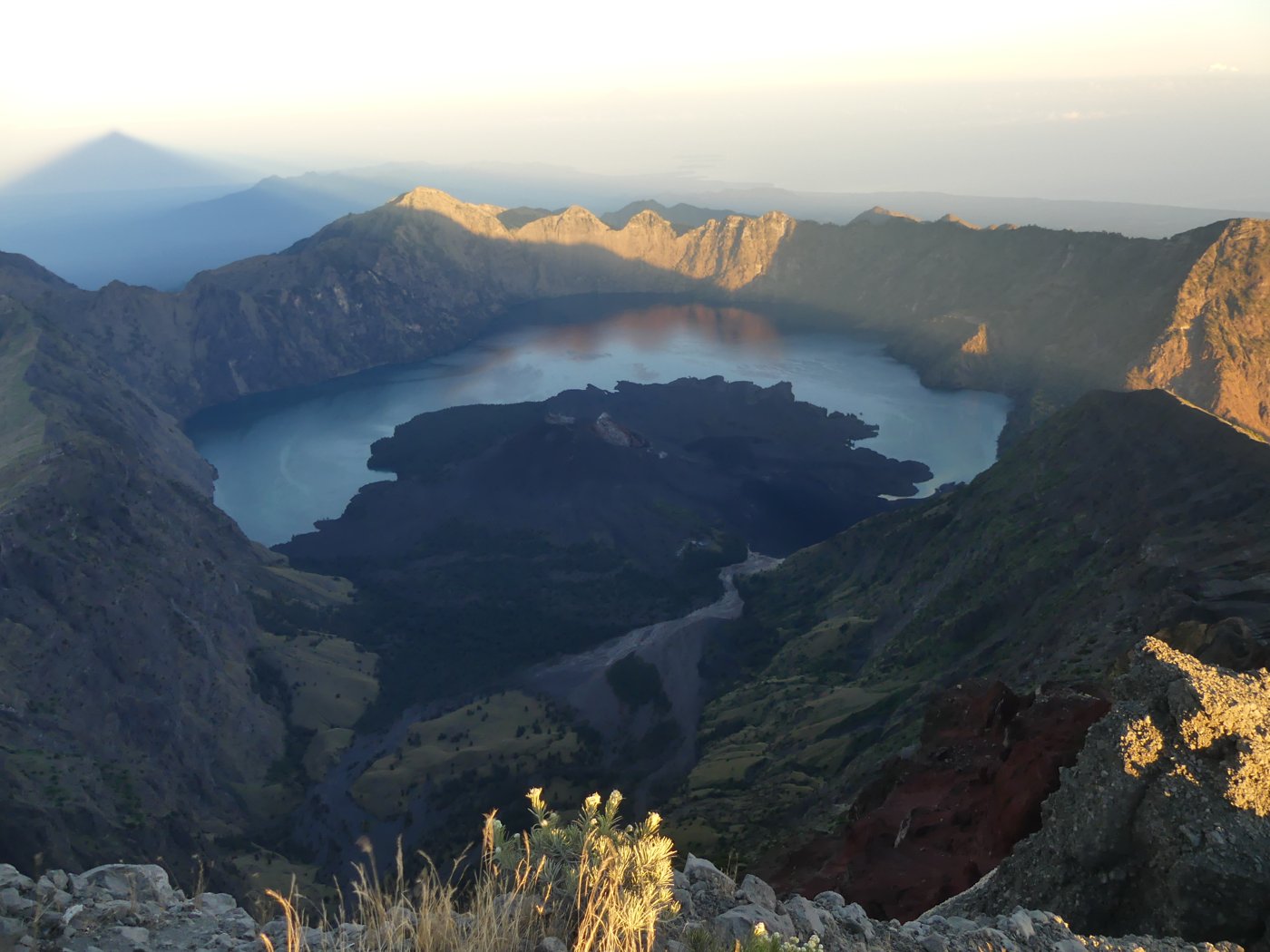
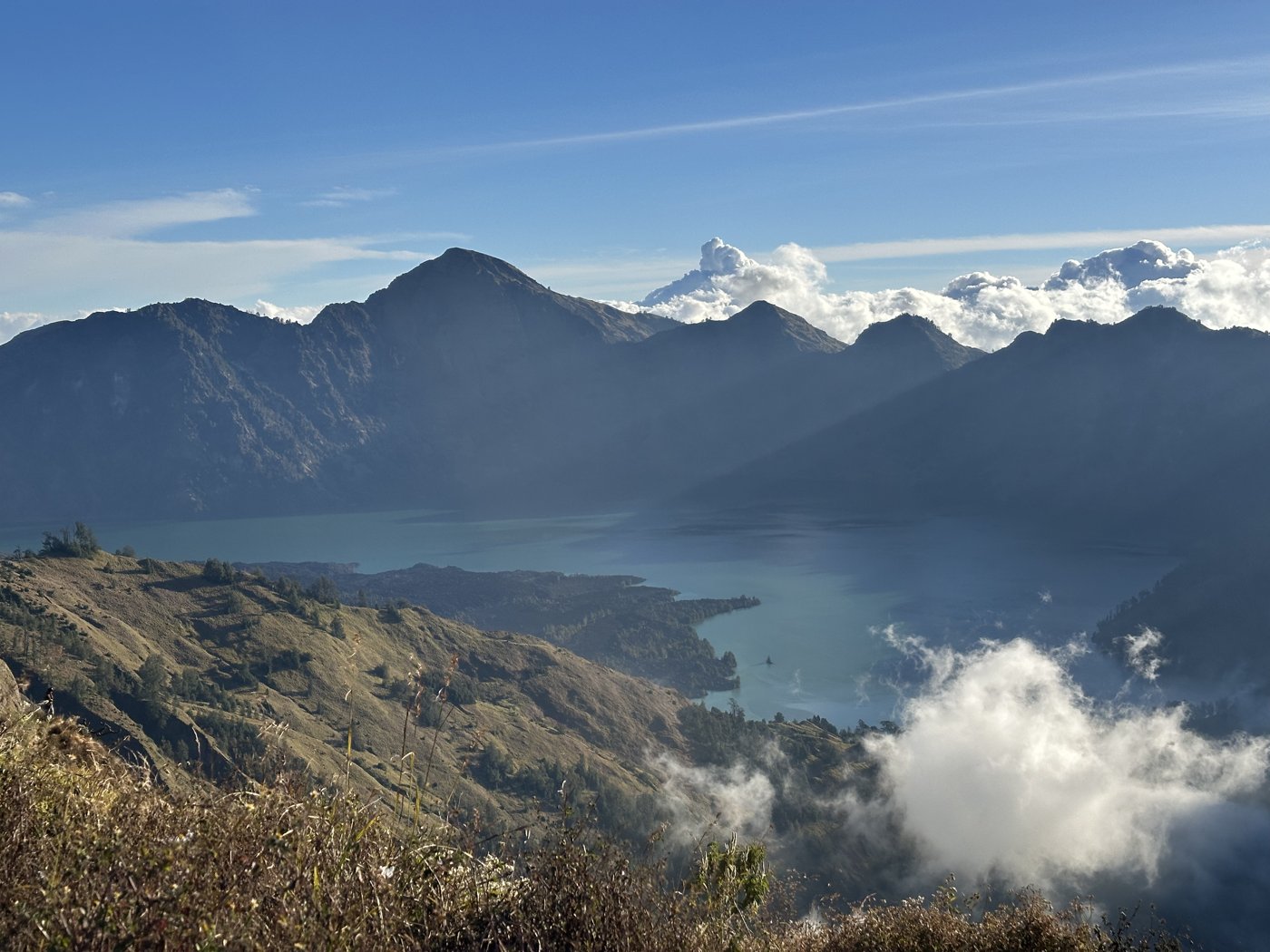
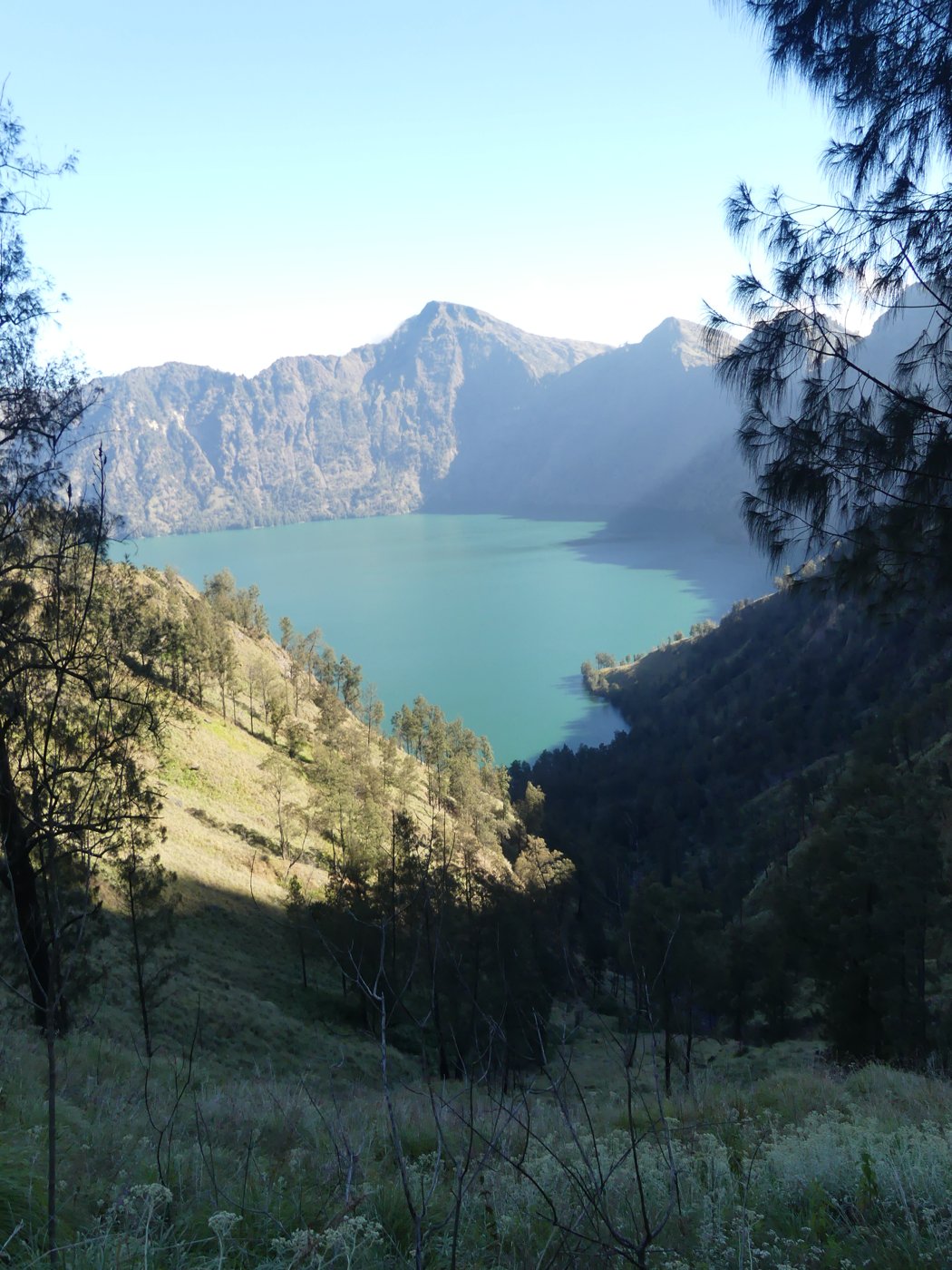
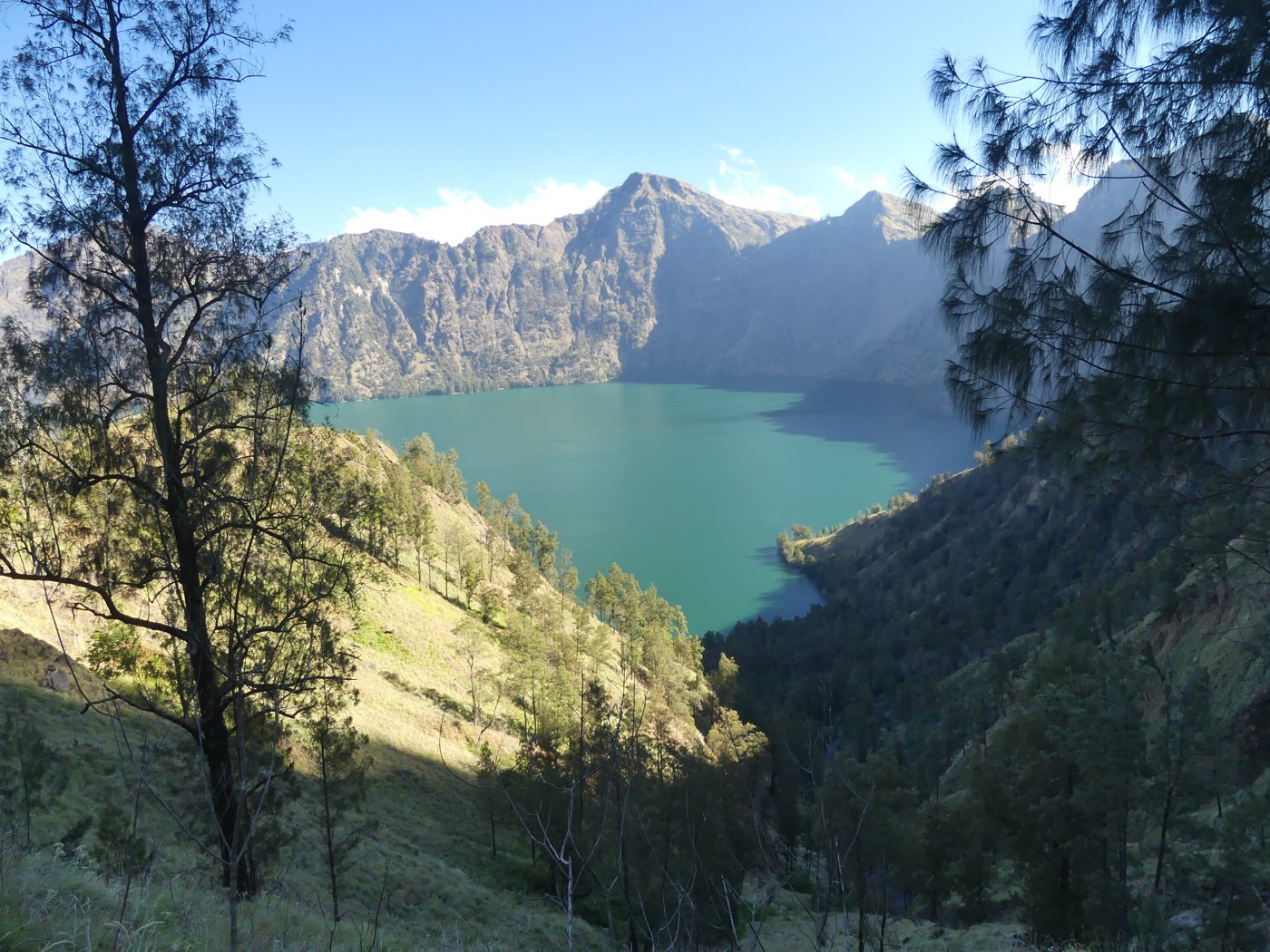
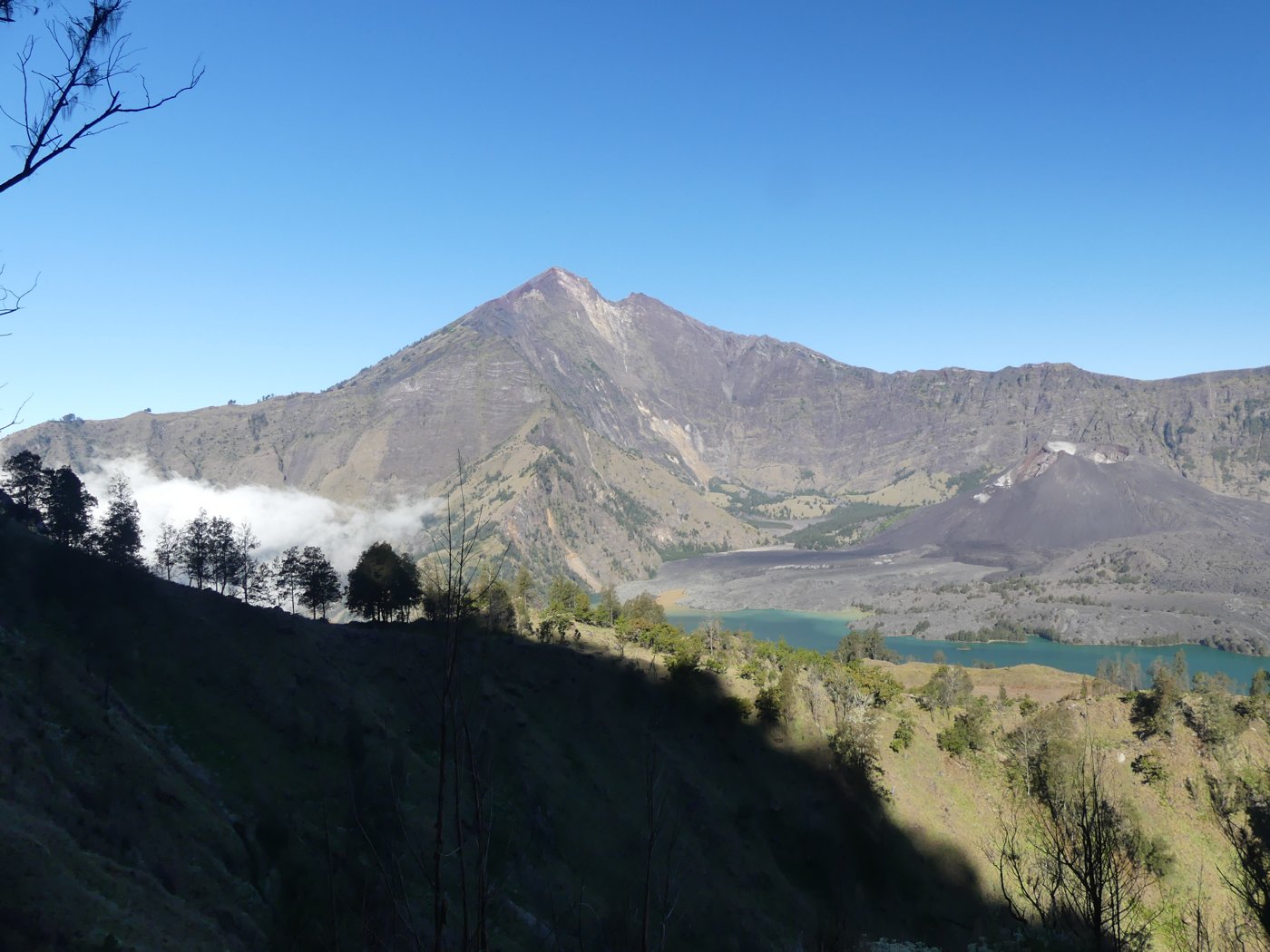
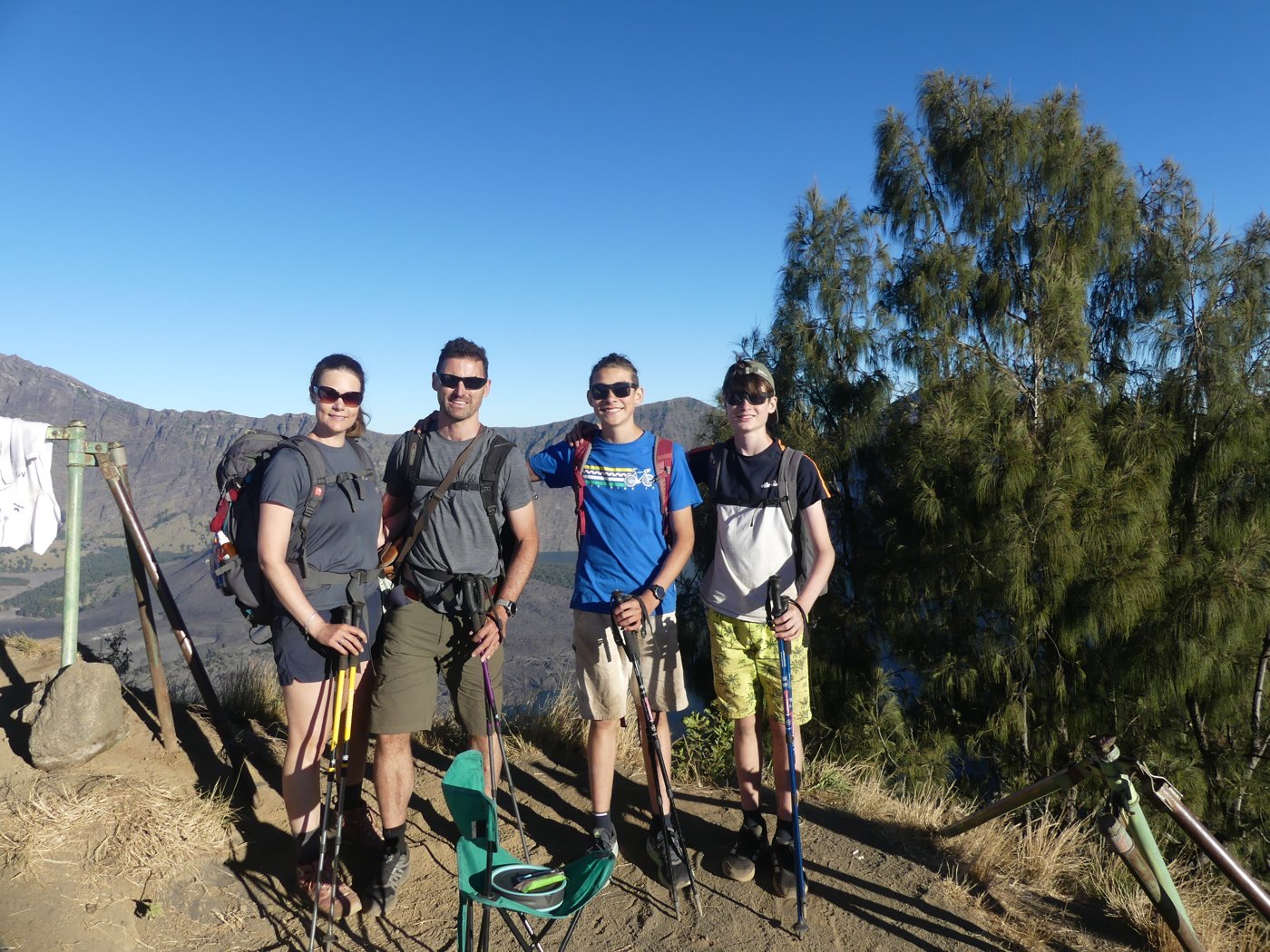
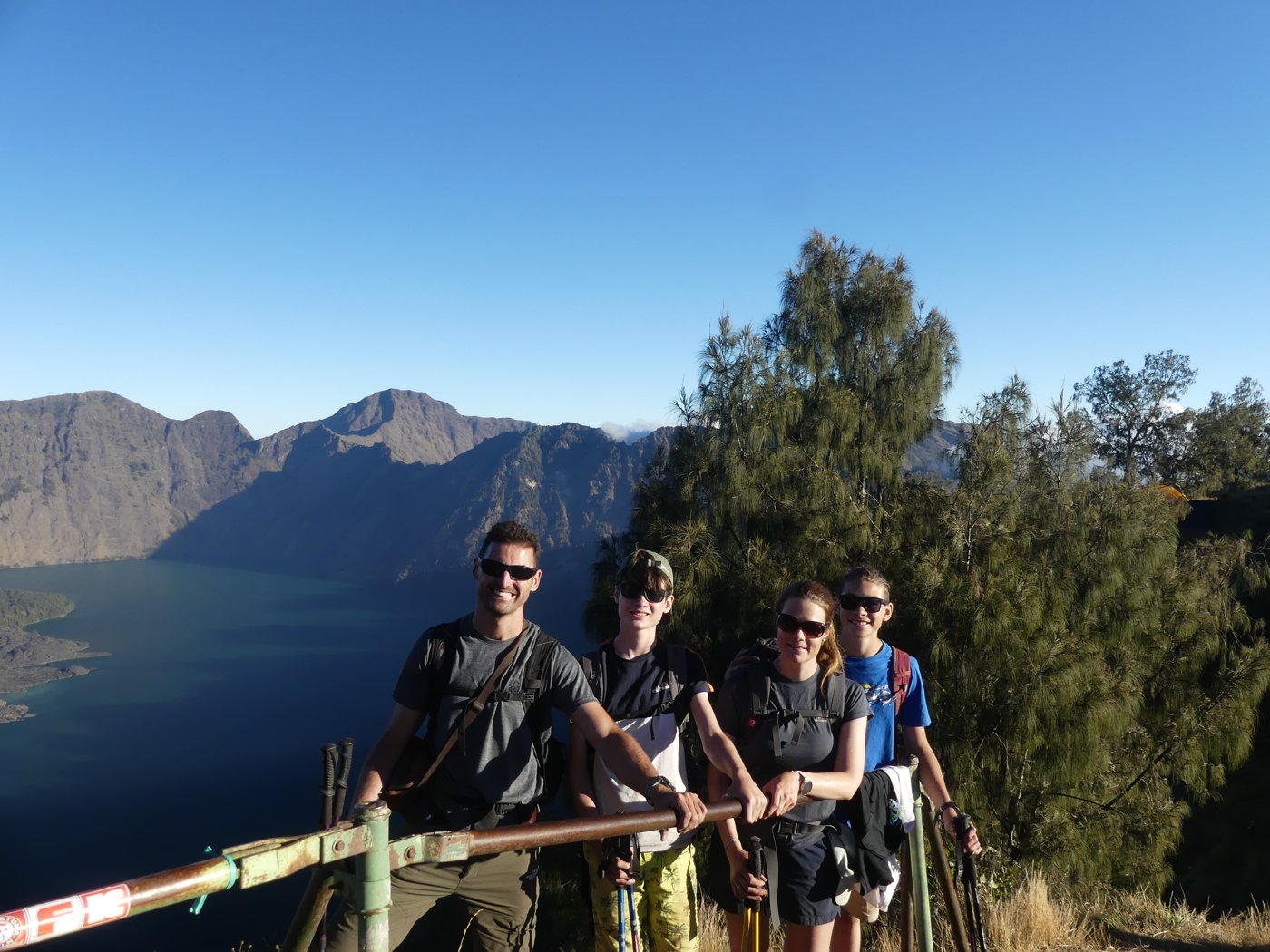
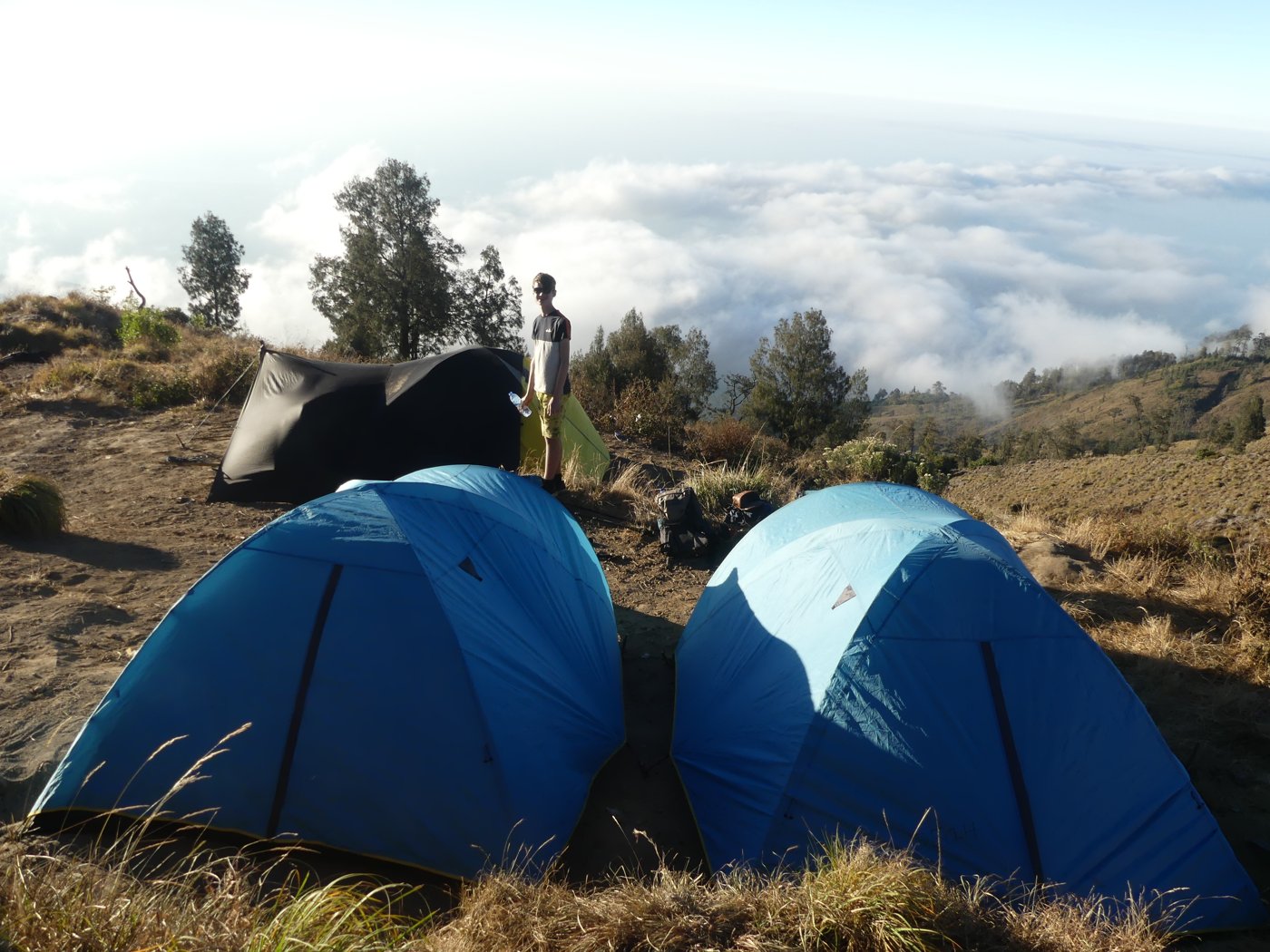
We reached the crater-rim camp around 3pm — fast going, which left a couple of hours simply to sit and take it in. The cloud lifted to reveal the reason everyone climbs this mountain: the enormous green crater with its lake far below, ringed by walls all the way around. Our tents were, of course, the exact opposite of what we'd booked — thin summer things the wind blew straight through, on wafer-thin mats — but perched on the rim in one of the most beautiful spots on earth, that felt like a detail.
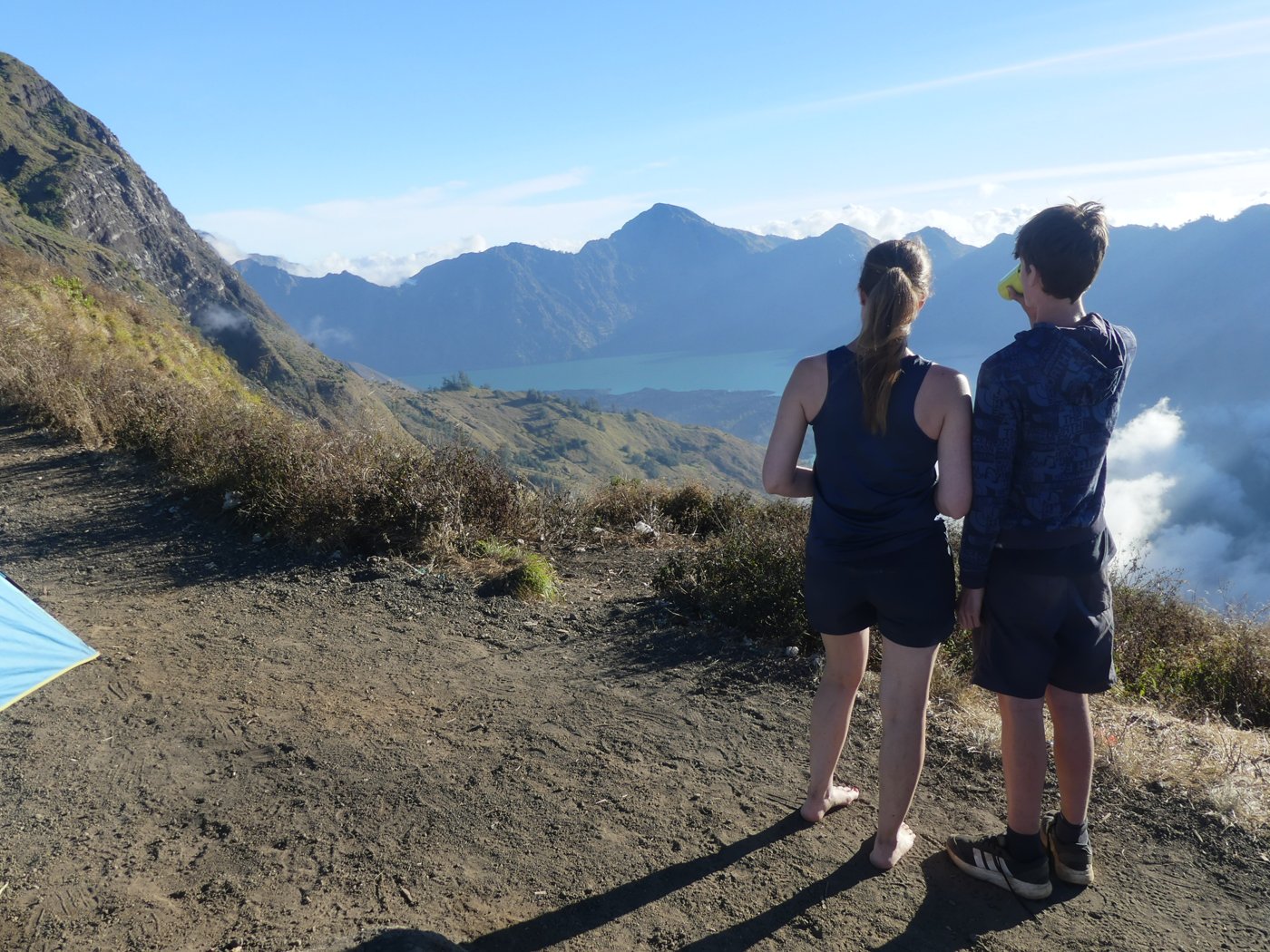
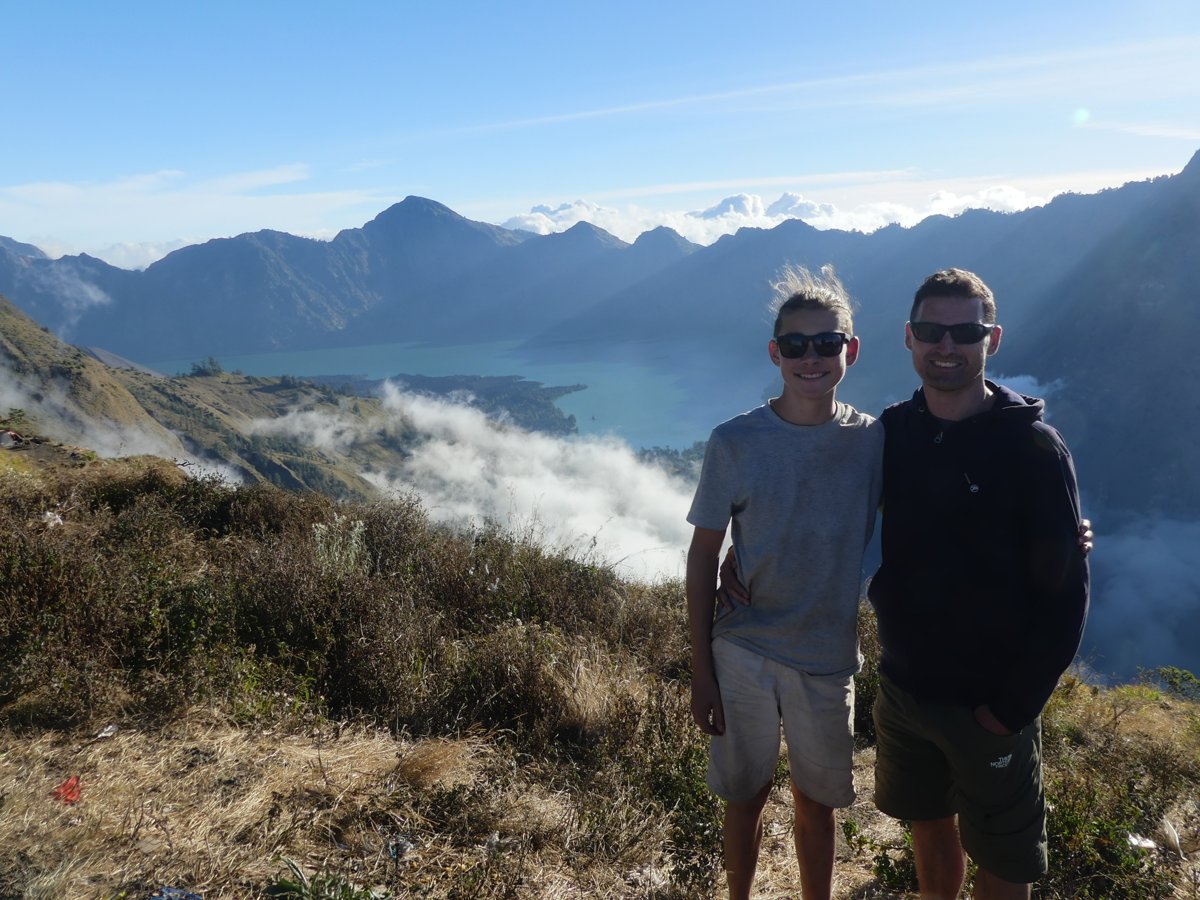
Dinner (fried rice — which always tastes better in a spot like that) came after dark, and it was bitterly cold: we ate in every layer we owned and still shivered. Bed by around half seven, no pillows, because the wake-up call was 2:30am.
Summit morning — and who turned back
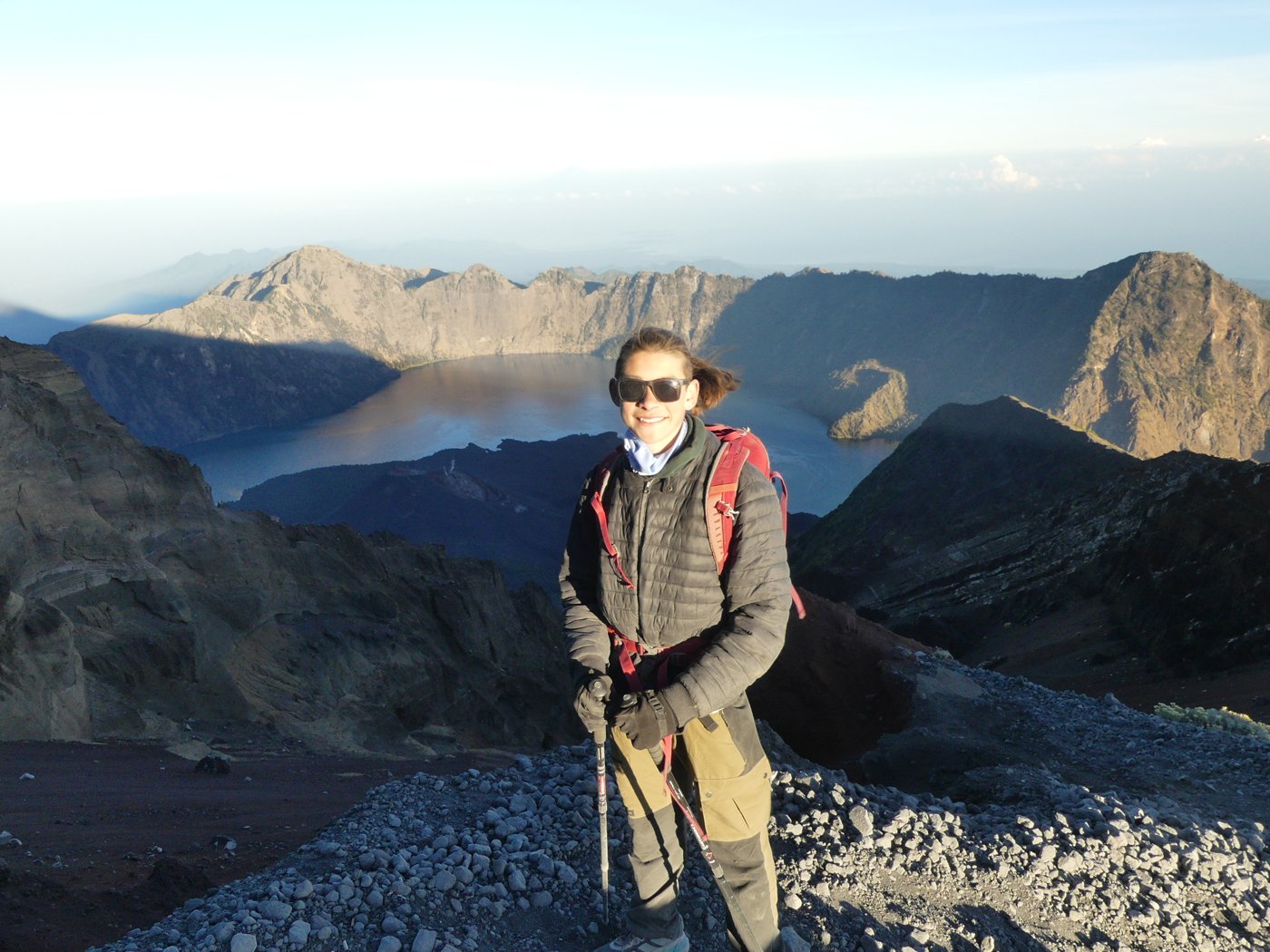
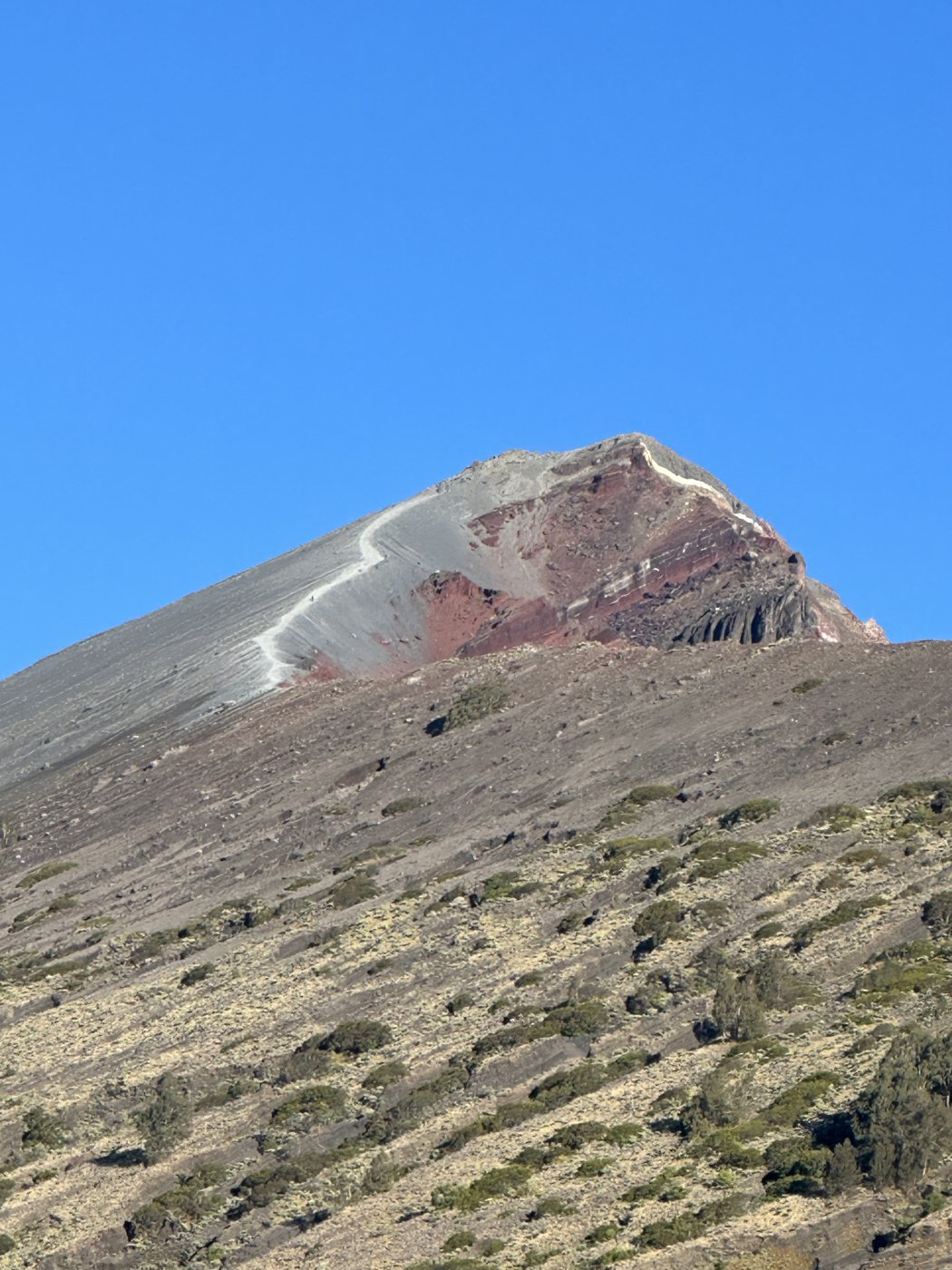
Up at 2:30, a cup of tea and some dry biscuits, and out into the pitch dark with head-torches to try for the summit. It is savagely hard: much of the climb is in deep loose sand and scree where you slide half a step back for every step up. Vitus ran out of steam, maybe 300–400 vertical metres up — completely spent, woken at 2, and with too little in the tank. Line turned back with him and walked him down. So Noah, Jesper and the guide pressed on to the 3,726m summit for sunrise. For Noah it was the one genuinely hard stretch of the whole hike — not the legs but the altitude and breathing, forcing you to go slow and steady so you don't tip into nausea.
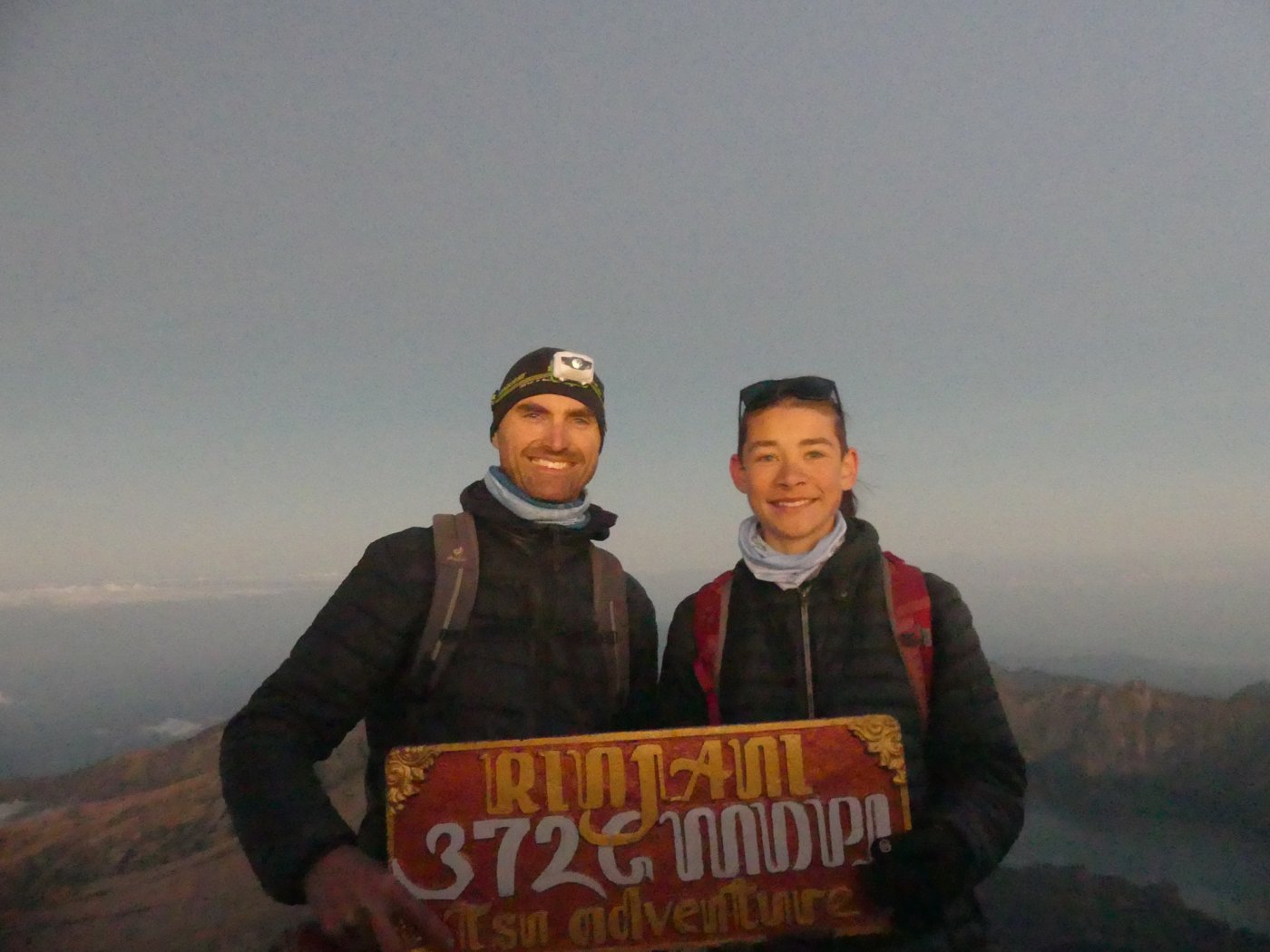
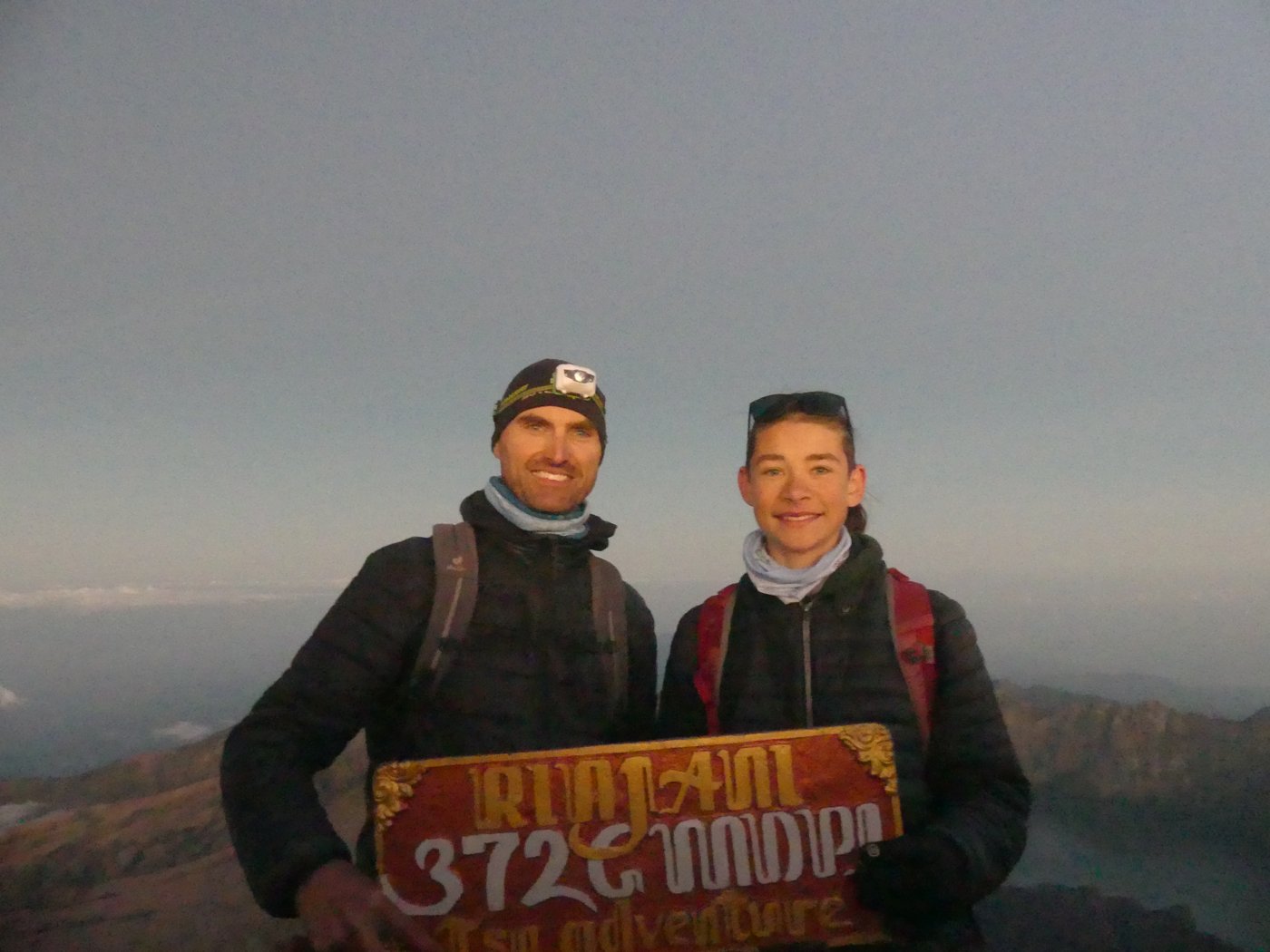
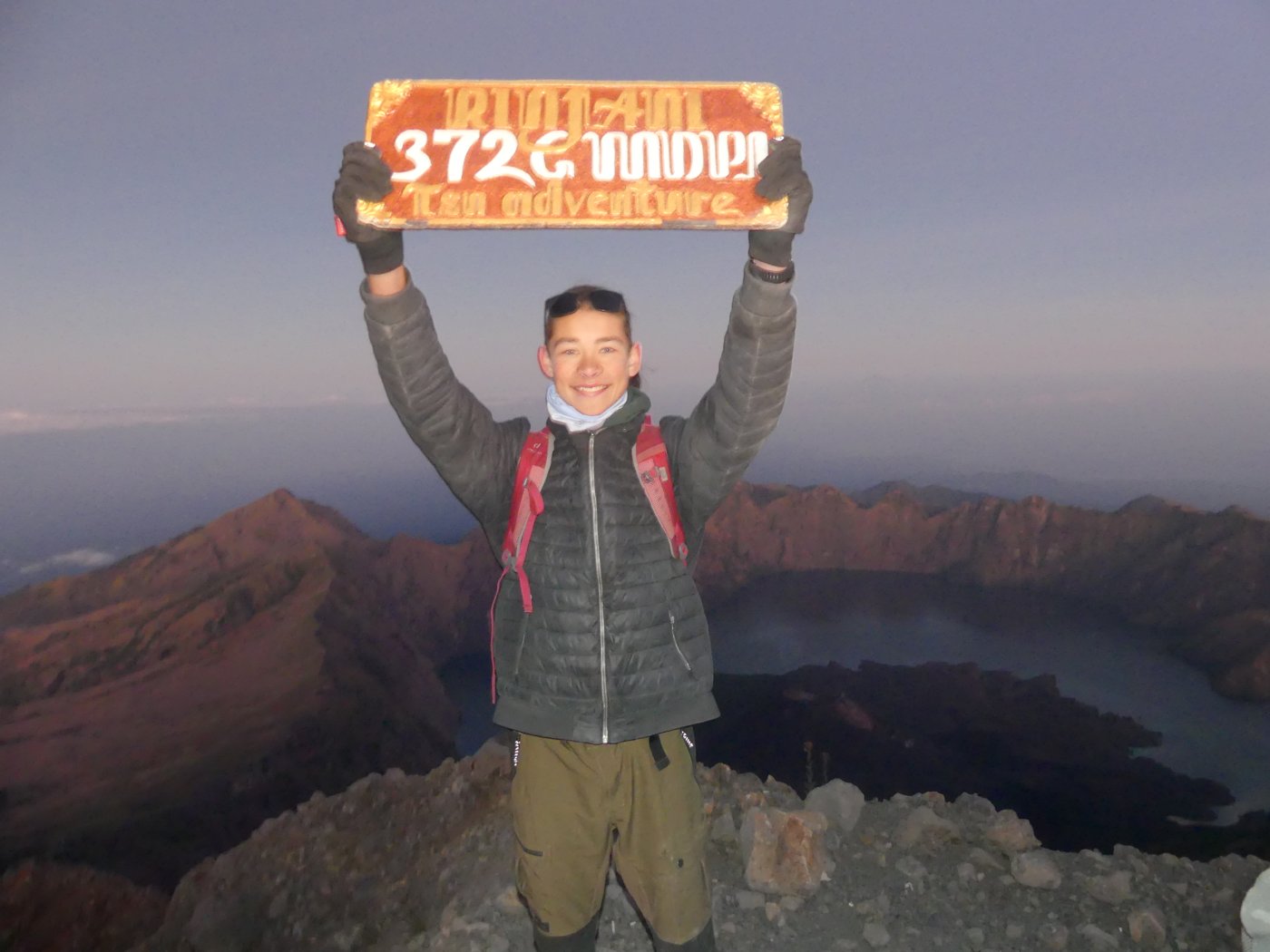
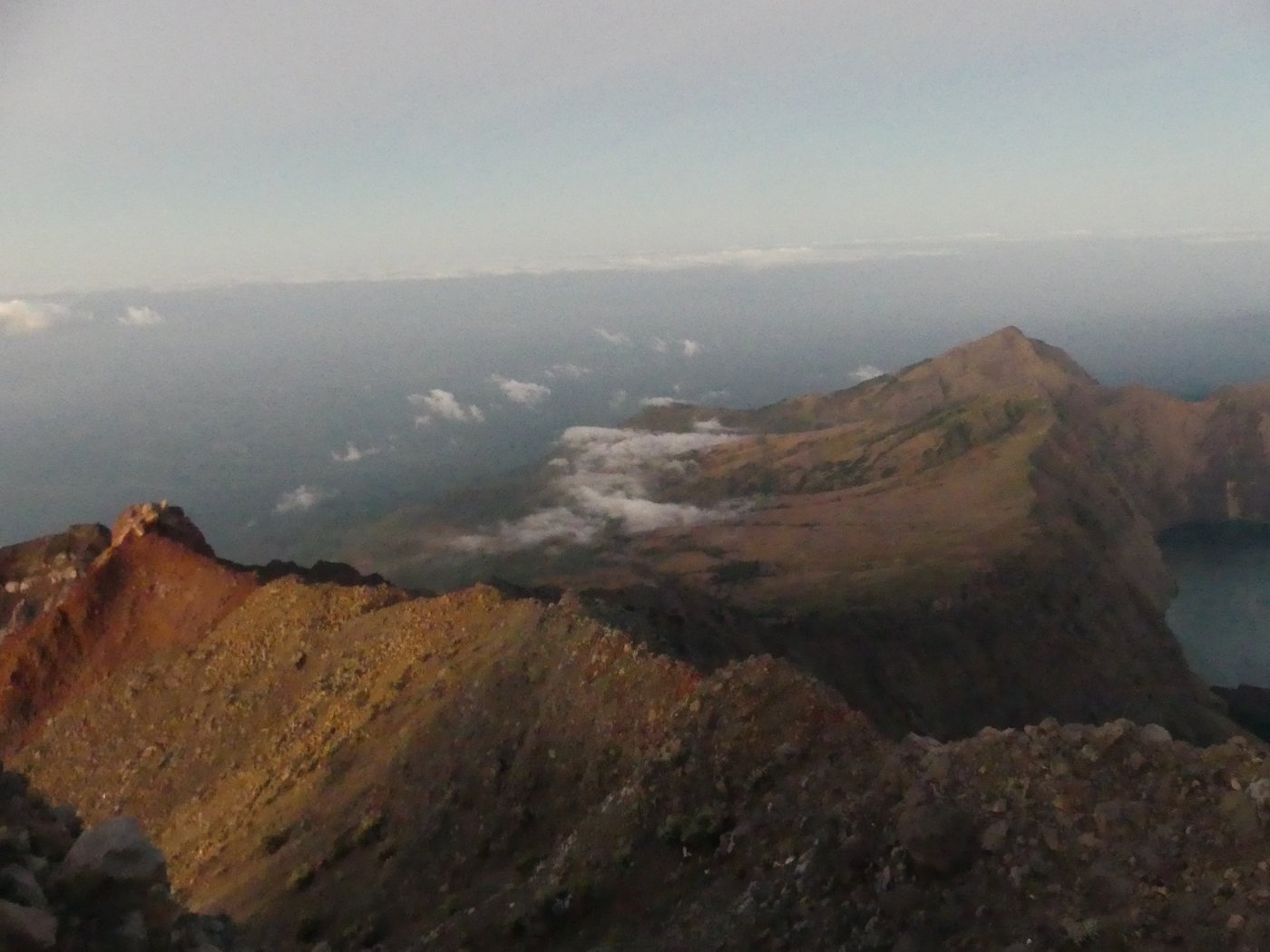
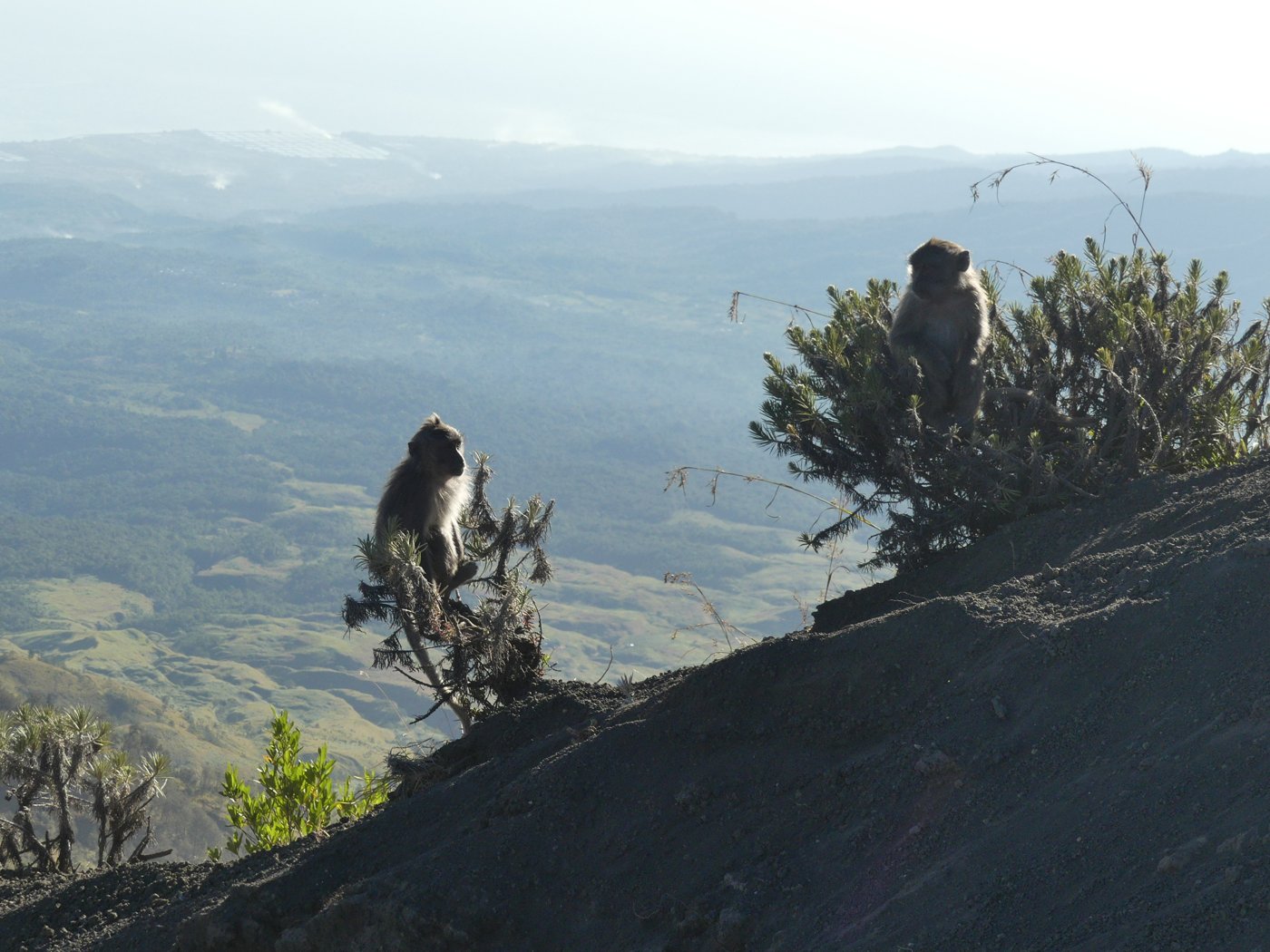
The wind on the ridge was ferocious — they waited in the lee of a rock near the top — and then, extraordinarily, dropped to nothing right at the summit. Noah's favourite view wasn't even the sunrise; it was looking back down at the whole crater and its lake glowing in the first light. He caught it all on a 360° panorama with his Insta360, which you can drag around below:
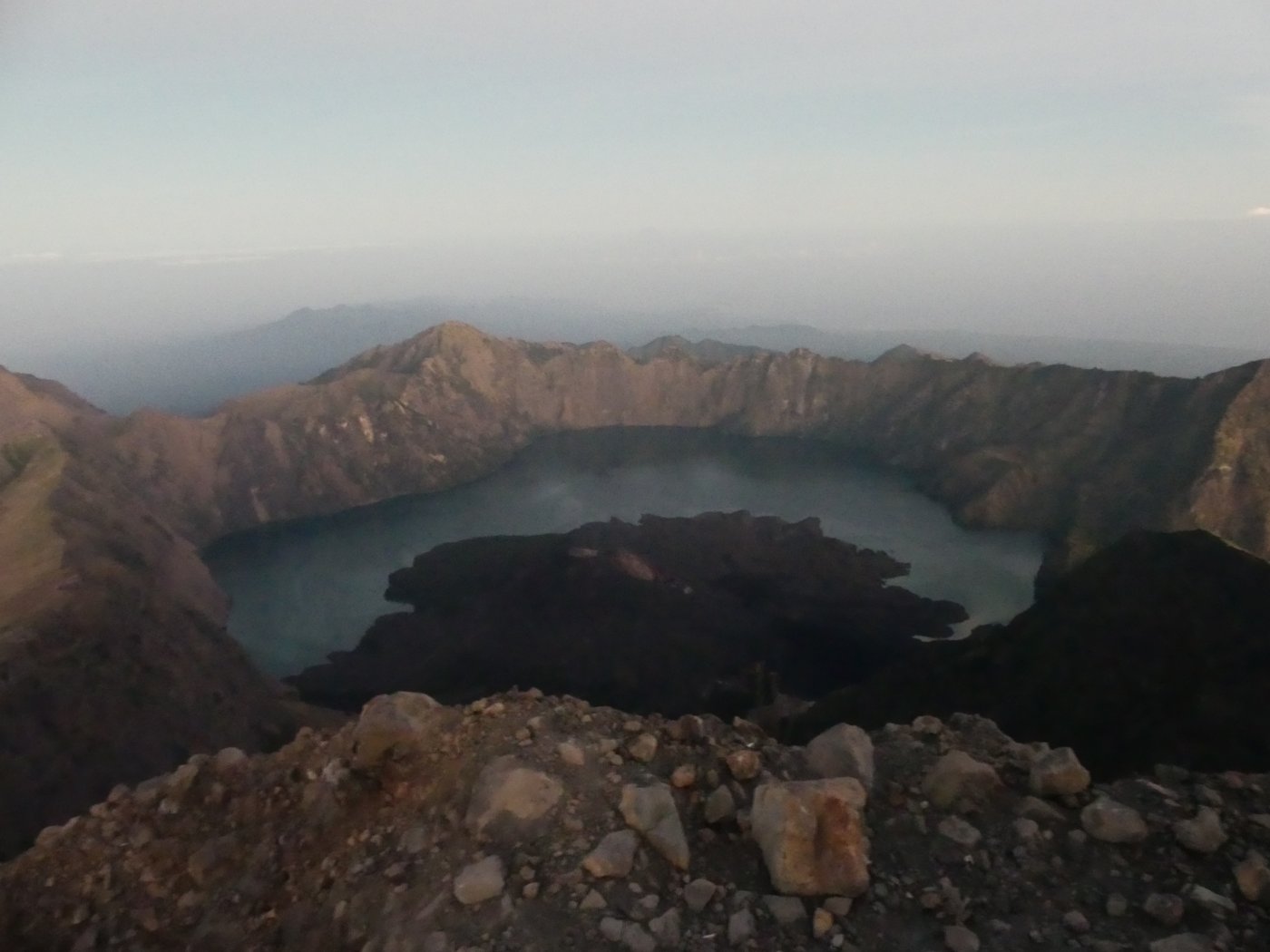
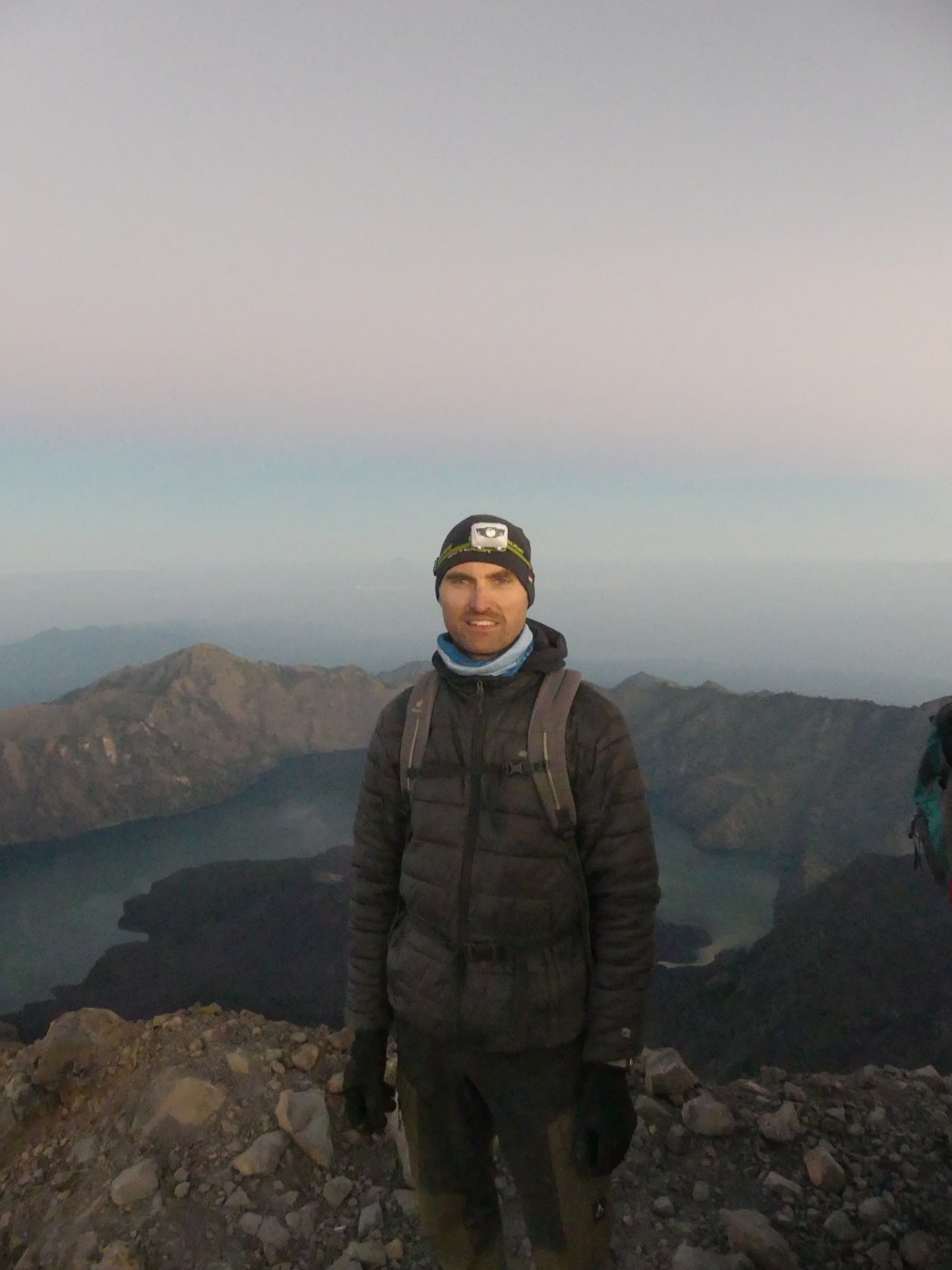
And because you can't stand on Indonesia's second-highest volcano and not mess about a bit — Noah knocked out a few push-ups on the summit, 3,726m up, the crater lake yawning below:
The descent back to camp was the fun part — you can bound down the soft sand almost like skiing. Back at the tents there were pancakes waiting, and Line and Vitus, who'd got a couple of precious extra hours of sleep.
Down into the crater — the lake and hot springs
Here's the thing most people don't realise about Rinjani: summit morning is only half of that day. After breakfast we packed up and dropped down into the crater toward the lake — a longer descent than we'd expected, winding down through forest and past a huge old tree in the crater basin.
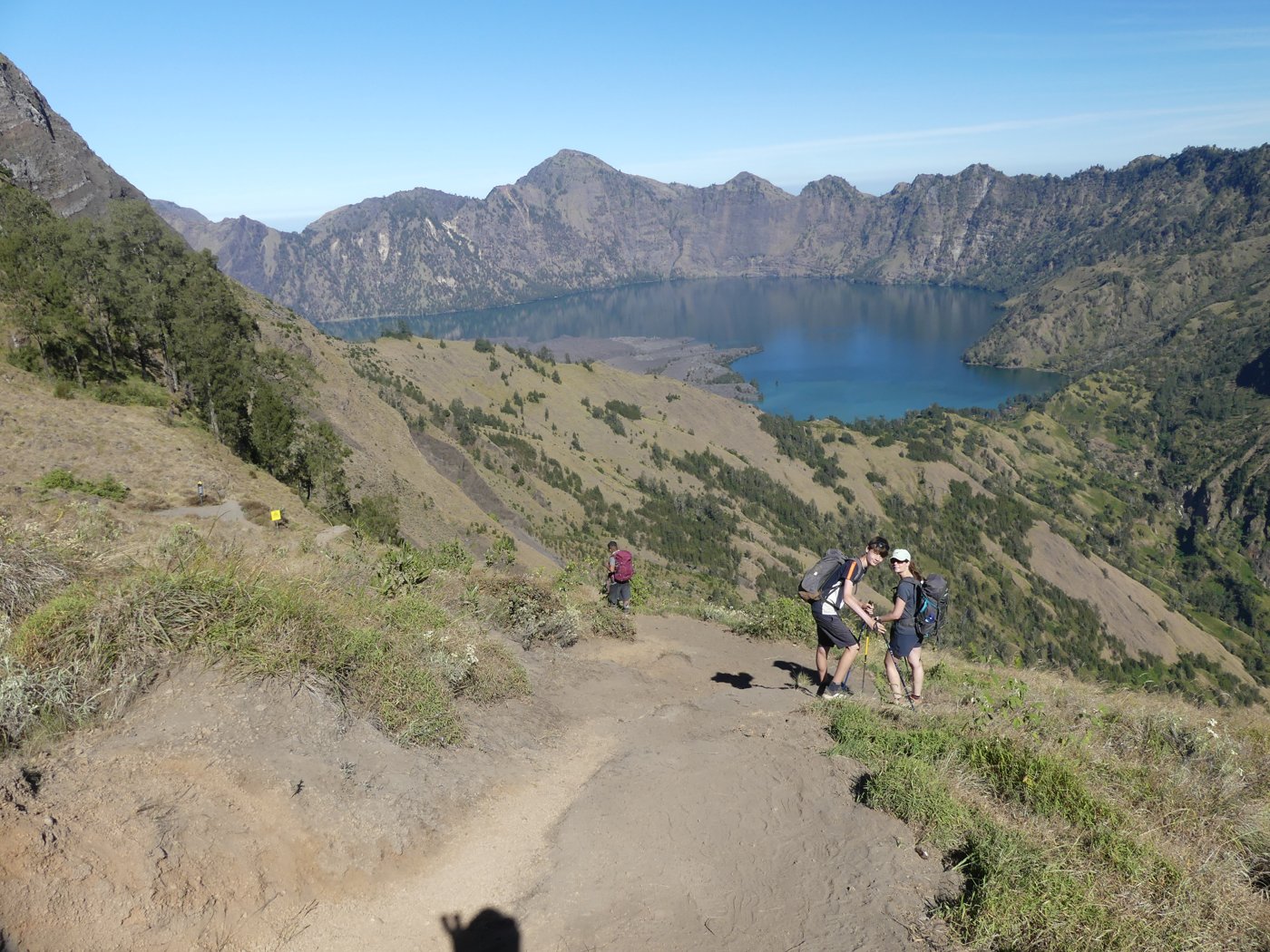
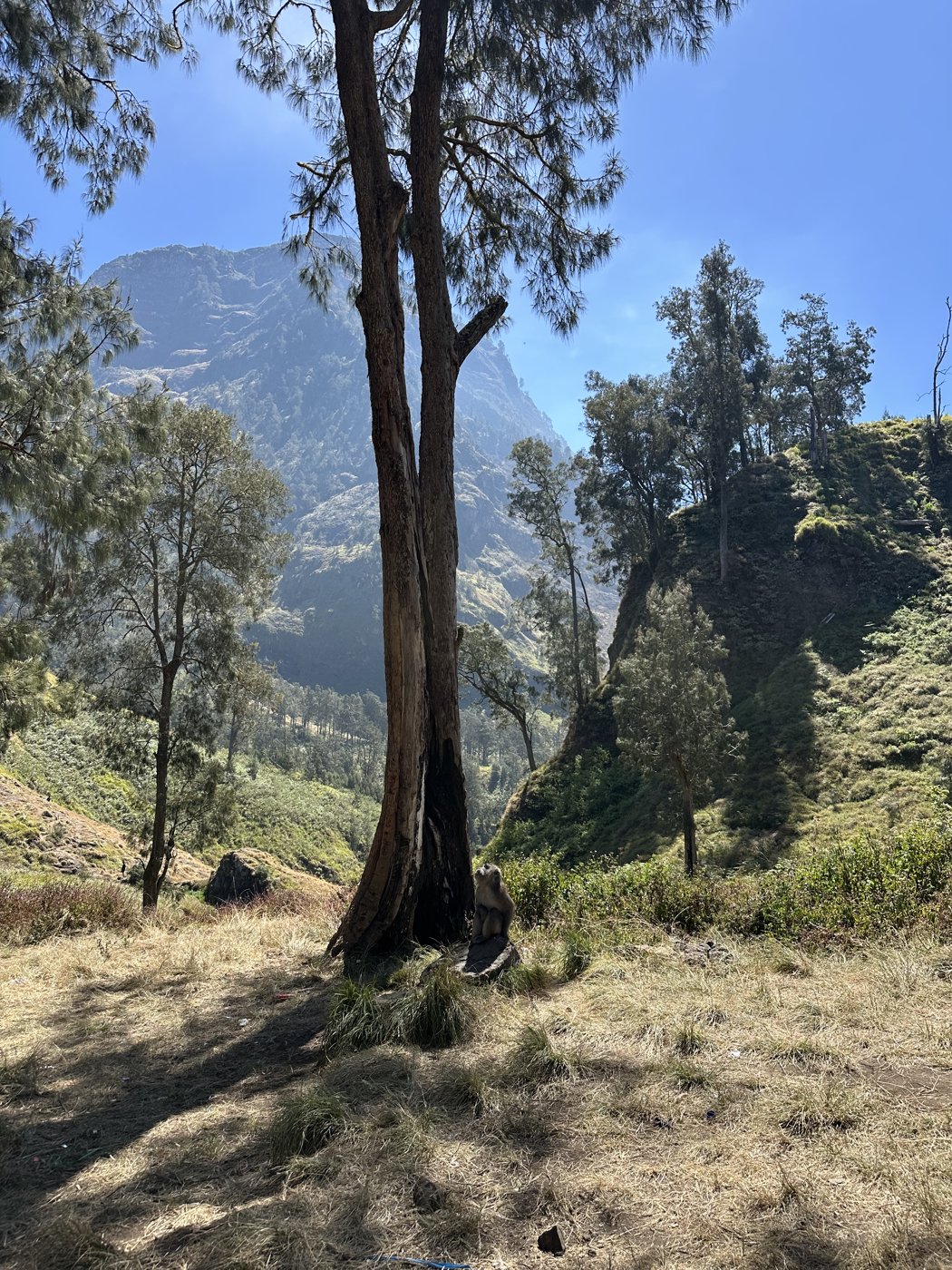
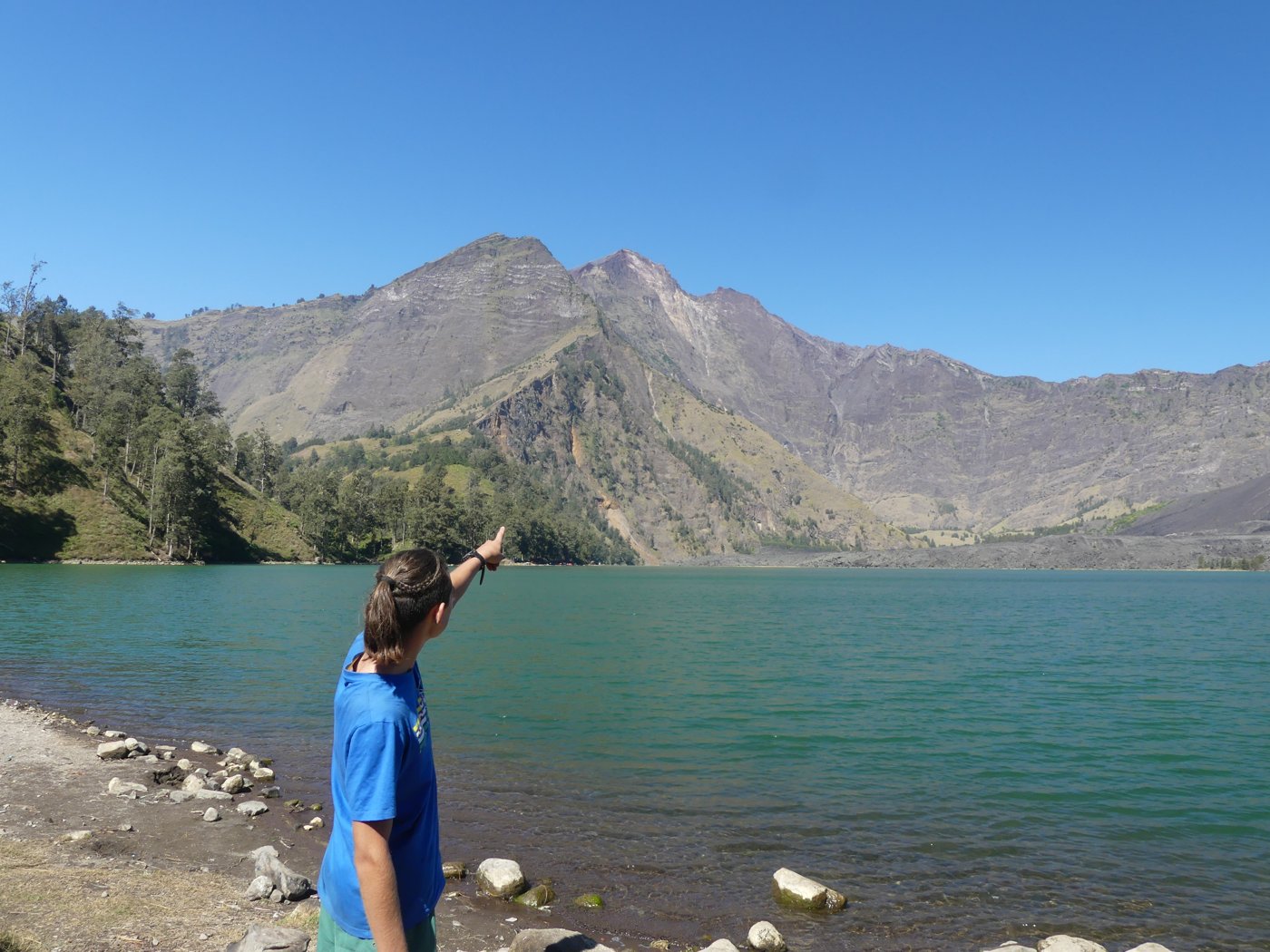
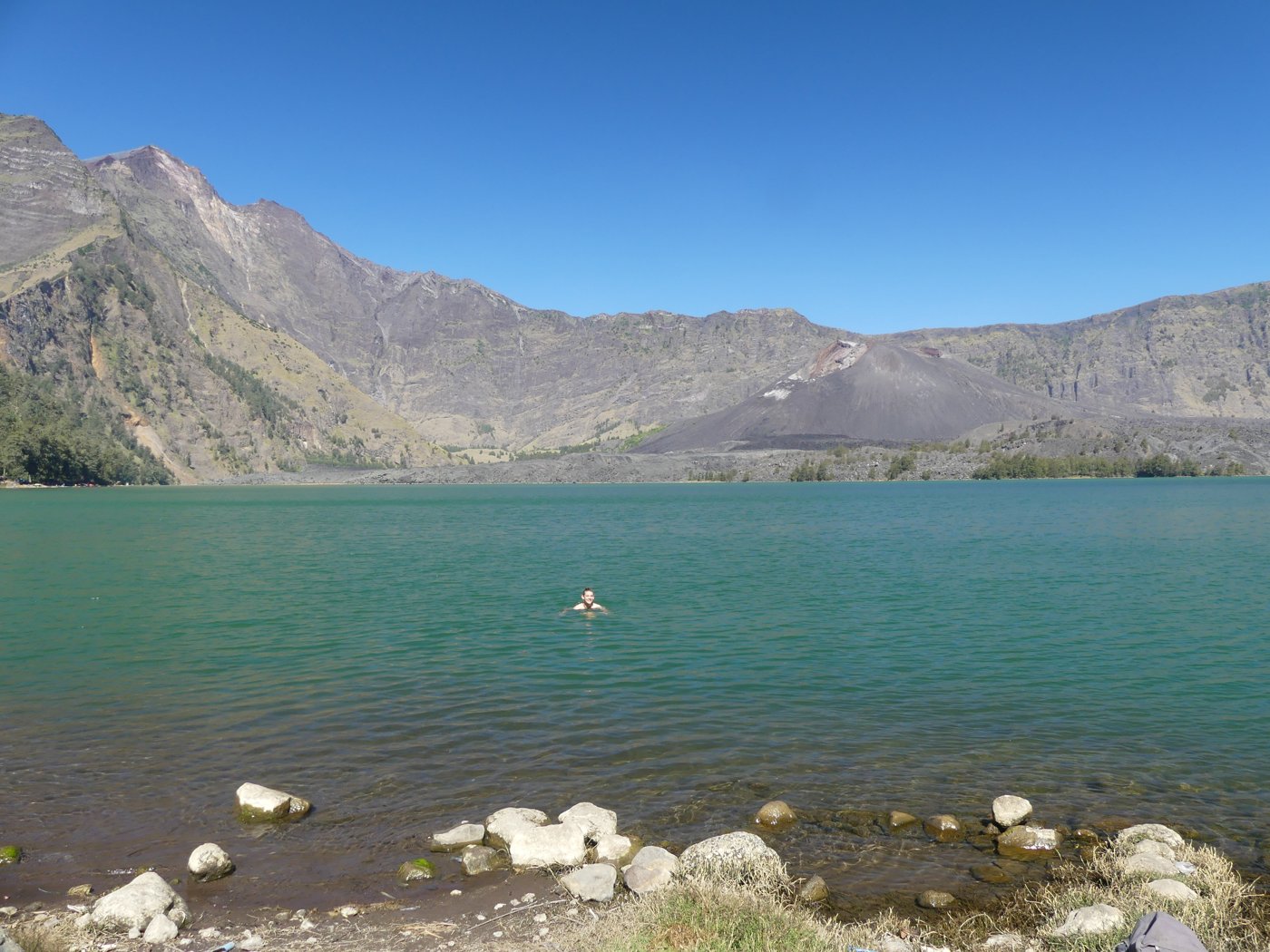
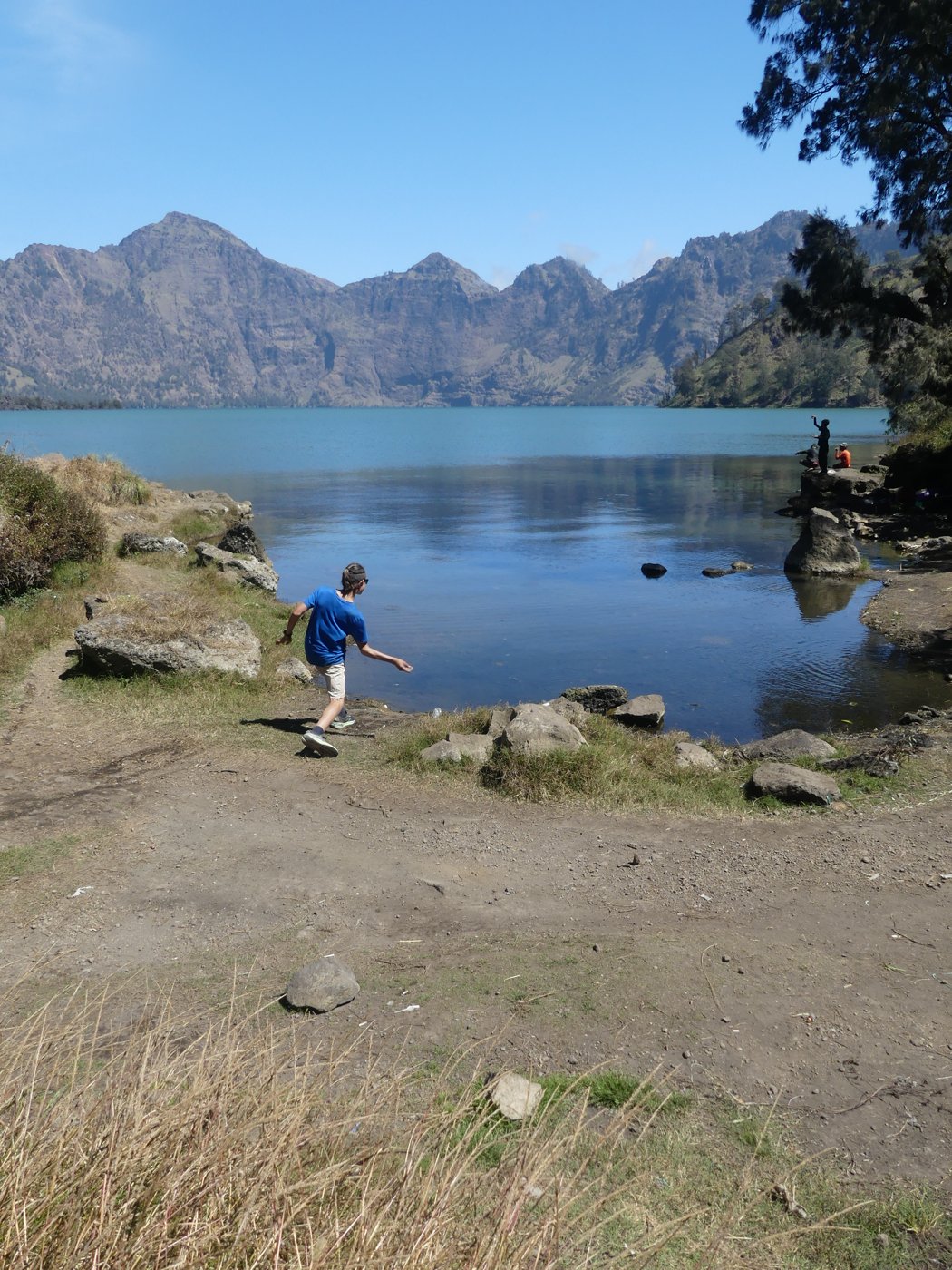
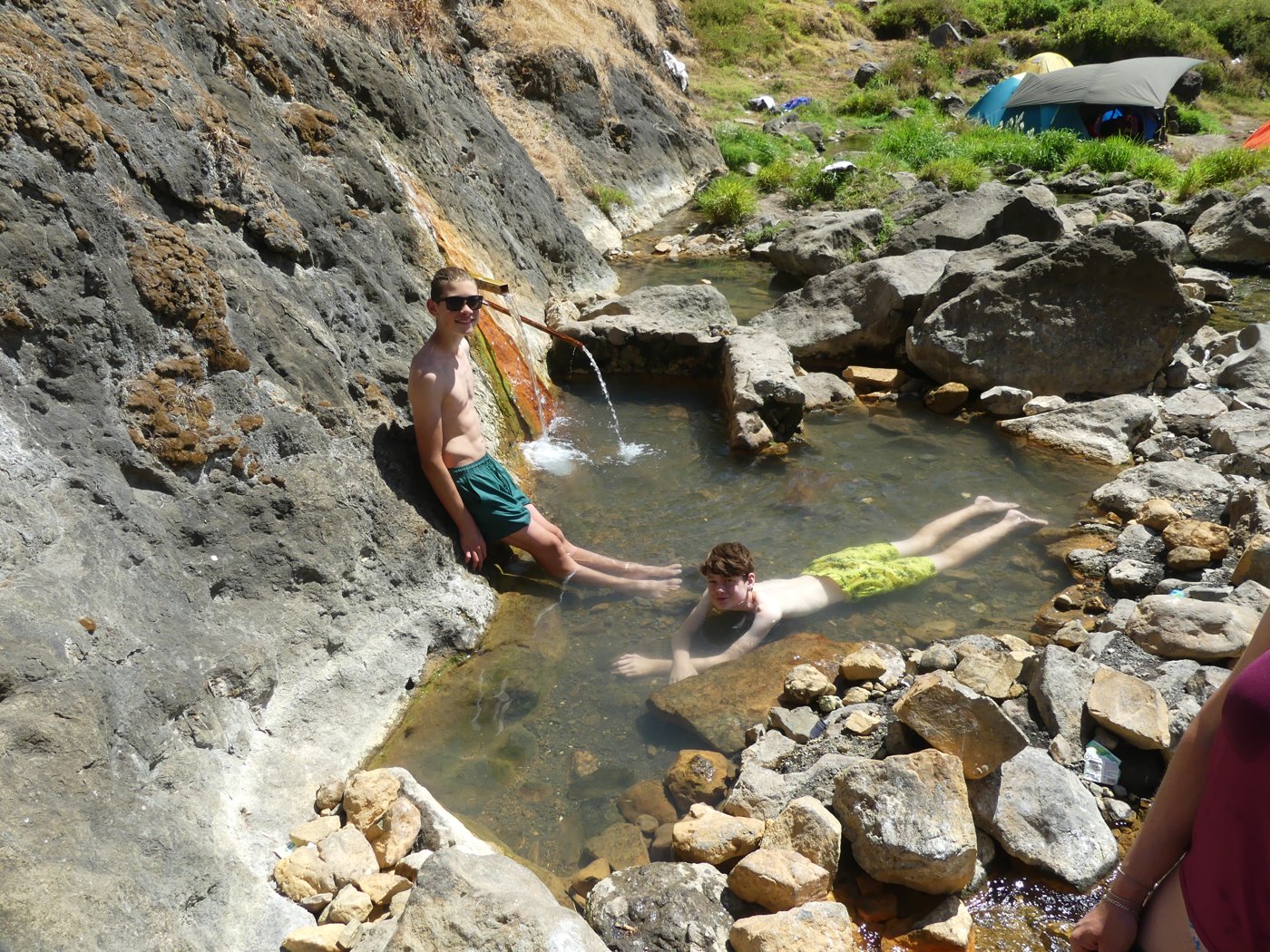
The crater lake is beautiful, though slightly eerie: there were a lot of dead and sick fish in the shallows. Our guide (whose English, despite a specific request, was almost non-existent) vaguely blamed the water getting too warm; we weren't convinced. The porters produced a superb noodle soup by the water, and there's a small hot spring where warm water runs straight out of the rock — blissful for soaking off the dust and cold.
…and back UP over the crater wall
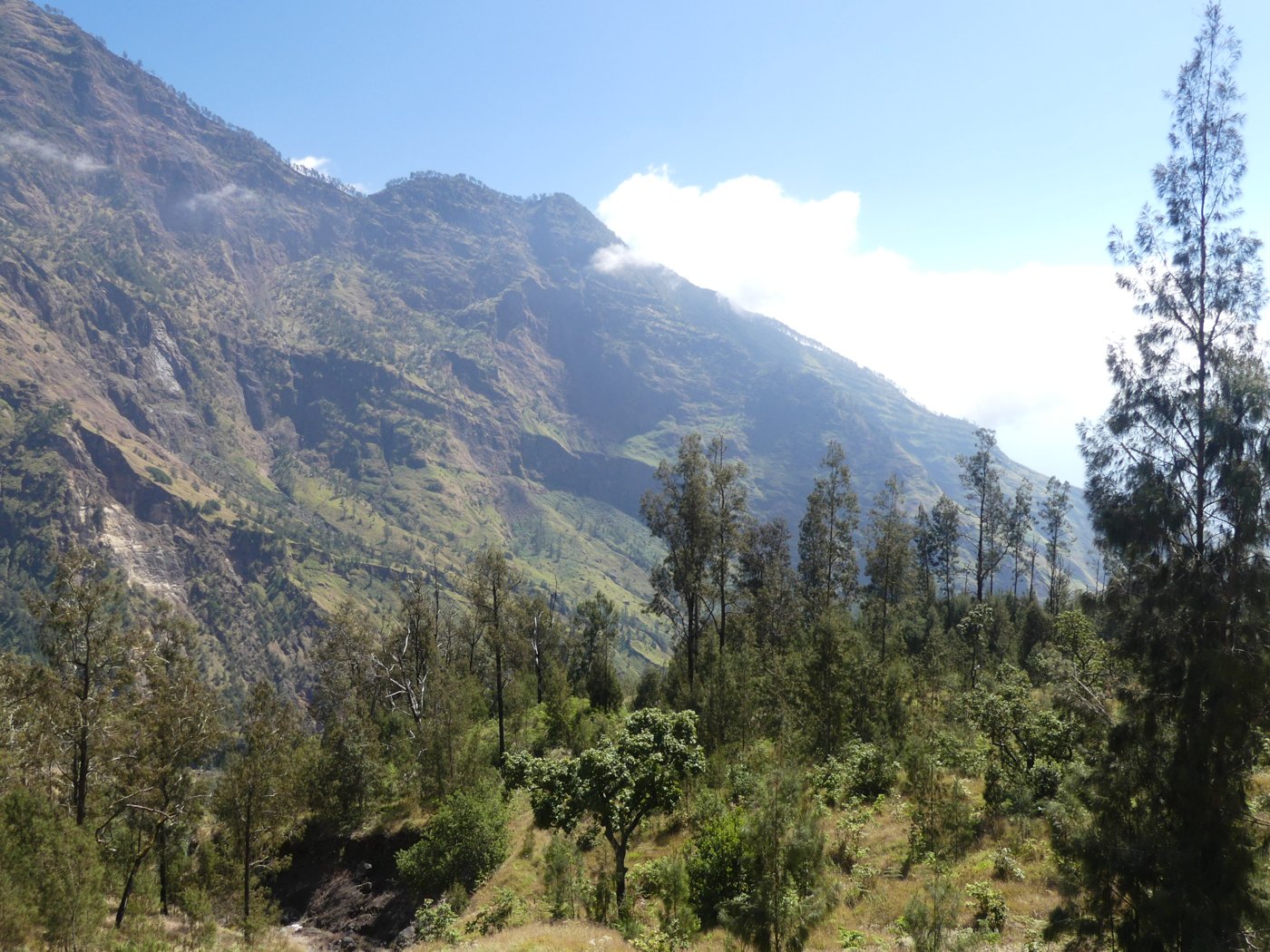
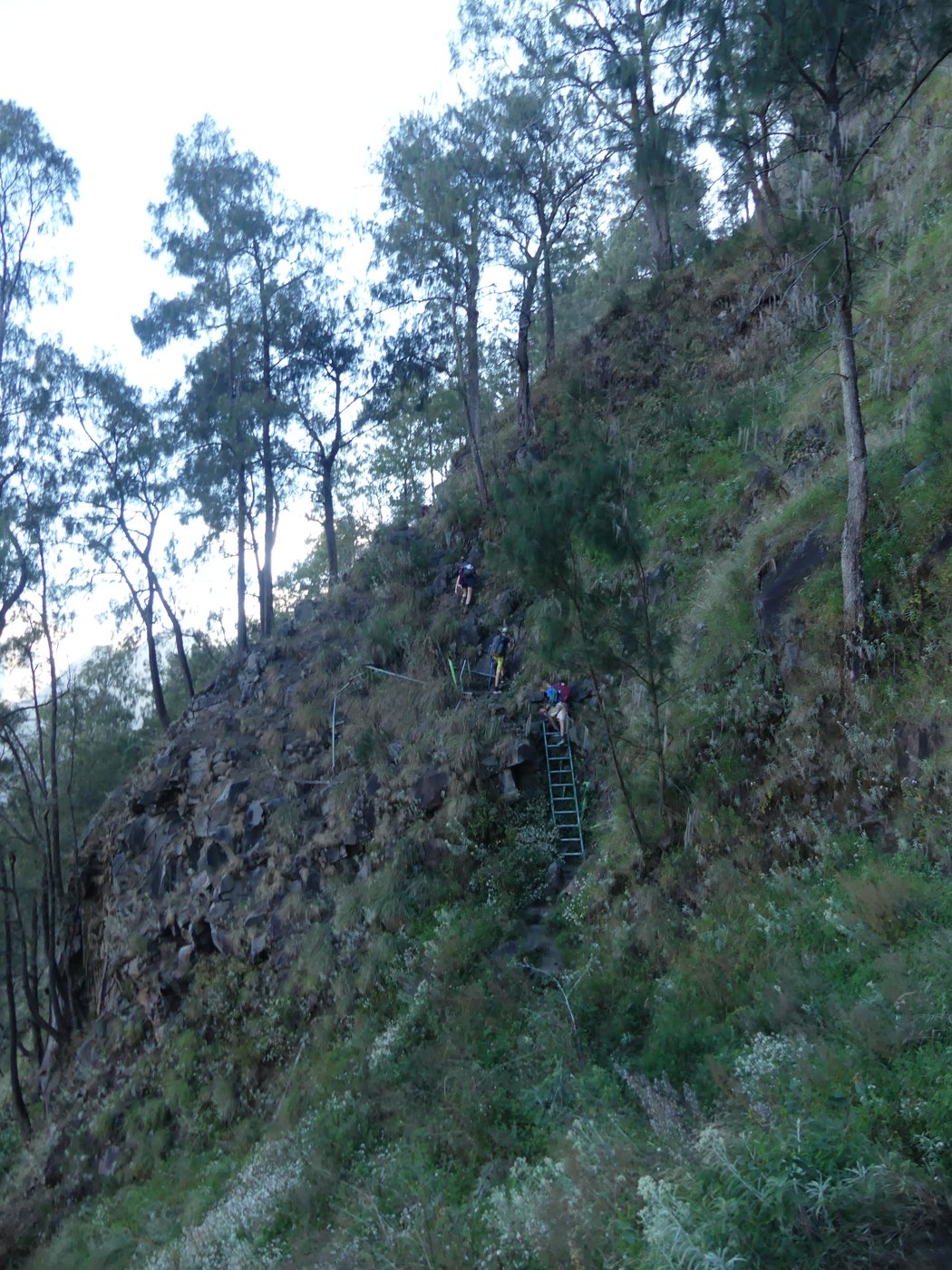
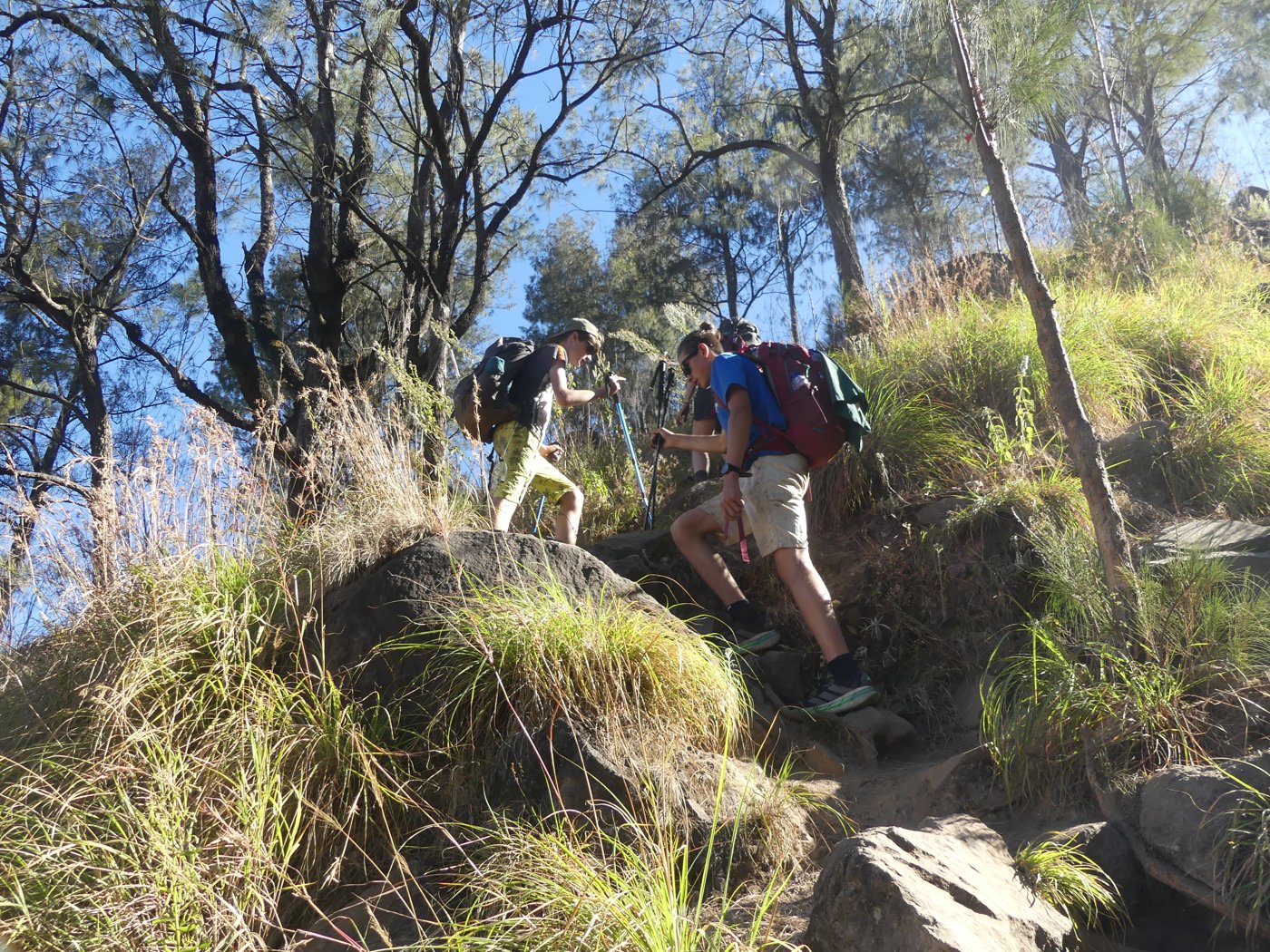
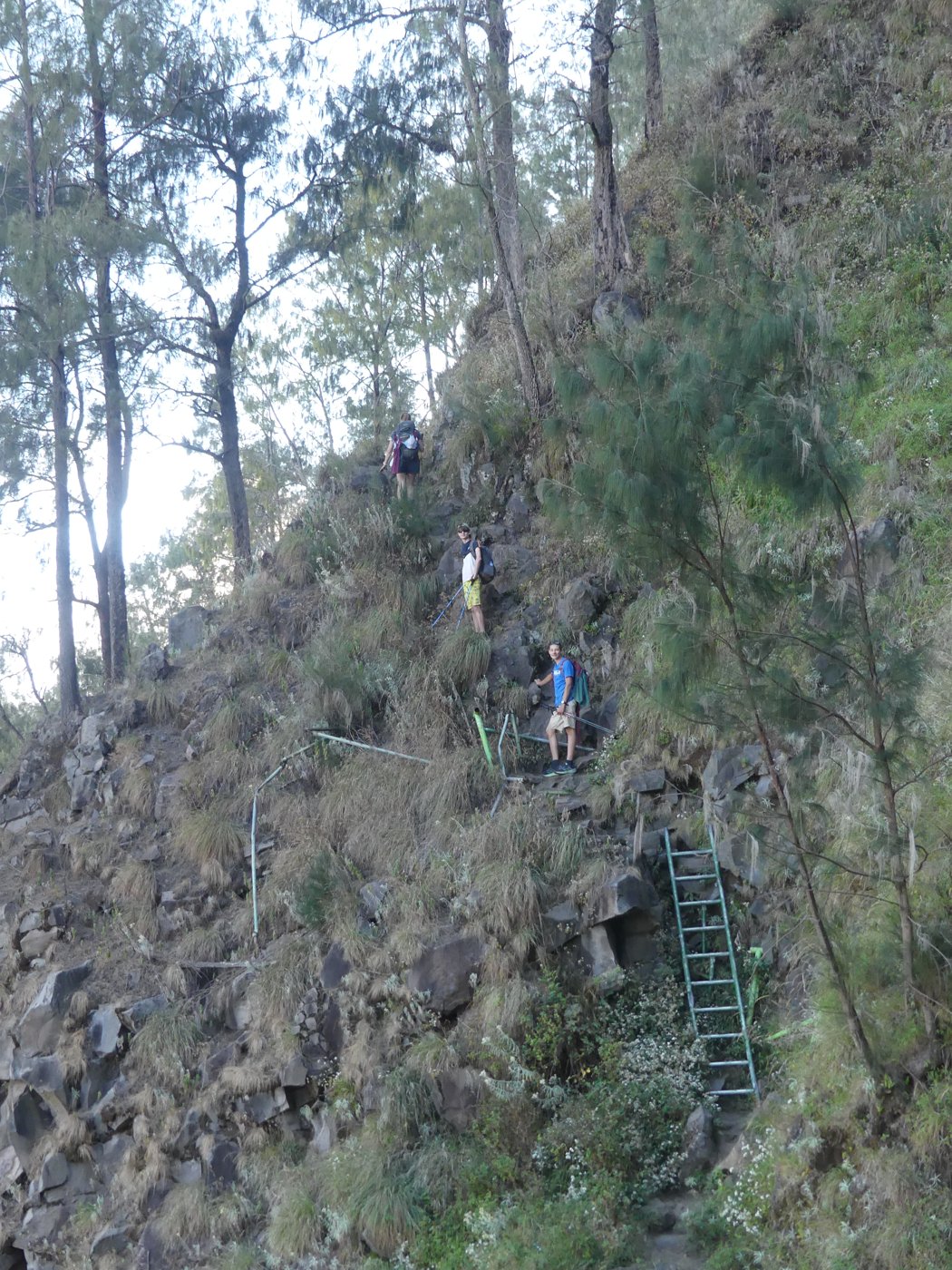
Then came the sting in the tail. We'd assumed we'd amble up a grassy slope a little way — the guide couldn't really tell us otherwise — but what actually followed was one of the most intense climbs of the whole trek: straight up the inside of the crater wall, near-vertical in places, on narrow exposed paths where you scramble up rock steps with trekking poles still in your hands. This is the stretch that terrified Line, who has a real fear of heights — and honestly, it was good that she and Vitus hadn't summited, because there is no way they'd have got through this second climb utterly exhausted. As it was, Jesper and Noah had by then done around 2,200 vertical metres in a single day.
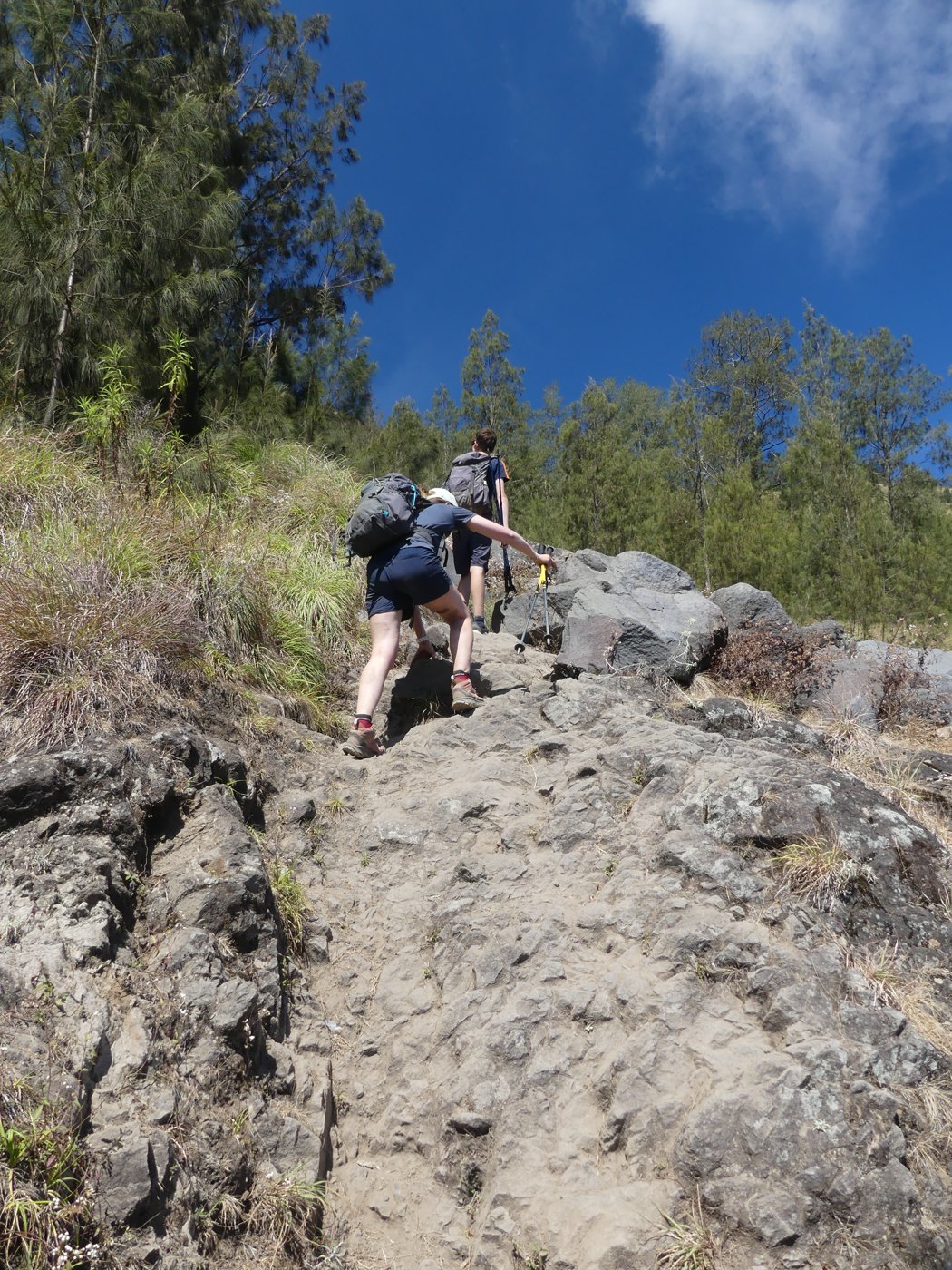
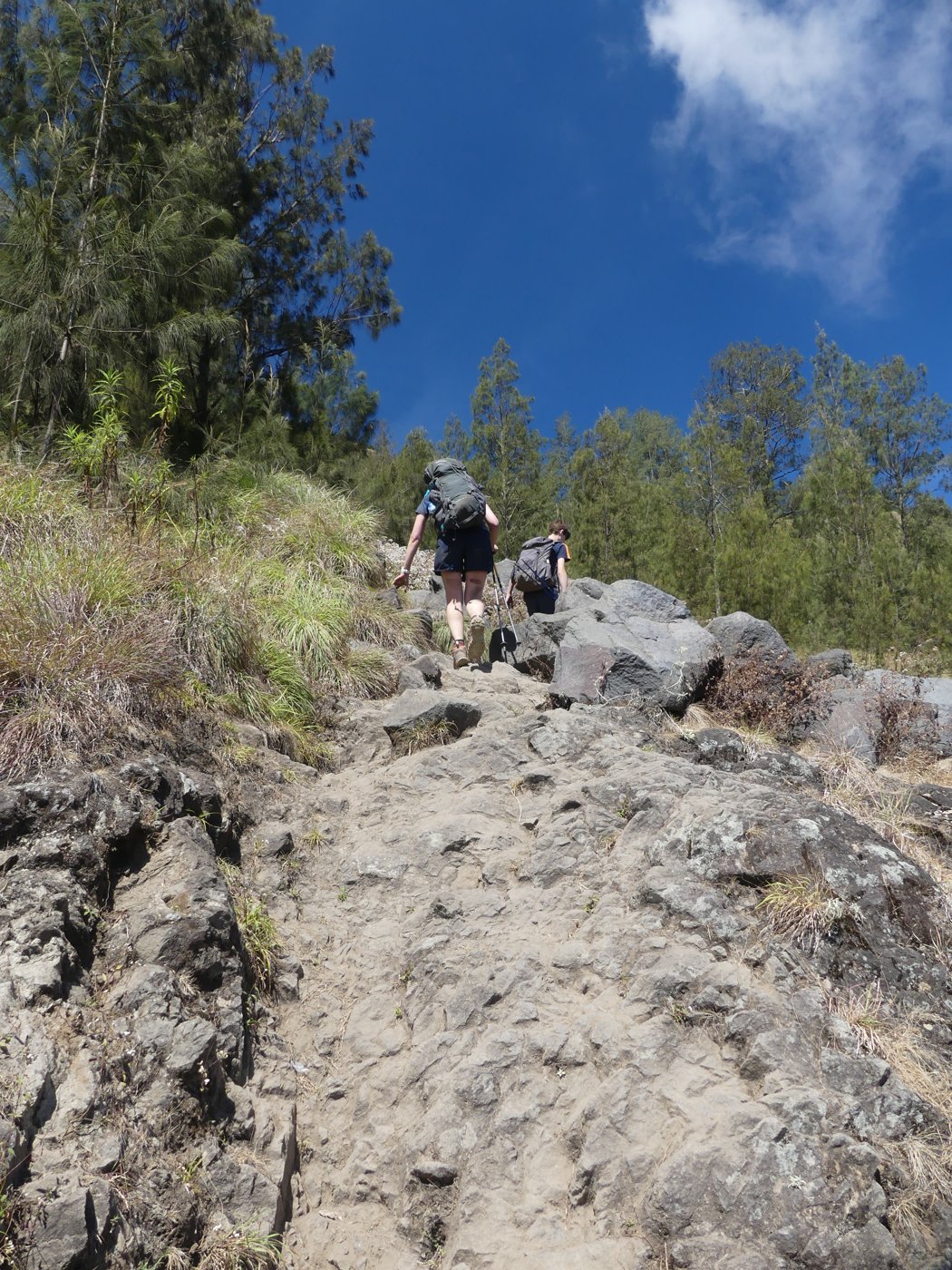
Line was magnificent — she climbed it calmly, without ever getting hysterical, despite her real fear of heights. The unsung hero of that climb, though, was Noah. He walked beside Vitus and kept him talking the entire way — because we'd worked out a golden rule about Vitus on this trip: as long as he's talking (ideally about Pokémon) he has bottomless energy, but the moment he's left to plod along in silence the power drains straight out of him. So Noah kept the Pokémon chatter going for hours, and threw in regular encouragement for Line whenever she needed it too — roughly two and a half hours of steady coaxing, which is far more mentally draining than it sounds. Everyone made it. Our second camp was on the ridge above, a little spot the porters had found all to ourselves, with the best view yet — and another freezing night in all our clothes.
Day three — the long way down
The final day was mostly downhill — four or five hours, easier terrain sliding into jungle — though still hard on the knees, and Jesper's old knee injury was now complaining loudly. Noah made a game of running ahead with the cameras to film and photograph everyone coming down, which looks brilliant. One sad note: some stretches were badly littered. We tipped the porters generously and (a little grudgingly) the guide the same — he'd added almost nothing all trek. Down by around 4pm.
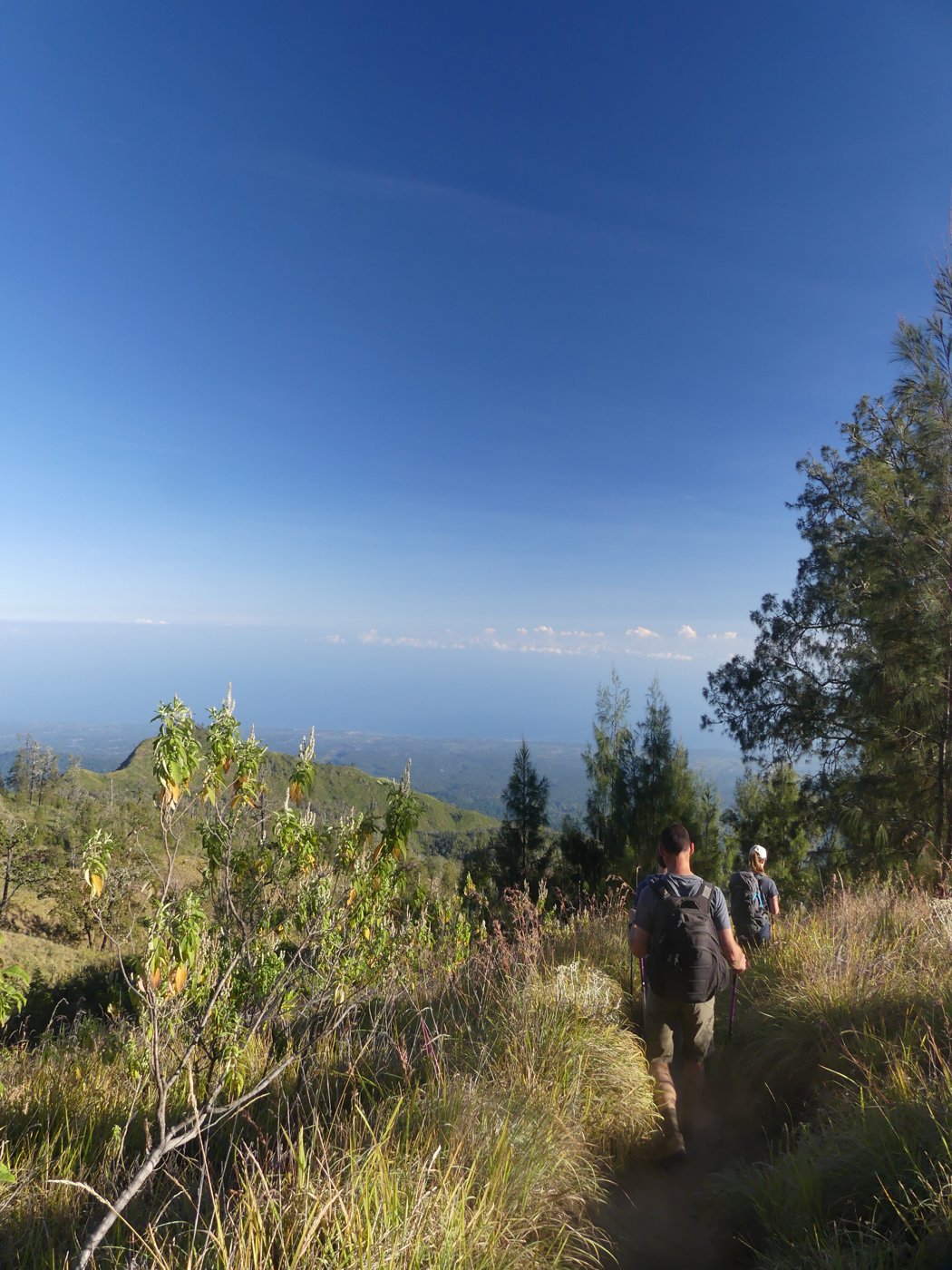
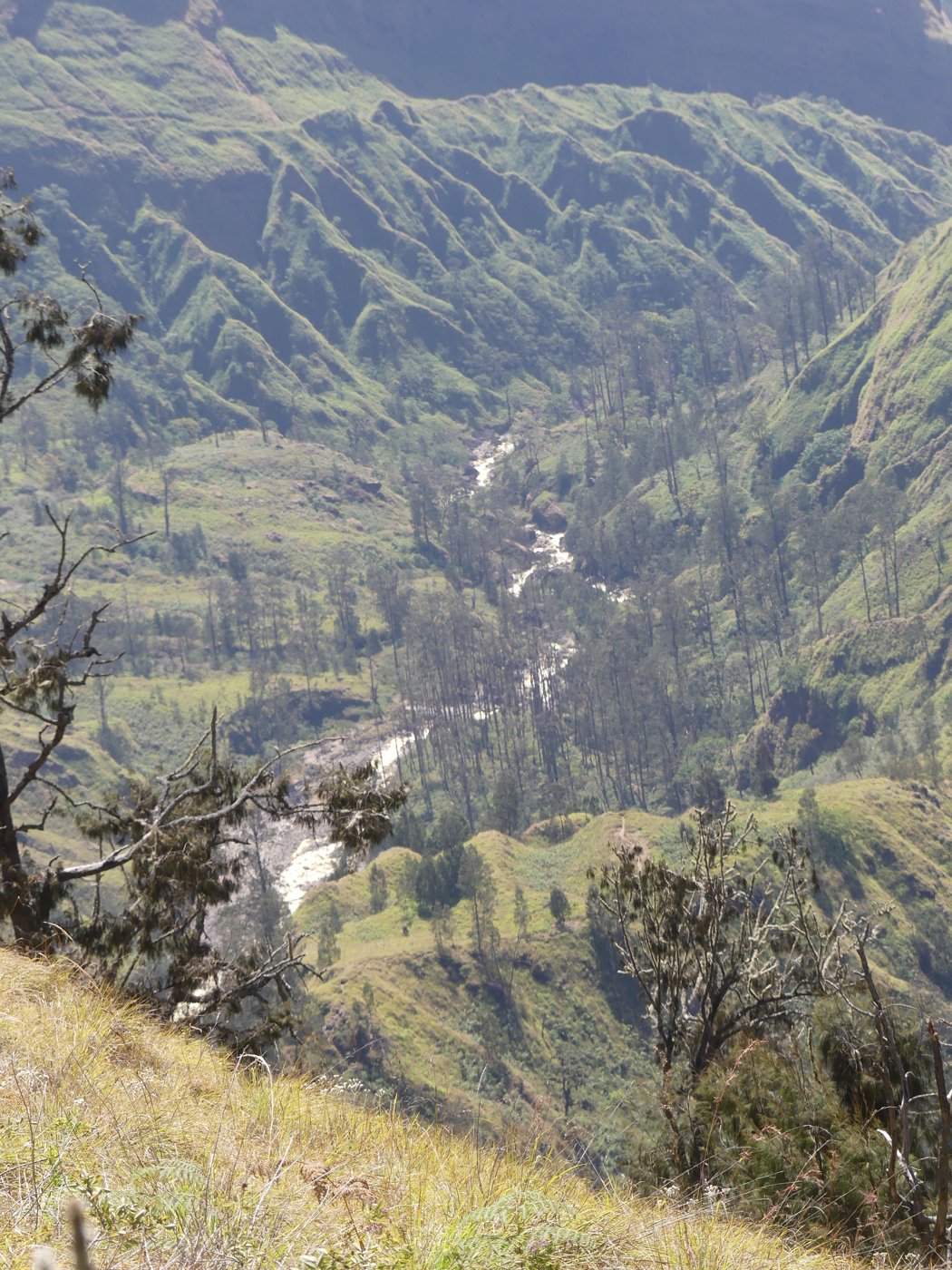
Noah and Vitus turned the last jungle stretch into a full-on run, cameras rolling:
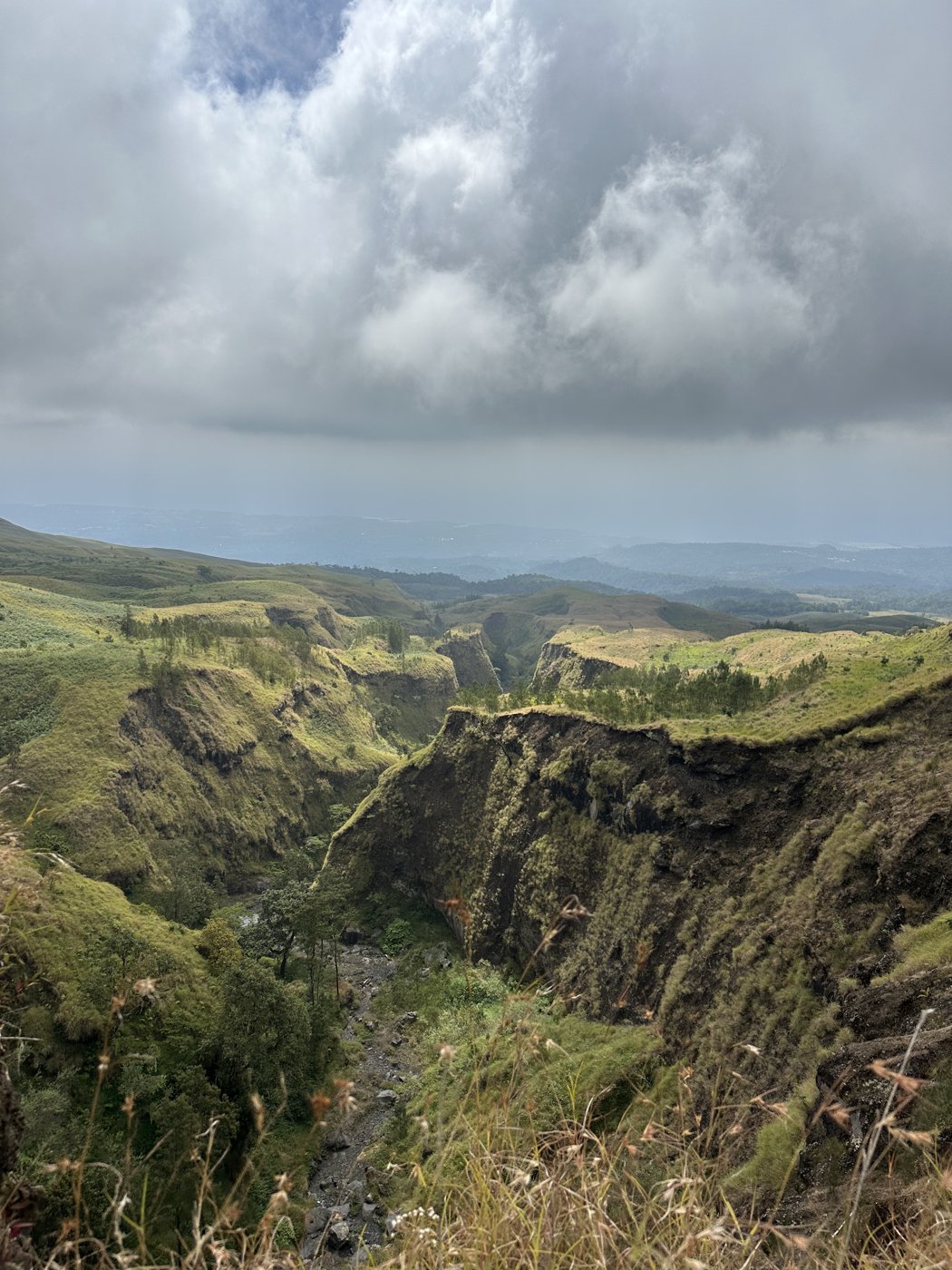
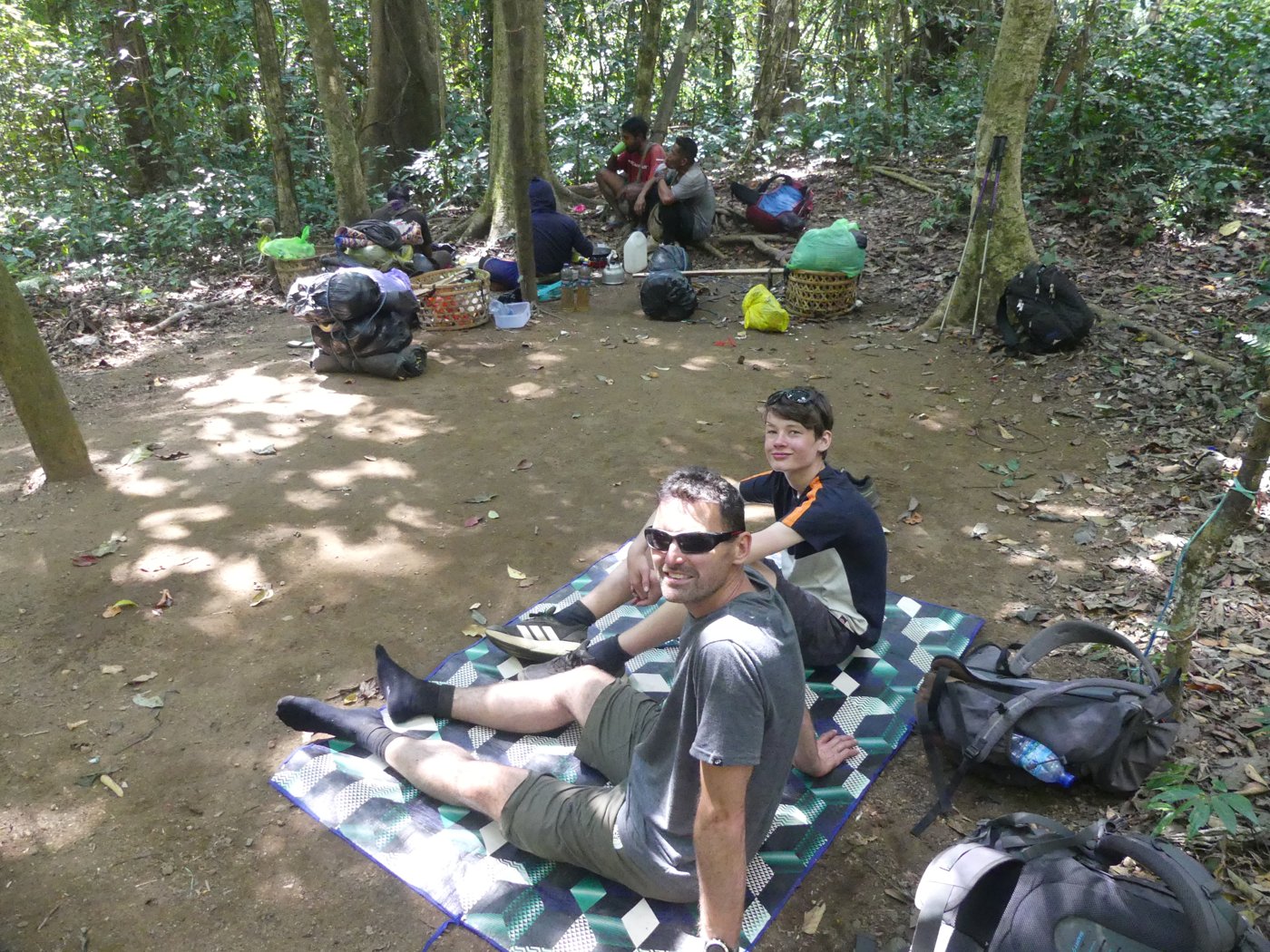
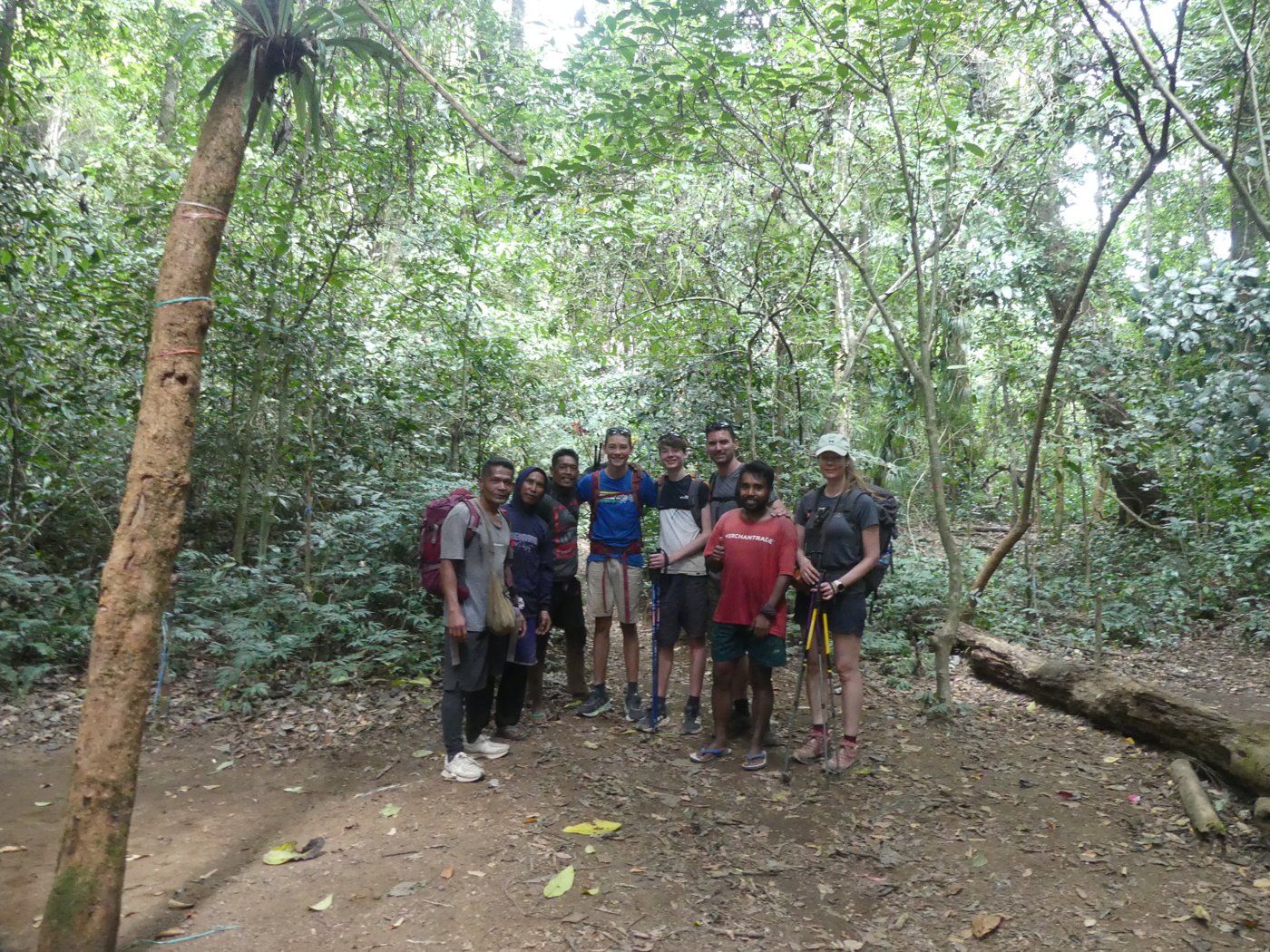
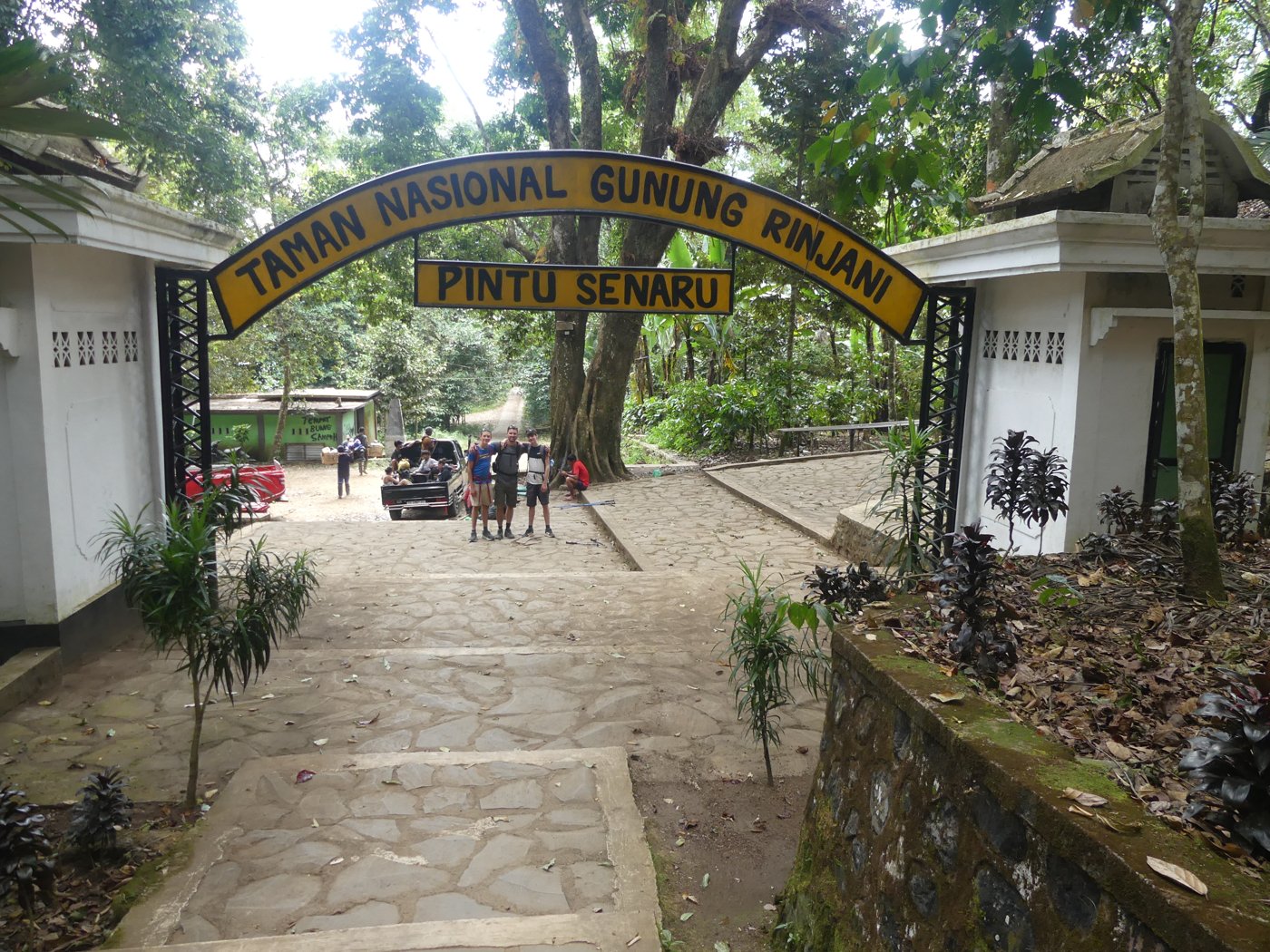
Brutal, cold, occasionally frightening — and one of the absolute highlights of the entire trip. Fantastic views, huge shared effort, and a real relief that nobody got sick or hurt enough to miss it. From here we headed for the coast, and a much gentler few days out on the islands.
Next: The Secret Gilis — turtles, snorkelling and island disc golf →
Previously: ← Arriving in Lombok — Senaru
Comments